Acupuncture for premature ovarian insufficiency: a systemic neuroendocrine perspective
By
Xi Zhao
ZhengYu Li
Sen Tang
Jie He
HuaXin Su
Yingchun Huang
July 2, 2026
Clinical Scorecard: Exploring Acupuncture's Role in Premature Ovarian Insufficiency: Insights from a Neuroendocrine Framework
At a Glance
Category Detail
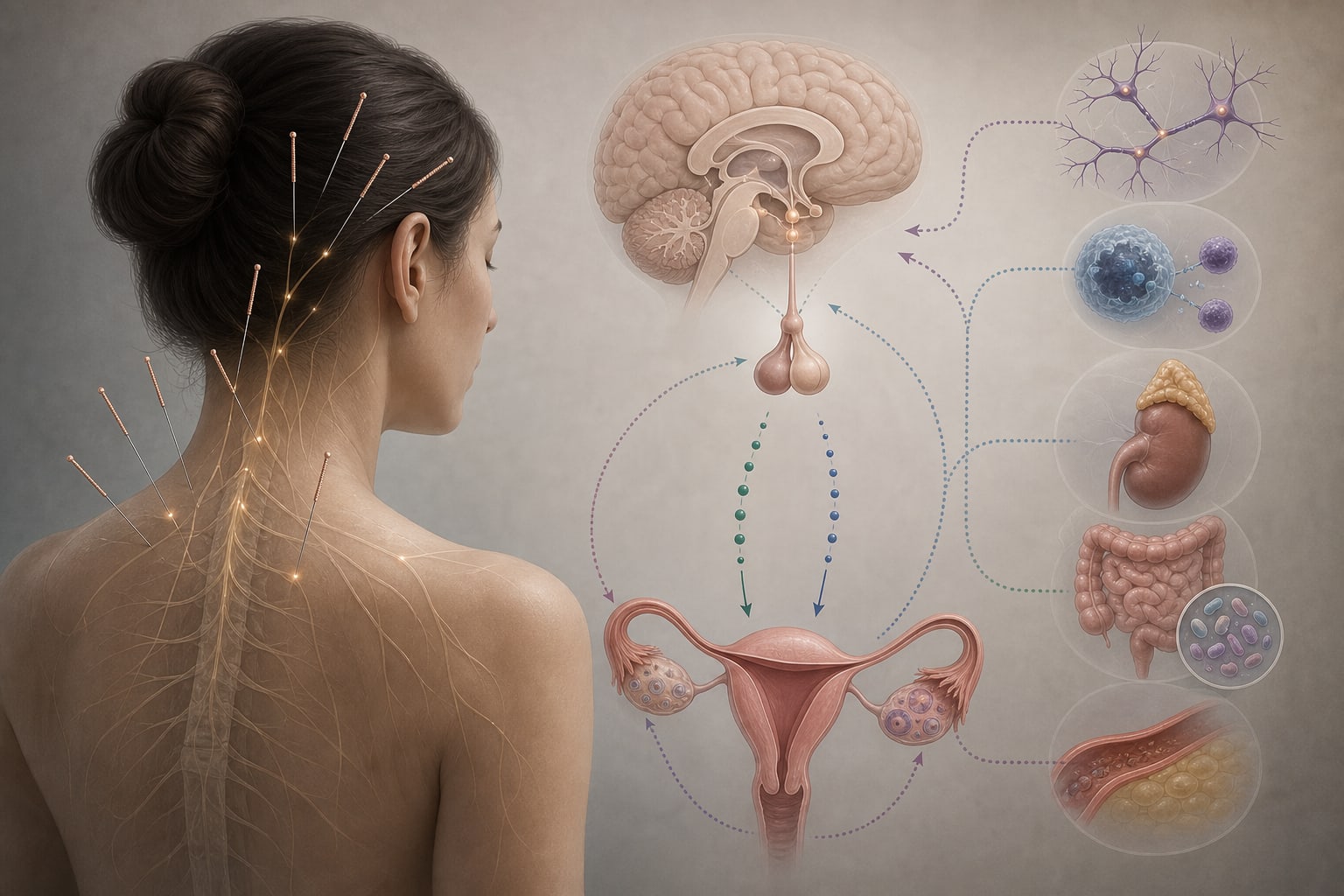
Condition Premature Ovarian Insufficiency (POI) Key Mechanisms Dysregulation of the HPO axis, KNDy–GnRH network, chronic inflammation, and metabolic disturbances. Target Population Women under 40 with loss of normal ovarian function. Care Setting Clinical management of reproductive dysfunction.
Key Highlights
POI is a systemic neuroendocrine condition, not just a reproductive disorder. Acupuncture may influence reproductive hormone regulation and emotional well-being. Current evidence on acupuncture's efficacy in POI is limited and preliminary. Guideline-Based Recommendations
Diagnosis
POI is diagnosed based on menstrual irregularities, elevated gonadotropin levels, and reduced estrogen levels. Management
Current management primarily relies on hormone replacement therapy (HRT). Monitoring & Follow-up
Monitor ovarian reserve-related indicators and menstrual function. Risks
POI poses systemic health risks affecting cardiovascular, bone metabolism, and mental well-being. Patient & Prescribing Data
Women with premature ovarian insufficiency.
Acupuncture may modulate the HPO axis and improve hormonal balance.
Clinical Best Practices
Consider acupuncture as a complementary intervention in POI management. Focus on a multidisciplinary approach to address systemic health risks associated with POI. Related Resources & Content