Predicting Gram-negative bloodstream infection in elderly patients after isolation of GNB from non-blood specimens: a machine learning-based tool - Scorecard - MDSpire
Advertisement
Predicting Gram-negative bloodstream infection in elderly patients after isolation of GNB from non-blood specimens: a machine learning-based tool
Clinical Scorecard: A Machine Learning Approach to Forecast Gram-Negative Bloodstream Infections in Elderly Patients Following Detection of GNB in Non-Blood Samples
At a Glance
Category
Detail
Condition
Key Mechanisms
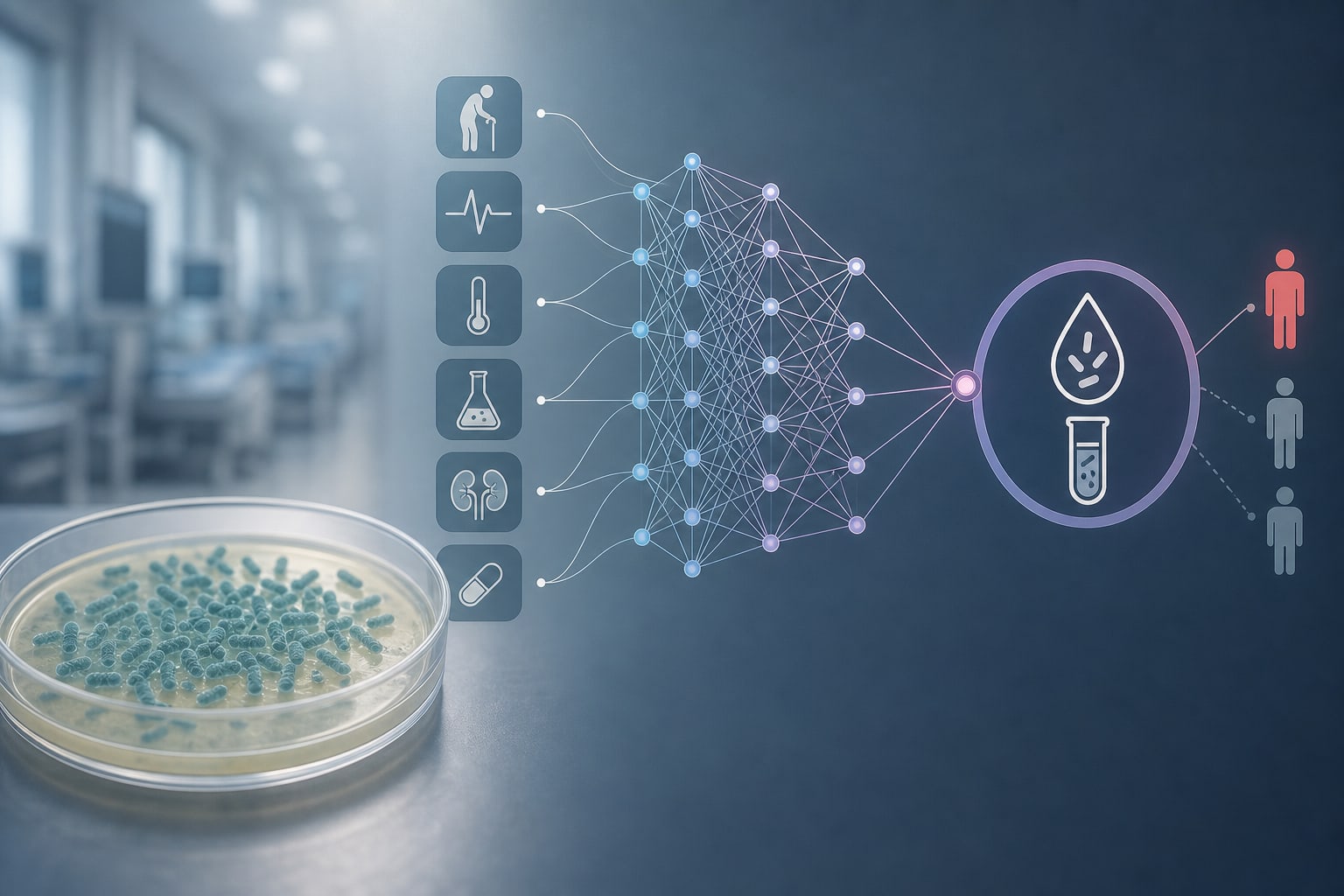
Machine learning algorithms for early risk prediction based on study findings.
Target Population
Care Setting
Key Highlights
Developed a machine learning model for early identification of high-risk elderly patients based on study data.
XGBoost model achieved AUC of 0.816, accuracy of 0.733, and recall of 0.760 as reported.
Seven predictive variables identified: procalcitonin level, neutrophil percentage, C-reactive protein level, white blood cell count, venous catheter, age, and length of hospital stay.
External validation confirmed generalizability of the model as per study results.
Guideline-Based Recommendations
Diagnosis
Utilize machine learning models based on study findings to identify high-risk patients.
Management
Initiate antimicrobial therapy upon identification of high-risk patients as per study results.
Monitoring & Follow-up
Monitor predictive variables identified in the study.
Risks
Delay in diagnosis and treatment can increase mortality risk as noted in the study.
Patient & Prescribing Data
Elderly inpatients with Gram-negative bacteria positivity
Early identification allows for timely antimicrobial therapy initiation
Clinical Best Practices
Implement machine learning tools in clinical settings for risk assessment as indicated in the study.
Focus on clinical indicators identified in the study for patient evaluation.