Cardiac morphology in children at 2 and 10 years of age after congenital diaphragmatic hernia repair: a comparative MRI-based analysis of ECMO and non-ECMO patients - Scorecard - MDSpire
Conexiant’s news site is now MDSpire News. Learn more
Advertisement
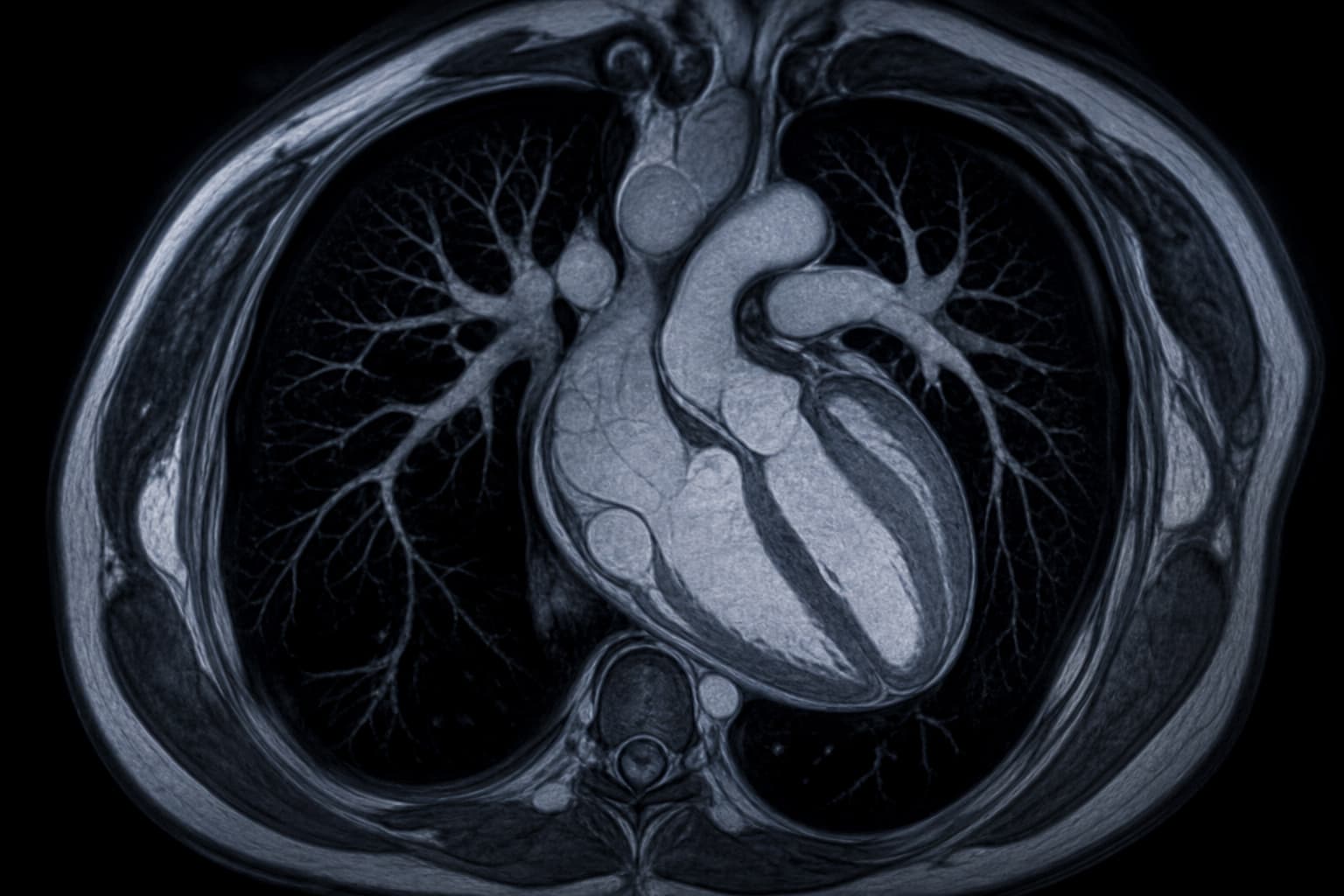
Cardiac Structure in Pediatric Patients at Ages 2 and 10 Following Repair of Congenital Diaphragmatic Hernia: A Comparative MRI Study of ECMO and Non-ECMO Cases
Clinical Scorecard: Cardiac Structure in Pediatric Patients at Ages 2 and 10 Following Repair of Congenital Diaphragmatic Hernia: A Comparative MRI Study of ECMO and Non-ECMO Cases
At a Glance
Category
Detail
Condition
Congenital Diaphragmatic Hernia (CDH)
Key Mechanisms
Developmental diaphragmatic defect leading to pulmonary hypoplasia and abnormal pulmonary vasculature.
Target Population
Pediatric patients who underwent repair of CDH.
Care Setting
Pediatric cardiology and neonatal intensive care.
Key Highlights
CDH affects approximately 1 in 2000–5000 live births.
Pulmonary arterial hypertension (PAH) is a significant determinant of outcomes in CDH.
ECMO treatment is associated with long-term cardiac complications.
MRI-derived parameters evaluated include PA/Ao ratio, RV/LV ratio, and eccentricity index (EI).
Study compares cardiac morphology and function in ECMO vs non-ECMO patients at ages 2 and 10.
Guideline-Based Recommendations
Diagnosis
MRI is utilized to assess cardiac morphology and function in CDH patients.
Management
Consider ECMO for severe respiratory and circulatory compromise in CDH.
Monitoring & Follow-up
Long-term follow-up of cardiac function is recommended for CDH patients.
Risks
ECMO is linked to increased risk of long-term cardiopulmonary complications.
Patient & Prescribing Data
Children with repaired congenital diaphragmatic hernia.
ECMO patients may exhibit abnormal cardiac morphology at follow-up.
Clinical Best Practices
Conduct regular cardiac evaluations using MRI in CDH patients.
Monitor for signs of pulmonary arterial hypertension in long-term follow-up.
by Schanas Jawhar, Greta Thater, Stefan Appelhaus, Michael Boettcher, Julia Elrod, Frank G. Zoellner, Florian Kipfmueller, Marcia Matos-Karaorman, Stefan O. Schoenberg, Meike Weis
Investigators examined Life’s Essential 8 scores and carotid ultrasonography measures across cardiovascular-kidney-metabolic stages in 1,283 young adults.
Research highlights expanding diagnostic capabilities but persistent gaps in antiviral therapy and vaccine coverage for pediatric enterovirus infections.