Treatment outcomes of antegrade versus retrograde approaches in tandem occlusion: a single-center retrospective study from Vietnam - Scorecard - MDSpire
Advertisement
Treatment outcomes of antegrade versus retrograde approaches in tandem occlusion: a single-center retrospective study from Vietnam
Clinical Scorecard: Comparative Analysis of Antegrade and Retrograde Techniques in Tandem Occlusion Management: A Retrospective Study from a Single Center in Vietnam
At a Glance
Category
Detail
Condition
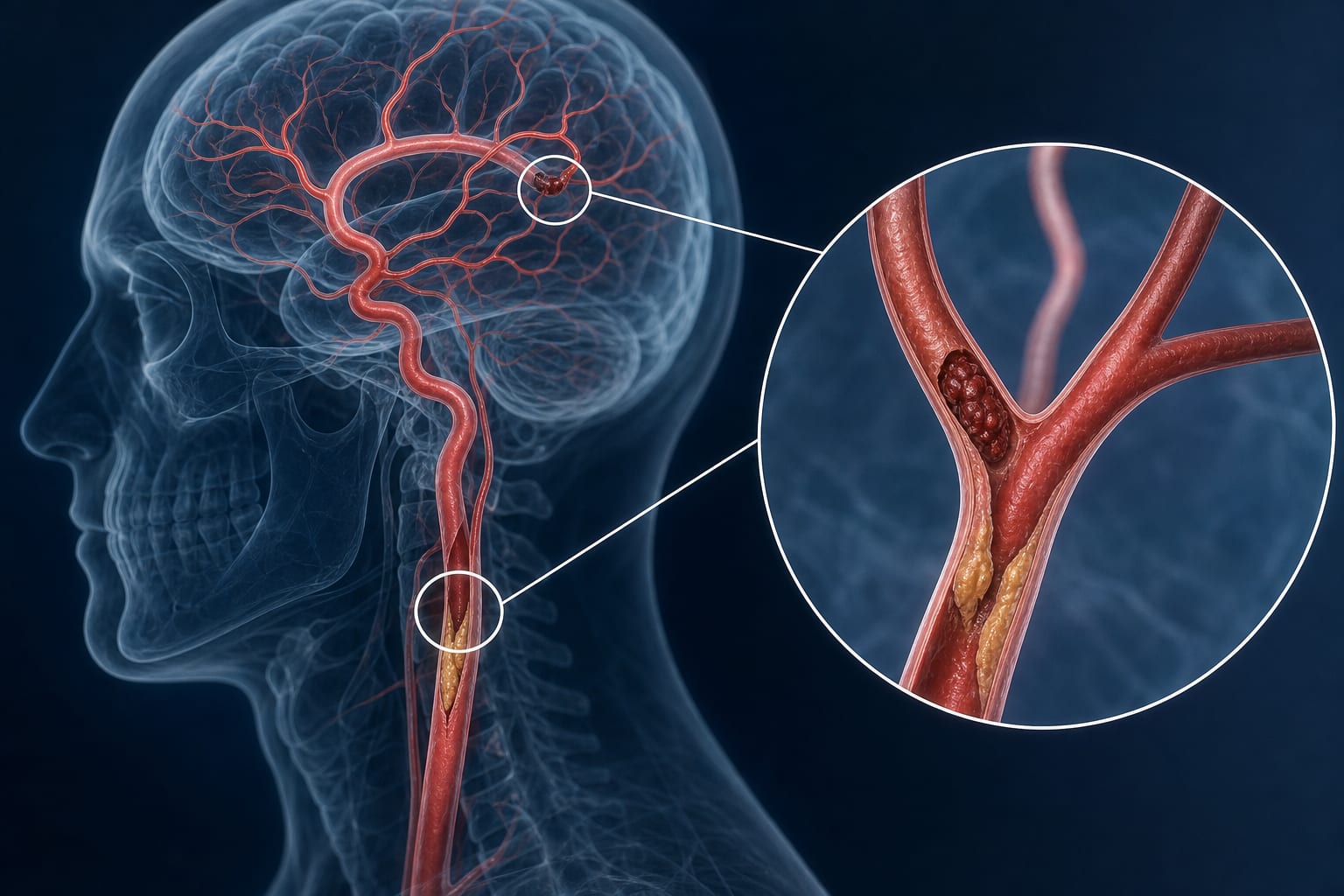
Tandem occlusion
Key Mechanisms
Concurrent extracranial and intracranial arterial occlusion
Target Population
Patients with tandem occlusion undergoing endovascular thrombectomy
Care Setting
Single-center retrospective study
Key Highlights
74 patients treated with tandem occlusion between January 2023 and June 2025
No significant differences in successful reperfusion rates between antegrade (94.6%) and retrograde (91.9%) groups
Favorable functional outcome at 90 days: 45.9% antegrade vs 40.5% retrograde
Symptomatic intracerebral hemorrhage occurred in 8.1% of patients
Mortality rate was 10.8%
Guideline-Based Recommendations
Diagnosis
Confirmation of tandem occlusion by digital subtraction angiography
Management
Endovascular thrombectomy indicated according to national stroke guidelines
Monitoring & Follow-up
Clinical outcome assessment at 90 days
Risks
Potential for symptomatic intracerebral hemorrhage and mortality
Patient & Prescribing Data
Patients aged 18 years or older with tandem occlusion
Treatment strategies include antegrade and retrograde approaches with no clear superiority established
Clinical Best Practices
Consider operator preference and patient-specific anatomical factors in procedural selection
Monitor for symptomatic intracerebral hemorrhage post-procedure
Assess functional outcomes at 90 days to evaluate treatment efficacy