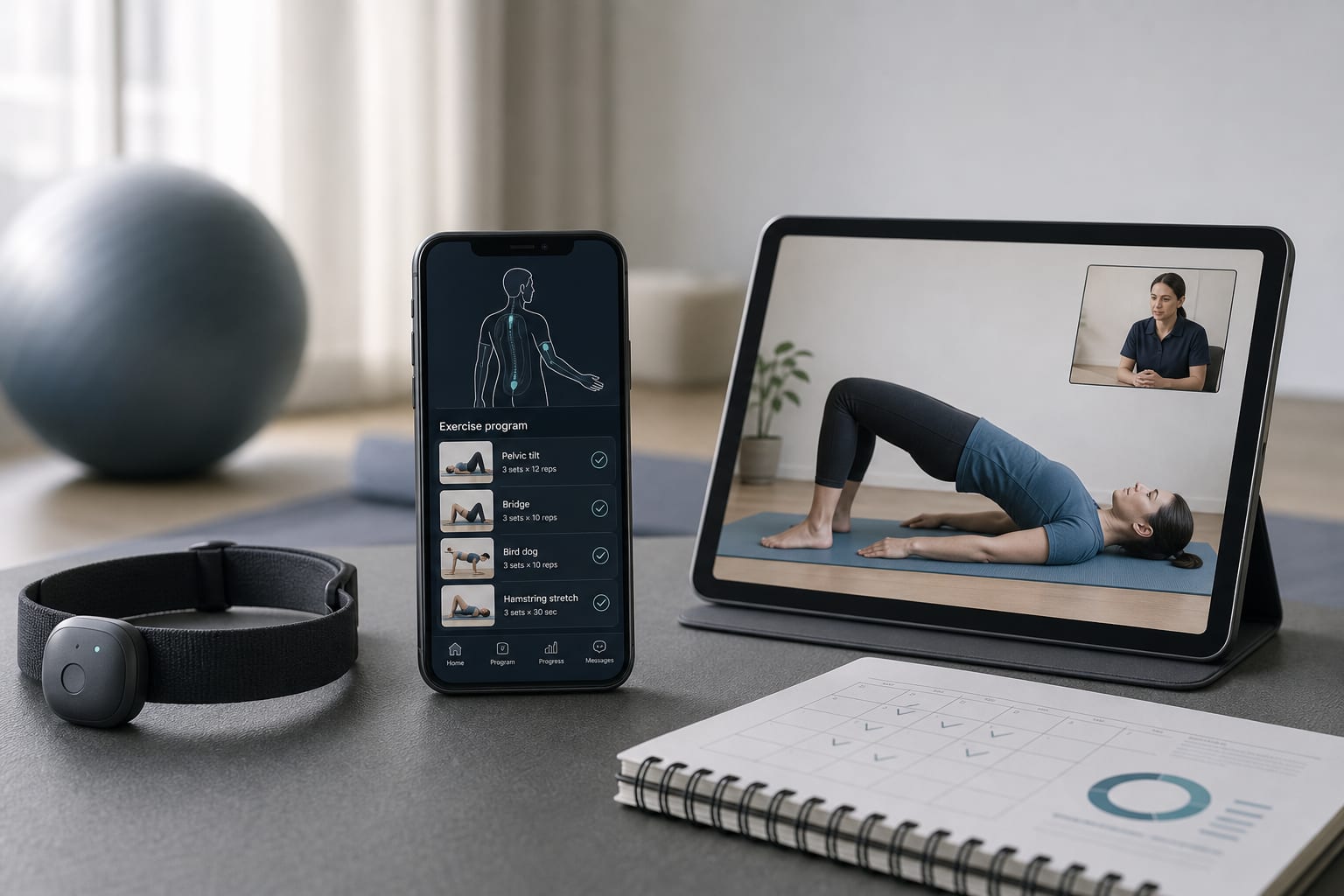
Clinical Scorecard: Mobile Health Technologies to Improve Physical Therapy Results in Adults with Chronic Non-Cancer Pain: A Scoping Review
At a Glance
Category
Detail
Condition
Key Mechanisms
Use of mHealth applications (apps, wearables, web-based content) for pain management in physical therapy settings.
Target Population
Care Setting
Key Highlights
additional_comment
Guideline-Based Recommendations
Diagnosis
Management
Monitoring & Follow-up
Track adherence to mHealth interventions and patient outcomes using specific metrics (e.g., frequency of app usage, completion rates of prescribed exercises).
Risks
Patient & Prescribing Data
Adults with chronic non-cancer pain.
mHealth tools can enhance pain management and adherence to therapy.
In a UK cohort, patients with osteoarthritis who initiated centrally acting analgesics had a higher hazard of knee or hip replacement than those who initiated SSRIs, though residual confounding by pain severity remains a key limitation.
A Geneva registry study points surgeons toward residual pain over functional limitation as the outcome that tracks patient satisfaction one year after hip or knee replacement.