The risk of neoplasms in appendiceal abscess: what emergency surgeons should know
-
By
-
Giulia Montori
-
Mauro Podda
-
Alessio Giordano
-
Giuseppa Procida
-
Vittoria Butera
-
Valentina Murzi
-
Paola Fugazzola
-
Carlo Bergamini
-
Fausto Catena
-
Luca Ansaloni
-
Adolfo Pisanu
-
Ferdinando Agresta
-
May 4, 2026
-
Clinical Scorecard: Understanding Neoplasm Risks in Appendiceal Abscess: Essential Insights for Emergency Surgeons
At a Glance
| Category | Detail |
|---|
| Condition | Appendiceal Abscess |
| Key Mechanisms | Increased risk of appendiceal neoplasms in complicated appendicitis, particularly in older adults. |
| Target Population | Adults aged 35 years or older with appendiceal abscess. |
| Care Setting | Emergency and surgical care settings. |
Key Highlights
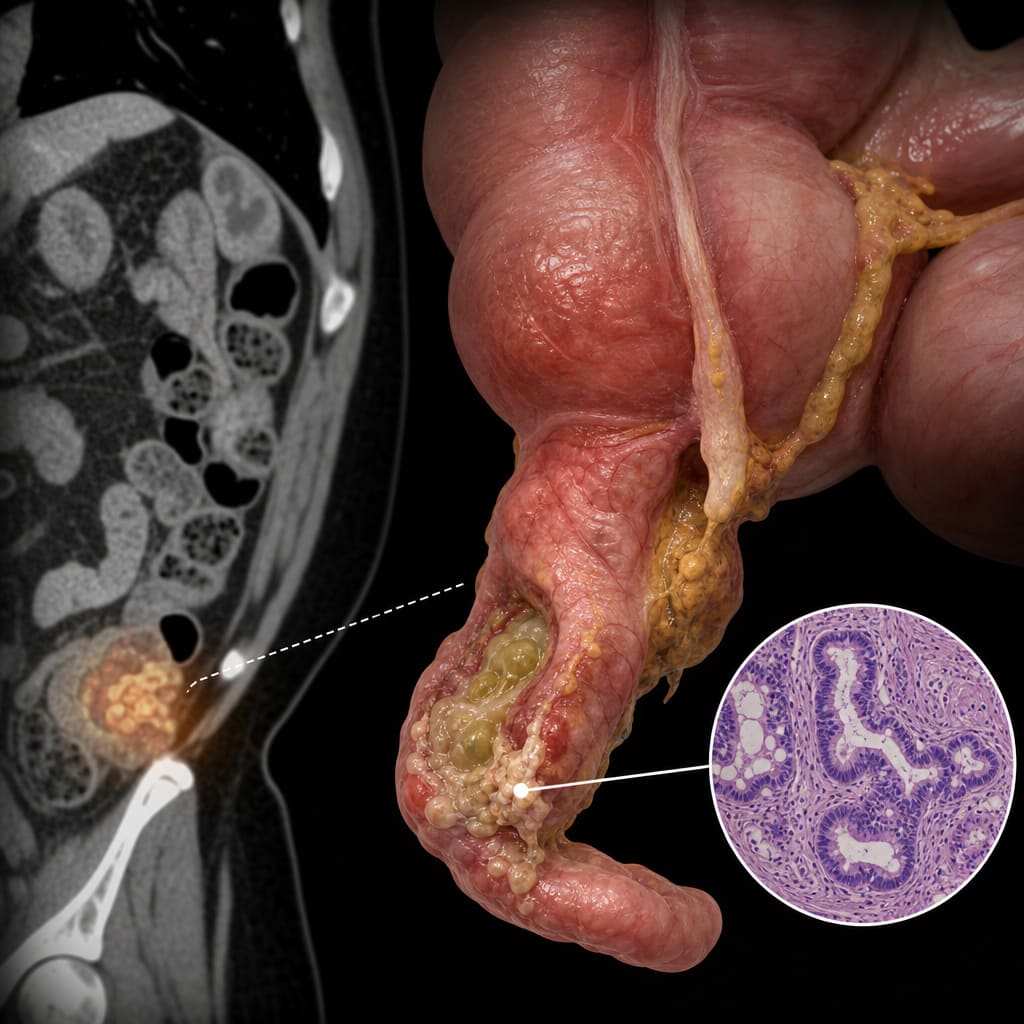
- Higher incidence of appendiceal neoplasms (10-15%) in patients with appendiceal abscess compared to uncomplicated appendicitis (<2%).
- Neuroendocrine tumors are more common in uncomplicated cases; low-grade mucinous neoplasms in abscess cases.
- Age is a significant risk factor for neoplasia, particularly above 35-40 years.
- Interval appendectomy after non-operative management provides diagnostic certainty.
- Pediatric patients show negligible risk of malignancy.
Guideline-Based Recommendations
Diagnosis
- Preoperative imaging has limited accuracy for tumor detection.
Management
- Consider interval appendectomy for adults with appendiceal abscess to ensure oncologic safety.
Monitoring & Follow-up
- Regular follow-up and imaging for patients with previous periappendiceal abscess.
Risks
- Increased risk of underlying neoplasia in older adults with appendiceal abscess.
Patient & Prescribing Data
Adults aged 35 years or older with appendiceal abscess.
High tumor detection rates in interval appendectomy suggest careful monitoring and management strategies.
Clinical Best Practices
- Utilize standardized imaging definitions for appendiceal abscess.
- Encourage participation in international registries to refine incidence estimates.
References