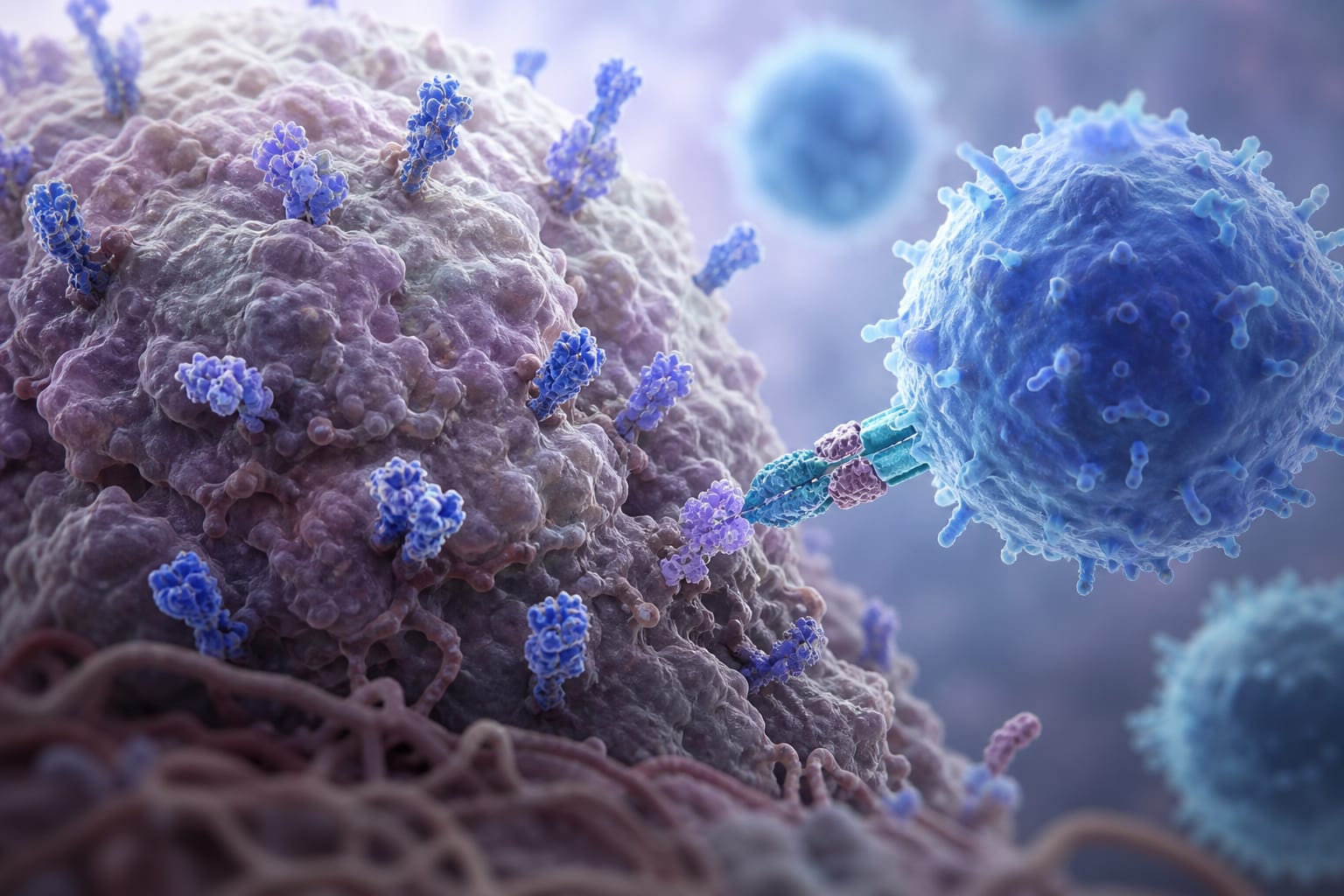
This Week's CGT News: World's First Solid Tumor CAR T Approved in China
-
June 30, 2026
-
6 min
Clinical Scorecard: This Week's CGT News: World's First Solid Tumor CAR T Approved in China
At a Glance
| Category | Detail |
|---|---|
| Condition | Advanced Gastric or Gastroesophageal Junction Adenocarcinoma |
| Key Mechanisms | Autologous CAR T-cell therapy targeting Claudin18.2 |
| Target Population | Patients with Claudin18.2-positive, HER2-negative advanced gastric or gastroesophageal junction adenocarcinoma who have failed at least two prior lines of therapy |
| Care Setting | Oncology |
Key Highlights
- First CAR T-cell therapy approved for a solid tumor in China
- Satricabtagene autoleucel (satri-cel) shows progression-free and overall survival benefits
- Median progression-free survival of 3.25 months with satri-cel versus 1.77 months with physician's choice
- Median overall survival of 7.92 months with satri-cel versus 5.49 months with physician's choice
- Approval supported by randomized phase 2 CT041-ST-01 trial
Guideline-Based Recommendations
Diagnosis
- Identify Claudin18.2-positive tumors in patients with advanced gastric or gastroesophageal junction adenocarcinoma
Management
- Consider satricabtagene autoleucel for patients who have failed at least two prior lines of therapy
Monitoring & Follow-up
- Monitor for progression-free survival and overall survival outcomes post-treatment
Risks
- Potential for cytokine release syndrome and other CAR T-cell therapy-related toxicities
Patient & Prescribing Data
Patients with advanced gastric or gastroesophageal junction adenocarcinoma
Satricabtagene autoleucel provides a new treatment option for patients with limited alternatives
Clinical Best Practices
- Utilize biomarkers for patient selection in CAR T-cell therapy
- Implement monitoring strategies for early detection of adverse effects
Related Resources & Content
Based on findings from:
This Week's CGT News: World's First Solid Tumor CAR T Approved in China
The Medicine Maker, 2026.
https://themedicinemaker.com/issues/2026/articles/june/this-weeks-cgt-news-worlds-first-solid-tumor-car-t-approved-in-china/
This content is an AI-generated, fully rewritten summary based on a published scholarly article. It does not reproduce the original text and is not a substitute for the original publication. Readers are encouraged to consult the source for full context, data, and methodology.