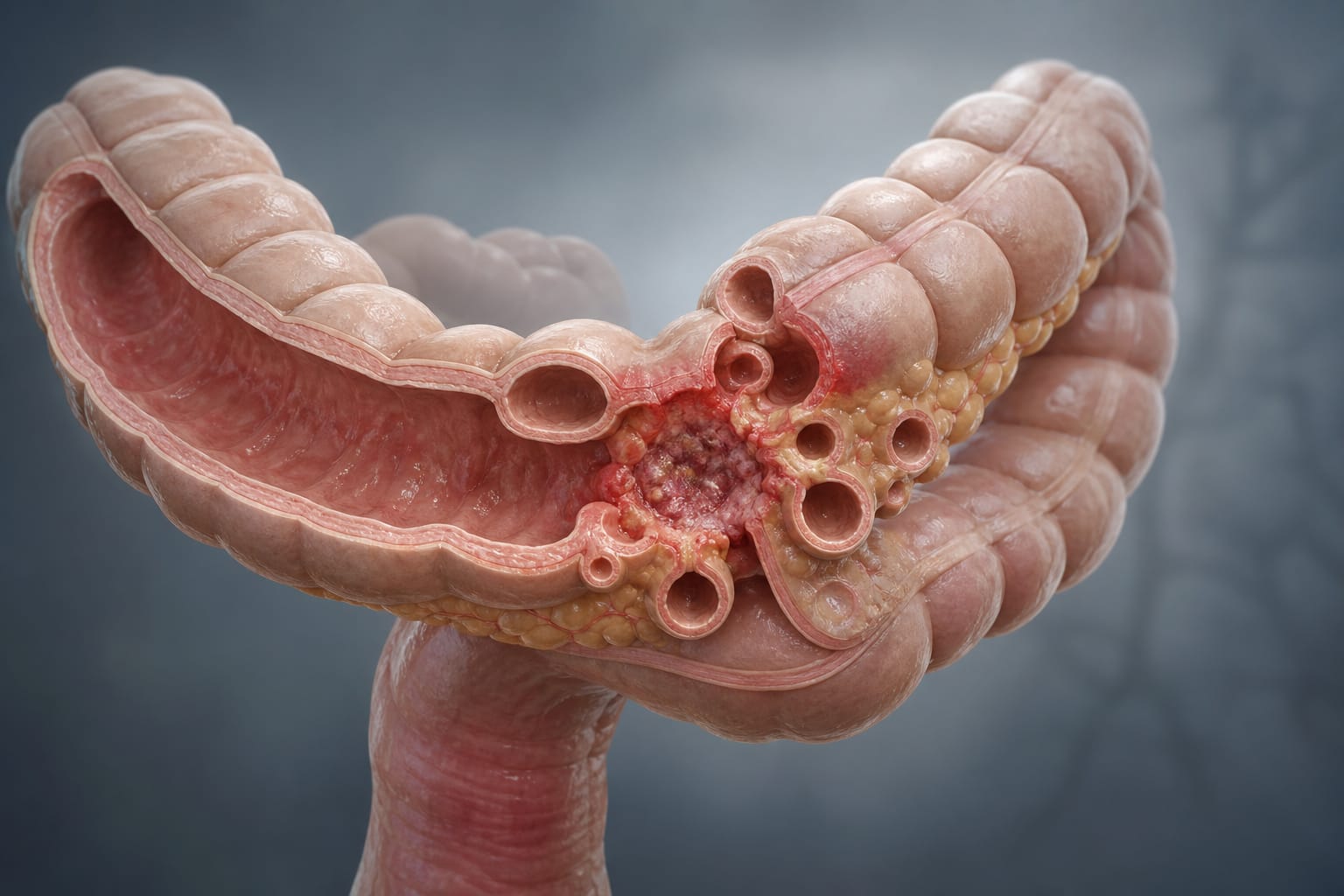
Dynamics of Sealing Length and Type 2 Endoleak in Proximal Sealing Following Endovascular Aneurysm Repair
-
By
-
Giulio Accarino
-
Raffaele Pulli
-
Felice Pecoraro
-
Domenico Angiletta
-
Nabile Belouafa
-
Salvatore Bruno
-
Stefano Attolini
-
Francesca Noce
-
Mostafa El Moumni
-
Jean-Paul P. M. de Vries
-
Umberto Marcello Bracale
-
July 6, 2026
Clinical Scorecard: Dynamics of Sealing Length and Type 2 Endoleak in Proximal Sealing Following Endovascular Aneurysm Repair
At a Glance
| Category | Detail |
|---|
| Condition | Infrarenal Abdominal Aortic Aneurysm (AAA) |
| Key Mechanisms | Proximal sealing changes and endoleak dynamics post-EVAR |
| Target Population | Patients undergoing elective or urgent EVAR for fusiform infrarenal AAA |
| Care Setting | Multicenter retrospective study |
Key Highlights
- EVAR is the predominant treatment for infrarenal AAA with lower peri-operative morbidity than open repair.
- Type 2 endoleak (EL2) is the most frequent endoleak after EVAR, with varying clinical significance.
- Proximal sealing length (SL) changes post-EVAR are associated with later EL1A occurrences.
- Structured follow-up is emphasized to detect endoleaks and seal-related complications.
- Loss of proximal sealing can increase rupture risk.
Guideline-Based Recommendations
Diagnosis
- Routine computed tomography angiography (CTA) within 1 month and at 1 year post-EVAR.
Management
- Surveillance protocols should include clinical assessment and imaging at least annually.
Monitoring & Follow-up
- Monitor for endoleaks, sac enlargement, migration, and seal-related complications.
Risks
- Loss of proximal sealing leading to type 1A endoleak increases rupture risk.
Patient & Prescribing Data
Consecutive patients with fusiform infrarenal AAA undergoing EVAR.
Inclusion criteria focused on degenerative pathology; exclusion of non-degenerative conditions.
Clinical Best Practices
- Follow a standardized protocol for assessing CTAs based on defined criteria.
- Evaluate sealing metrics longitudinally rather than relying on a single measurement.
Related Resources & Content