Conexiant’s news site is now MDSpire News. Learn more
Advertisement
Significant Rise in Diabetic Ketoacidosis Incidence Linked to Slight Increase in HbA1c Levels at Type 1 Diabetes Diagnosis Among Swedish Pediatric Patients
Clinical Scorecard: Significant Rise in Diabetic Ketoacidosis Incidence Linked to Slight Increase in HbA1c Levels at Type 1 Diabetes Diagnosis Among Swedish Pediatric Patients
At a Glance
Category
Detail
Condition
Diabetic Ketoacidosis (DKA) in Type 1 Diabetes
Key Mechanisms
Metabolic acidosis at diagnosis, primarily due to DKA.
Target Population
Children diagnosed with Type 1 Diabetes in Sweden.
Care Setting
Pediatric diabetes care and management.
Key Highlights
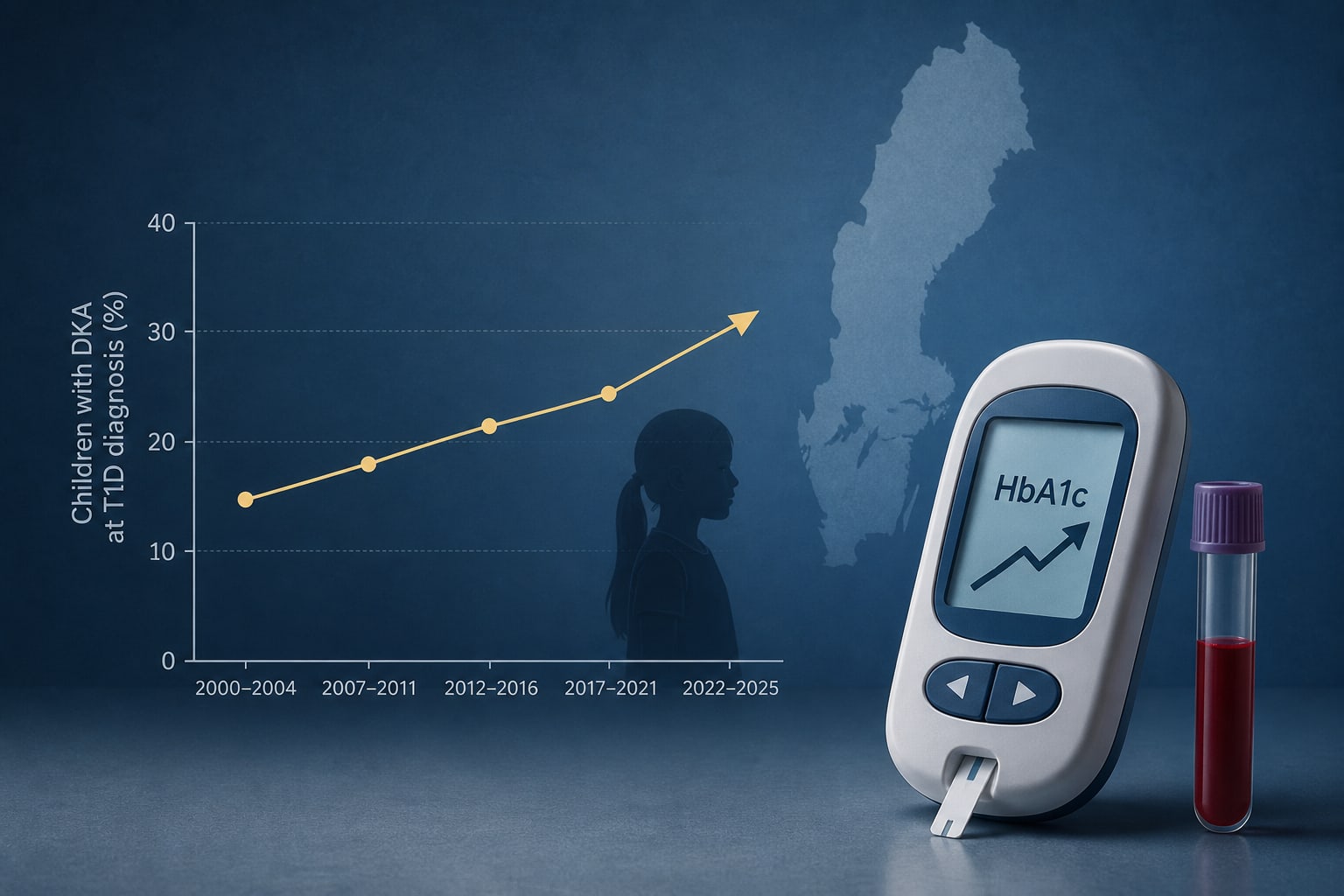
30% of children diagnosed with T1D presented with DKA in 2025.
Severe DKA (pH < 7.1) increased from 8.4%-10% in 2021-2025.
Mean HbA1c at diagnosis increased from 92-97 mmol/mol (2007-2011) to 96-98 mmol/mol (2021-2025).
Incidence of childhood T1D doubled from 1978 to 2019.
Higher DKA presentation may indicate a more aggressive disease course.
Guideline-Based Recommendations
Diagnosis
Measure plasma glucose immediately in any child exhibiting symptoms suggestive of diabetes.
Management
Monitoring & Follow-up
Risks
HCP-delayed diagnosis may increase DKA risk.
Patient & Prescribing Data
Children diagnosed with Type 1 Diabetes.
Further investigation of modifiable risk factors associated with disease progression is warranted.
Clinical Best Practices
Comprehensive evaluation of data including age distribution and HbA1c relationship with age.