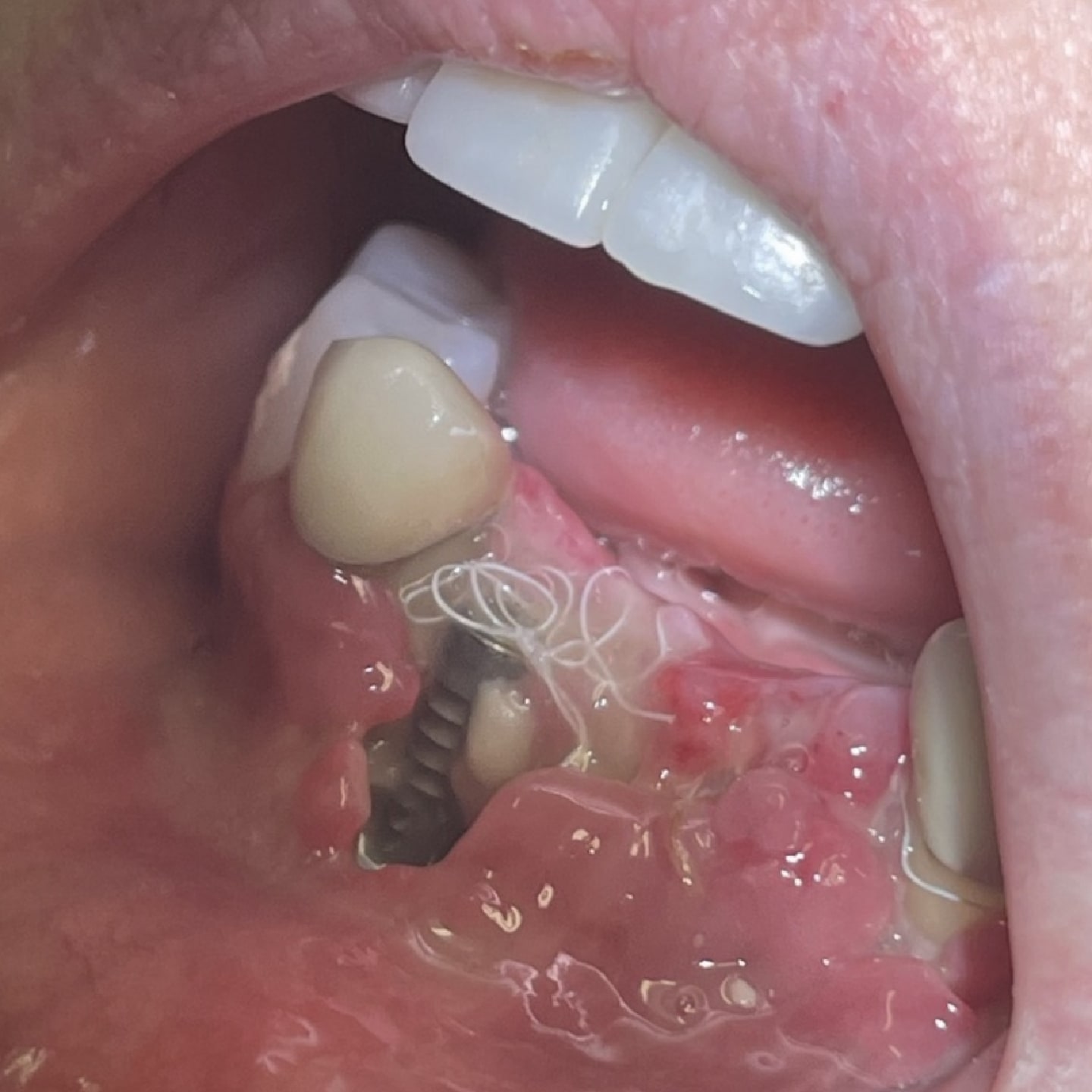
Acellular Dermal Matrix as a Treatment Option for Guided Bone Regeneration
Clinical application demonstrates improved soft tissue support and surgical predictability
-
By
-
Laurence Jay Levine
-
April 1, 2026
-
Clinical Scorecard: Acellular Dermal Matrix as a Treatment Option for Guided Bone Regeneration
At a Glance
| Category | Detail |
|---|
| Condition | Gingival recession and soft tissue deficiencies around dental implants |
| Key Mechanisms | Acellular dermal matrix (ADM) acts as a barrier membrane and scaffold for tissue regeneration |
| Target Population | Patients with inadequate gingival tissue or those opposed to palatal grafting |
| Care Setting | Dental clinics performing periodontal and implant surgeries |
Key Highlights
- ADM provides an alternative to traditional soft tissue grafts, avoiding a second surgical site.
- High success rates reported in root coverage and gingival health with ADM.
- ADM is beneficial for patients needing multiple grafts or those with thin biotype tissue.
- Studies show comparable or superior outcomes of ADM to subepithelial connective tissue grafts.
- ADM can enhance peri-implant tissues and support guided bone regeneration.
Guideline-Based Recommendations
Diagnosis
- Assess gingival recession and soft tissue deficiencies through clinical examination and radiographs.
Management
- Consider ADM for guided bone regeneration and soft tissue augmentation in appropriate cases.
Monitoring & Follow-up
- Regular follow-up to evaluate tissue integration and health post-surgery.
Risks
- Potential for inadequate blood supply affecting graft success; ADM not suitable for vertical augmentation.
Patient & Prescribing Data
Adults with periodontal issues or implant-related soft tissue deficiencies.
ADM is effective in achieving desired tissue outcomes without the need for palatal donor sites.
Clinical Best Practices
- Utilize ADM in cases where traditional grafting is not feasible or desired by the patient.
- Ensure rigorous donor screening and processing of ADM to minimize infection risks.
- Combine ADM with guided bone regeneration techniques for optimal results.
References