Inhibition of MST3, a STE20-type kinase, alleviates metabolic dysfunction-related steatohepatitis in mice without influencing the development of hepatocellular carcinoma - Scorecard - MDSpire

Inhibition of MST3, a STE20-type kinase, alleviates metabolic dysfunction-related steatohepatitis in mice without influencing the development of hepatocellular carcinoma

  • By

  • Jingjing Zhang

  • Xiangdong Gongye

  • Lohitesh Kovooru

  • Emma Andersson

  • Bernice Asiedu

  • Manoj Amrutkar

  • Nadia Gul

  • Caitlyn Myers

  • Sheri Booten

  • Dan Emil Lind

  • Ying Xia

  • Antonio Molinaro

  • Anetta Härtlova

  • Per Lindahl

  • Sue Murray

  • Margit Mahlapuu

  • March 24, 2026

  • 0 min

Share

Clinical Scorecard: Inhibition of MST3, a STE20-type kinase, alleviates metabolic dysfunction-related steatohepatitis in mice without influencing the development of hepatocellular carcinoma

At a Glance

CategoryDetail
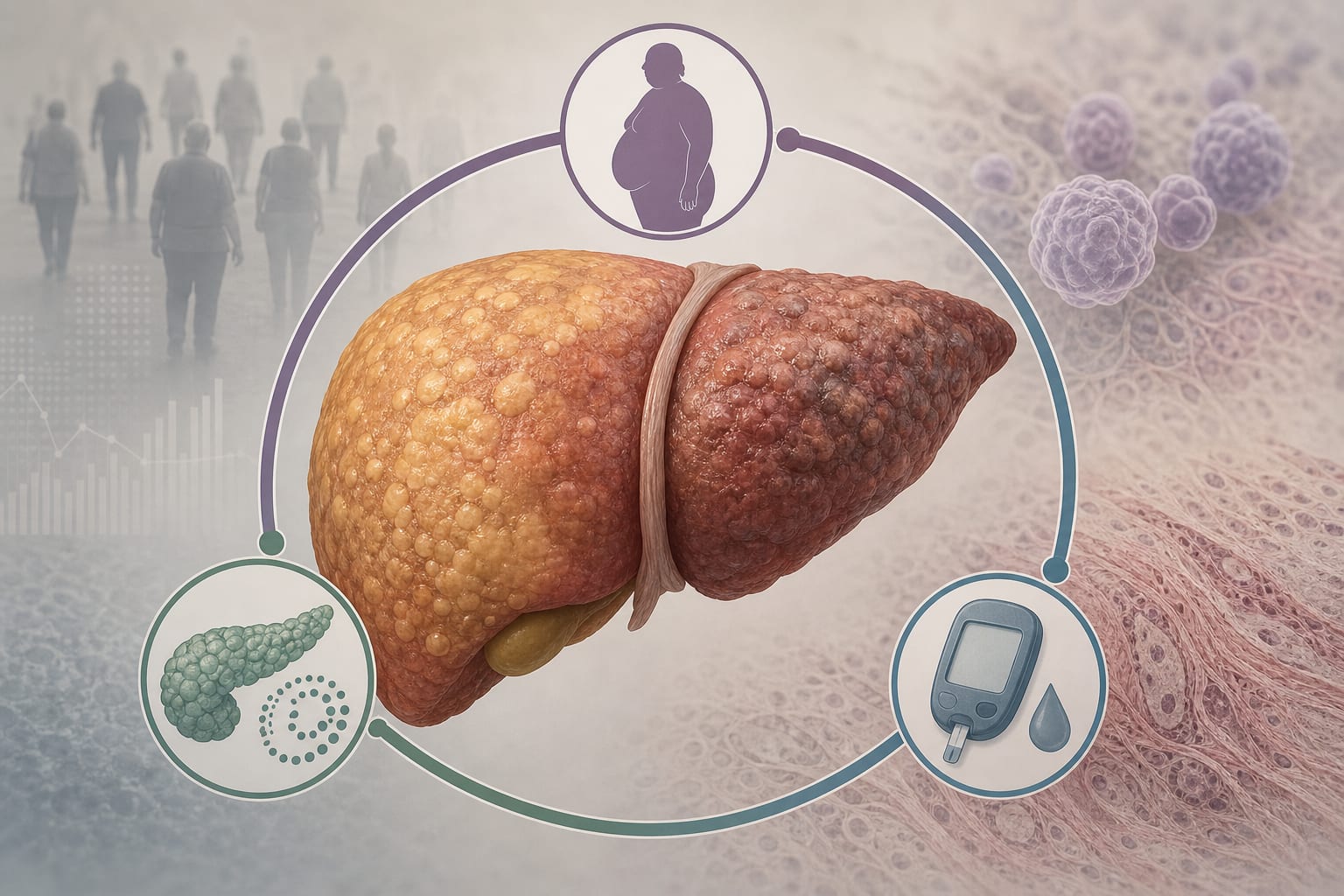
ConditionMetabolic dysfunction-associated steatotic liver disease (MASLD) and metabolic dysfunction-associated steatohepatitis (MASH)
Key MechanismsInhibition of MST3 and related kinases (MST4, STK25) reduces hepatic steatosis, inflammation, and cell injury.
Target PopulationPatients with MASLD and MASH, particularly those at risk for progression to hepatocellular carcinoma (HCC).
Care SettingResearch settings involving animal models.

Key Highlights

  • MST3, MST4, and STK25 are key drivers of hepatocellular steatotoxicity.
  • Inhibition of MST3 improves metabolic profiles and reduces MASH severity.
  • No impact on HCC tumor burden was observed with MST3 inhibition.

Guideline-Based Recommendations

Diagnosis

  • Assess liver steatosis through imaging and liver biopsy for histological evaluation.

Management

  • Consider targeting MST3 and related kinases for therapeutic intervention in MASH.

Monitoring & Follow-up

  • Regular monitoring of liver function tests and metabolic parameters in MASLD patients.

Risks

  • Progression from MASLD to MASH and potential development of HCC.

Patient & Prescribing Data

Individuals with obesity-related liver disorders, particularly those with MASH.

MST3-targeting antisense oligonucleotide (ASO) shows promise in reducing MASH severity.

Clinical Best Practices

  • Implement lifestyle modifications to manage MASLD.
  • Monitor for signs of liver inflammation and fibrosis in at-risk populations.

References

Original Source(s)

Related Content