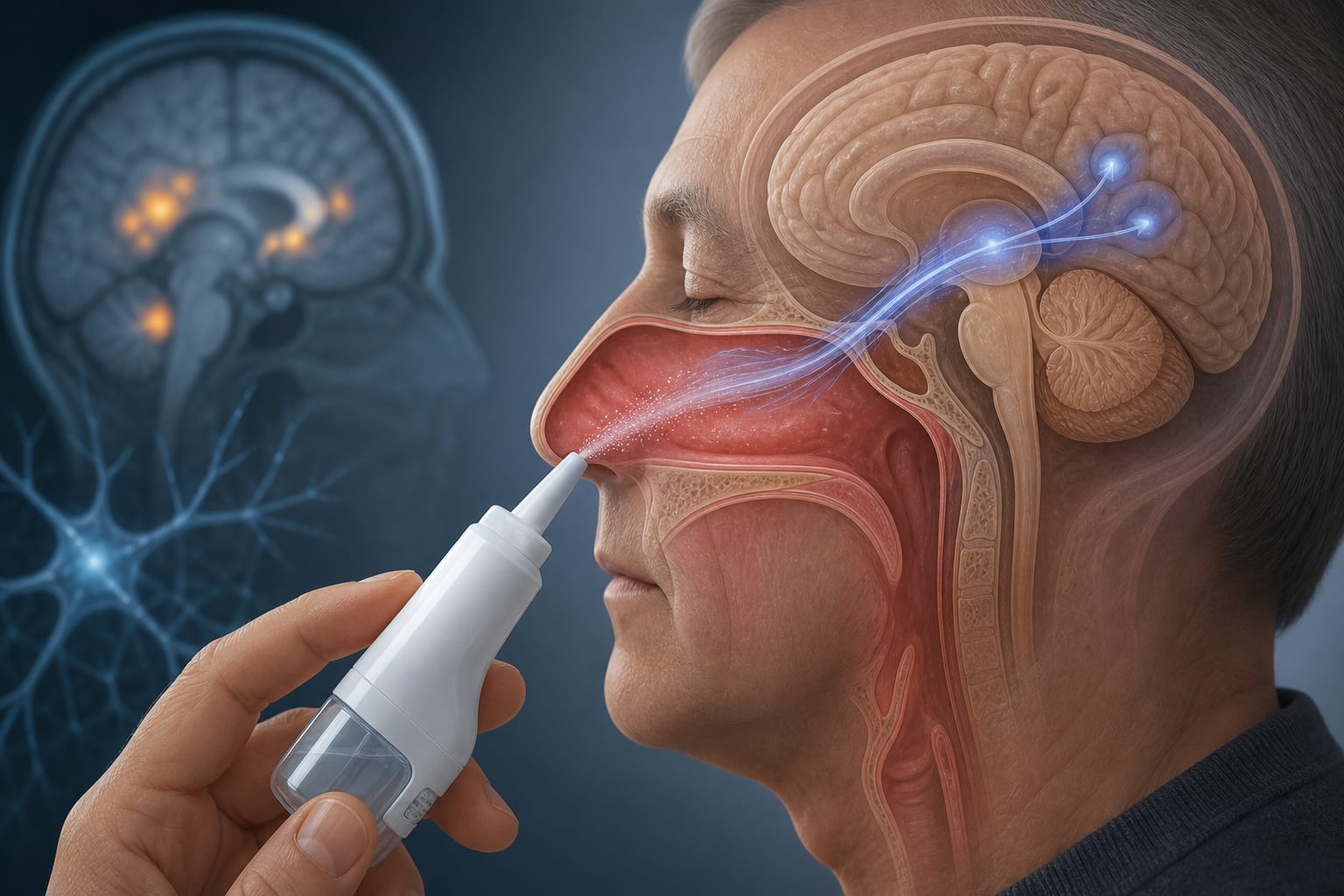
Evaluating the Safety and Tolerability of Intranasal Insulin in Patients with Parkinson's Disease
By
Julia C. Johnson
Bhavani Kashyap
Sally K. Gustafson
Meghan O'Brien
William Howard Frey
Aleta L. Svitak
Leah R. Hanson
September 9, 2026
Clinical Scorecard: Evaluating the Safety and Tolerability of Intranasal Insulin in Patients with Parkinson's Disease
At a Glance
Category Detail
Condition Parkinson's Disease Key Mechanisms Cerebral glucose hypometabolism and central insulin resistance Target Population Patients with Parkinson's Disease aged 41–89 years Care Setting Phase II clinical trial
Key Highlights
Intranasal insulin (INI) shows an acceptable safety profile in Parkinson's Disease. No significant hypoglycemia or weight changes observed during the study. Common adverse events included mild nasal irritation and epistaxis. Secondary cognitive measures showed improvement in the 40 IU INI group, but not significantly greater than placebo. Guideline-Based Recommendations
Diagnosis
Participants required MoCA scores ≥16 and stable anti-PD medication doses. Management
Monitor for hypoglycemia, weight changes, and adverse events during treatment. Monitoring & Follow-up
Evaluate safety and tolerability through regular assessments. Risks
Potential for mild adverse events such as nasal irritation and epistaxis. Patient & Prescribing Data
30 participants with Parkinson's Disease
INI administered at doses of 20, 40, or 80 IU over 21 days.
Clinical Best Practices
Related Resources & Content