Survival and hematologic toxicity after whole-brain radiotherapy, photon craniospinal irradiation, and proton craniospinal irradiation for solid-tumor leptomeningeal disease: a systematic review - Scorecard - MDSpire
Conexiant’s news site is now MDSpire News. Learn more
Advertisement
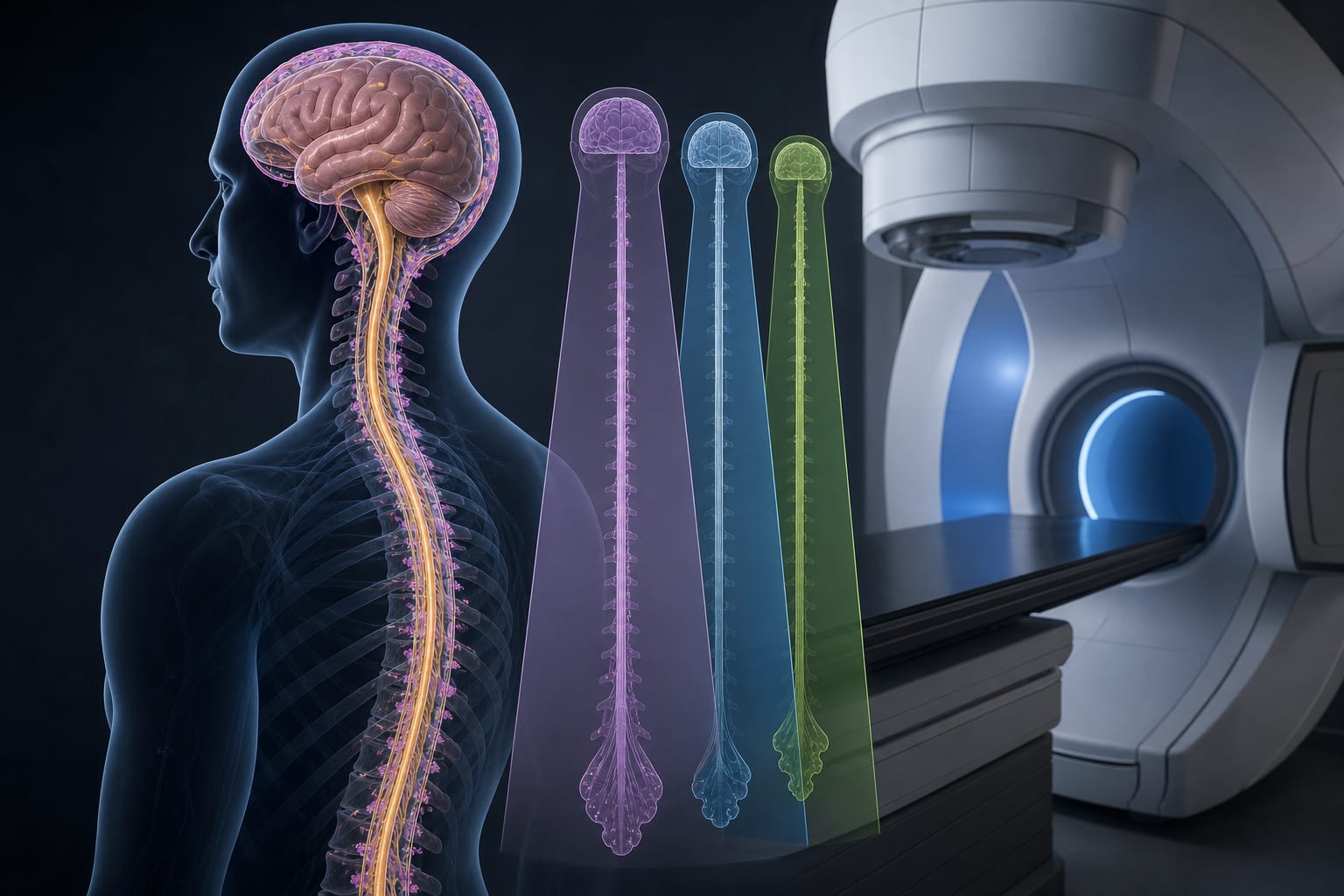
Outcomes and hematologic side effects following whole-brain radiotherapy, photon craniospinal irradiation, and proton craniospinal irradiation in patients with solid-tumor leptomeningeal disease: a systematic analysis
Clinical Scorecard: Outcomes and hematologic side effects following whole-brain radiotherapy, photon craniospinal irradiation, and proton craniospinal irradiation in patients with solid-tumor leptomeningeal disease: a systematic analysis
At a Glance
Category
Detail
Condition
Leptomeningeal disease (LMD)
Key Mechanisms
Malignant-cell spread throughout the leptomeninges and cerebrospinal fluid pathways.
Target Population
Patients with solid tumors, particularly breast cancer, non-small cell lung cancer, melanoma, and gastrointestinal malignancies.
Care Setting
Multidisciplinary evaluation for complex management of LMD.
Key Highlights
LMD is increasingly recognized as a complication of advanced solid tumors.
Management may involve CNS-active systemic agents, intrathecal therapy, and various forms of radiotherapy.
Proton craniospinal irradiation shows promise in reducing treatment-related toxicity compared to photon CSI.
Clinical outcomes vary significantly based on tumor biology and treatment modalities.
Hematologic toxicity is a notable concern with radiotherapy.
Guideline-Based Recommendations
Diagnosis
Diagnosis of LMD should consider clinical manifestations and CSF cytology.
Management
Treatment options include CNS-active systemic agents, intrathecal therapy, and various radiotherapy modalities.
Monitoring & Follow-up
Monitor for treatment-related toxicity and disease progression.
Risks
Risks include myelosuppression, gastrointestinal toxicity, and fatigue.
Patient & Prescribing Data
Adults with solid tumors and leptomeningeal disease.
Therapeutic selection is informed by patient condition, CSF cytology, and goals of care.
Clinical Best Practices
Conduct multidisciplinary evaluations for complex cases of LMD.
Consider proton therapy for selected patients to minimize toxicity.
Tailor treatment based on tumor histology and extent of systemic disease.
he U.S. Food and Drug Administration (FDA) has approved daraxonrasib, an oral multi-selective RAS(ON) inhibitor, for adults with metastatic pancreatic adenocarcinoma who have received at least one prior systemic therapy or are not candidates for multiagent systemic therapy.