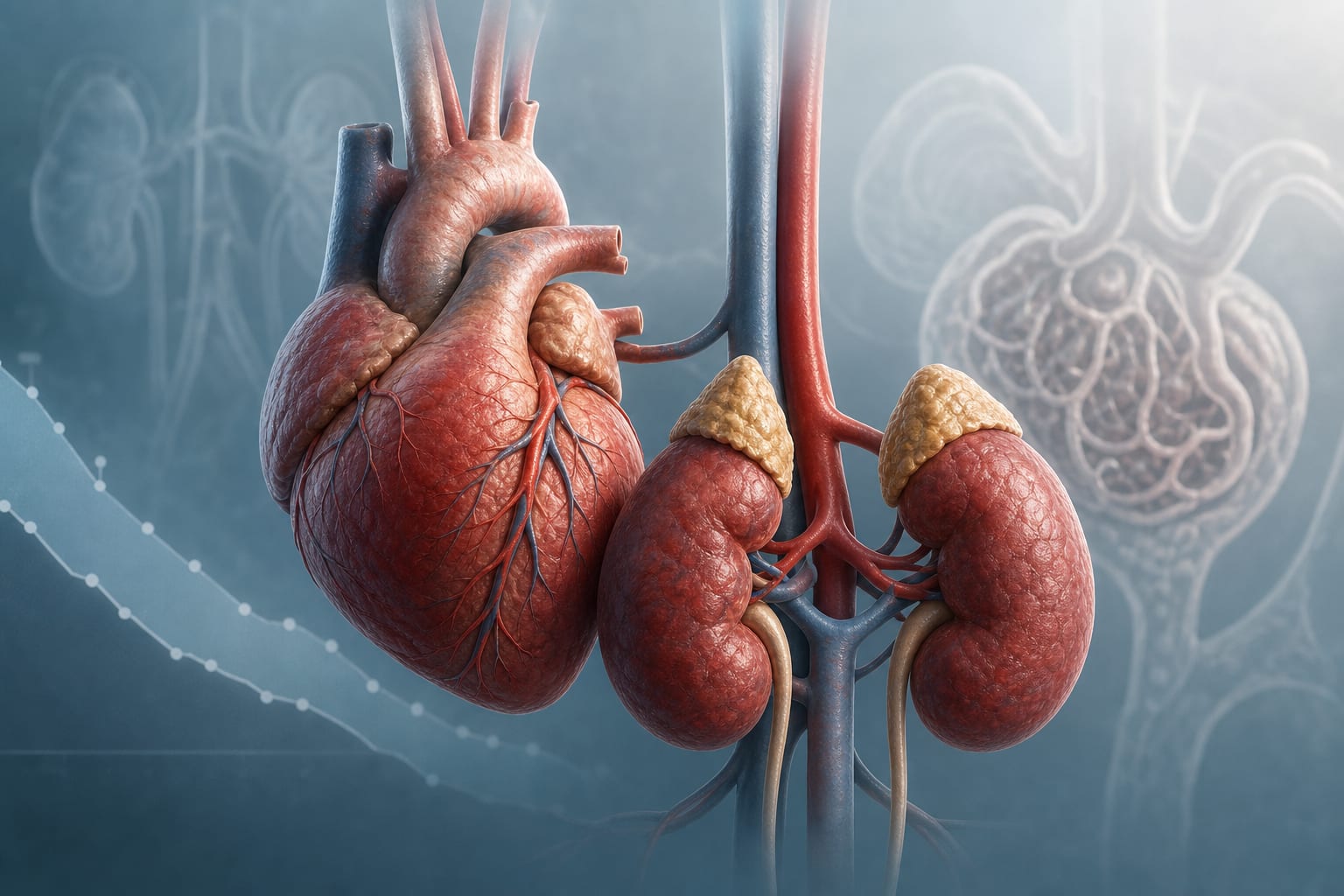
Residual risk in cardiovascular and renal diseases and the potential role of aldosterone synthase inhibitors
-
By
-
Kausik Umanath
-
Jamie P. Dwyer
-
Robert J. Mentz
-
May 29, 2026
-
Clinical Scorecard: Residual Risk in Cardiac and Renal Disorders: Exploring the Role of Aldosterone Synthase Inhibitors
At a Glance
| Category | Detail |
|---|
| Condition | Cardiorenal disease |
| Key Mechanisms | Dysregulation of aldosterone biosynthesis and activation of the renin-angiotensin-aldosterone system (RAAS) |
| Target Population | Patients with cardiovascular and kidney disease, including chronic kidney disease and heart failure |
| Care Setting | Clinical settings managing cardiovascular and renal health |
Key Highlights
- Residual risk for adverse cardiorenal outcomes remains substantial despite RAAS blockade.
- Aldosterone synthase inhibitors (ASi) may reduce aldosterone production and residual risk.
- Preliminary evidence shows ASi efficacy in improving blood pressure and decreasing albuminuria.
- Ongoing phase III trials are investigating ASi agents as monotherapy or in combination with SGLT2 inhibitors.
- ASi agents may represent a new addition to cardiorenal therapies.
Guideline-Based Recommendations
Diagnosis
- Assess cardiovascular and kidney function in patients with risk factors.
Management
- Consider RAAS blockade as a standard treatment for cardiorenal disease.
Monitoring & Follow-up
- Monitor blood pressure and renal function in patients receiving ASi.
Risks
- Be aware of potential side effects from off-target activity of ASi.
Patient & Prescribing Data
Patients with chronic kidney disease and cardiovascular risk factors.
ASi may improve outcomes in patients with residual risk despite standard therapies.
Clinical Best Practices
- Incorporate ASi into treatment plans for patients with persistent cardiorenal risk.
- Evaluate the role of SGLT2 inhibitors in conjunction with ASi therapy.
Related Resources & Content