Factors Influencing Graft Patency Following Coronary Artery Bypass Grafting
-
By
-
Hao-Hui Ti
-
Sheng-Bo Gao
-
Yu-Ting Wu
-
Sheng-Jun Dong
-
August 21, 2026
Clinical Scorecard: Factors Influencing Graft Patency Following Coronary Artery Bypass Grafting
At a Glance
| Category | Detail |
|---|
| Condition | Coronary Artery Disease |
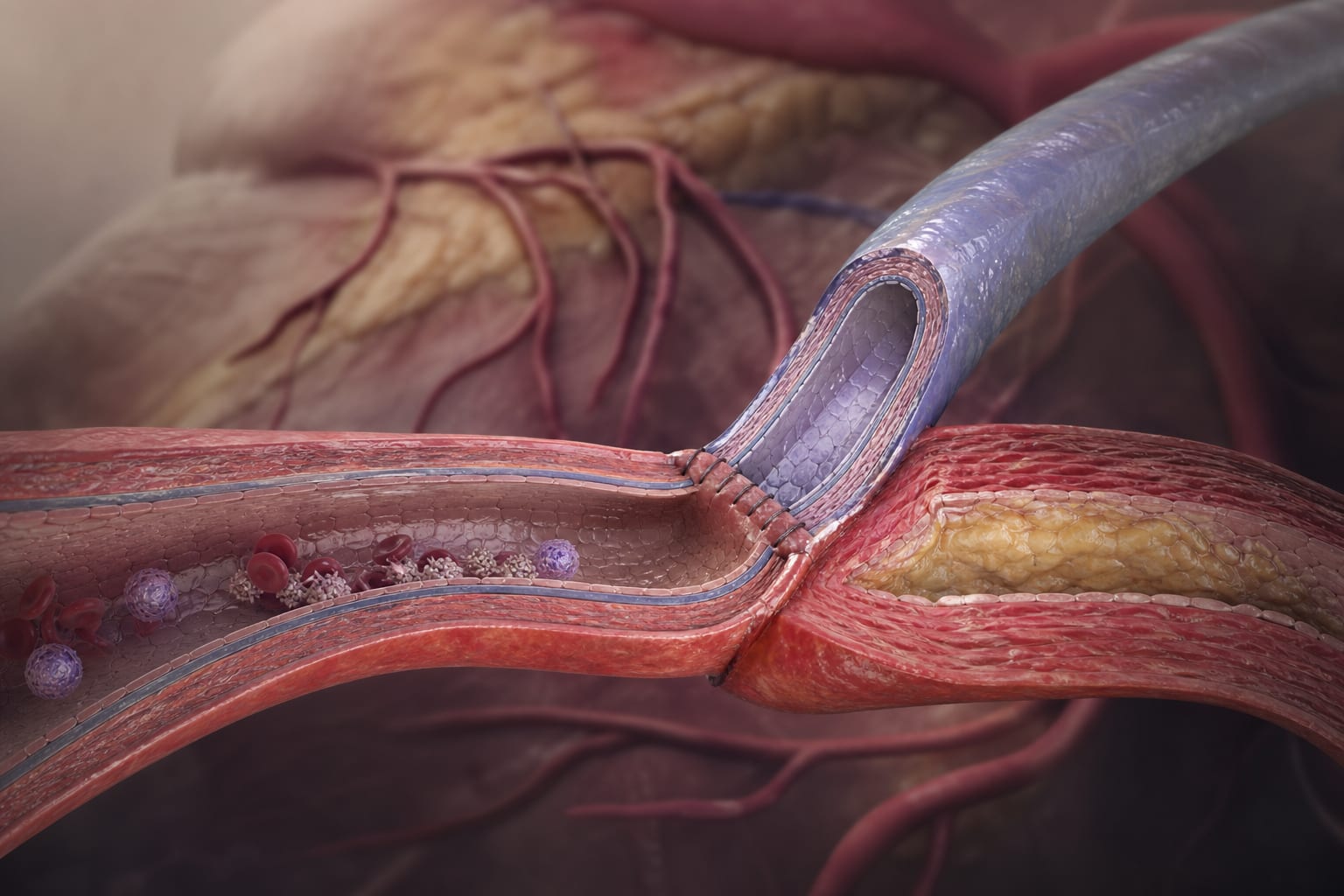
| Key Mechanisms | Endothelial nitric oxide synthase dysfunction, oxidative stress, and reactive oxygen species signaling impact graft patency. |
| Target Population | Patients undergoing coronary artery bypass grafting (CABG) for multivessel coronary artery disease. |
| Care Setting | Cardiovascular surgical settings |
Key Highlights
- Graft patency is influenced by anatomical, technical, biological, and patient-level factors.
- Internal thoracic artery (ITA) has superior long-term patency compared to saphenous vein grafts (SVGs).
- Endothelial nitric oxide (eNO) plays a critical role in preventing thrombosis and supporting vascular health.
- Harvesting techniques impact graft outcomes, with no-touch (NT) methods preserving endothelial integrity.
- Arterial grafts are more resilient to systemic pressure and shear stress than venous grafts.
Guideline-Based Recommendations
Diagnosis
- Evaluate graft patency using imaging modalities post-CABG.
Management
- Select conduits based on anatomical considerations and patient comorbidities.
Monitoring & Follow-up
- Regular follow-up for graft patency and management of risk factors.
Risks
- Thrombosis, intimal hyperplasia, and atherosclerosis are risks associated with graft failure.
Patient & Prescribing Data
Patients with multivessel coronary artery disease undergoing CABG.
Calcium-channel blockers may improve outcomes for radial artery grafts, but treatment should be individualized.
Clinical Best Practices
- Prioritize the use of arterial grafts, particularly the internal thoracic artery, for better long-term outcomes.
- Utilize no-touch harvesting techniques to maintain endothelial integrity.
- Consider patient-specific factors when selecting graft conduits.
Related Resources & Content