Clinical and prognostic differences in mild to moderate AECOPD with and without emphysema: a 3-year multicenter prospective study - Scorecard - MDSpire
Advertisement
Clinical and prognostic differences in mild to moderate AECOPD with and without emphysema: a 3-year multicenter prospective study
Clinical Scorecard: Prognostic and Clinical Variations in Mild to Moderate AECOPD Patients With and Without Emphysema: Findings from a Three-Year Multicenter Prospective Investigation
At a Glance
Category
Detail
Condition
Mild to Moderate Acute Exacerbation of Chronic Obstructive Pulmonary Disease (AECOPD)
Key Mechanisms
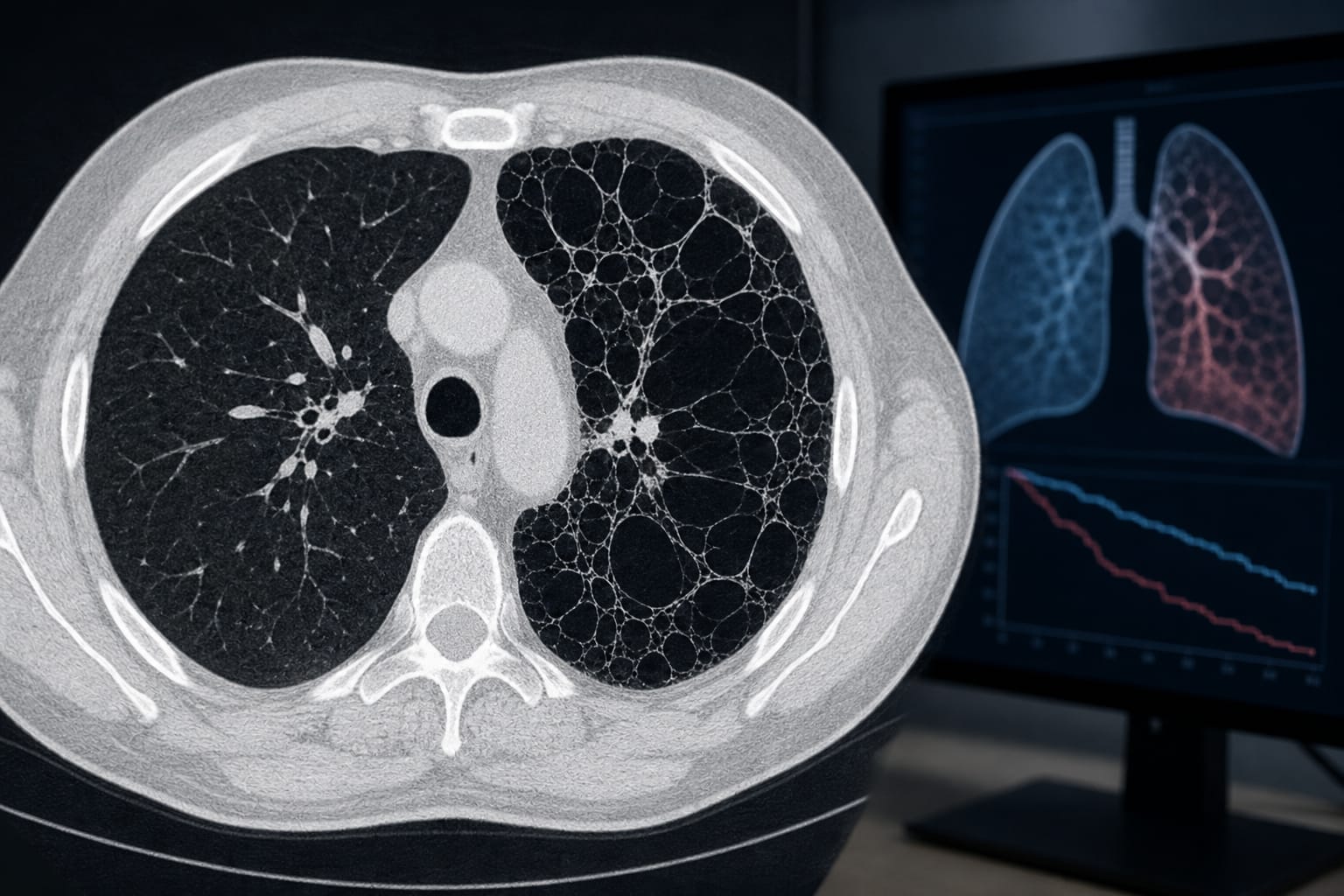
Emphysema phenotype identified via computed tomography influences clinical outcomes.
Target Population
Patients hospitalized with mild-to-moderate AECOPD.
Care Setting
Multicenter tertiary care hospitals.
Key Highlights
Emphysema phenotype linked to more severe acute disease but lower 3-year all-cause mortality.
Higher rates of respiratory failure and inflammatory markers in emphysema group.
Non-emphysema group showed greater cardiovascular comorbidities impacting mortality.
Study suggests distinct management strategies based on emphysema presence.
First large-scale study focusing on mild-to-moderate AECOPD patients.
Guideline-Based Recommendations
Diagnosis
Patients should undergo chest CT within 24 hours of admission for accurate phenotyping.
Management
Consider comorbidity-focused care for non-emphysema patients and optimized respiratory support for emphysema patients.
Monitoring & Follow-up
Monitor for respiratory failure and inflammatory markers in patients with emphysema.
Risks
Increased risk of cardiovascular comorbidities in non-emphysema patients.
Patient & Prescribing Data
Patients hospitalized for mild-to-moderate AECOPD.
Emphysema patients may require more non-invasive ventilation and longer hospital stays.
Clinical Best Practices
Utilize CT-based phenotyping for early risk stratification in AECOPD.
Implement personalized management strategies based on emphysema presence.