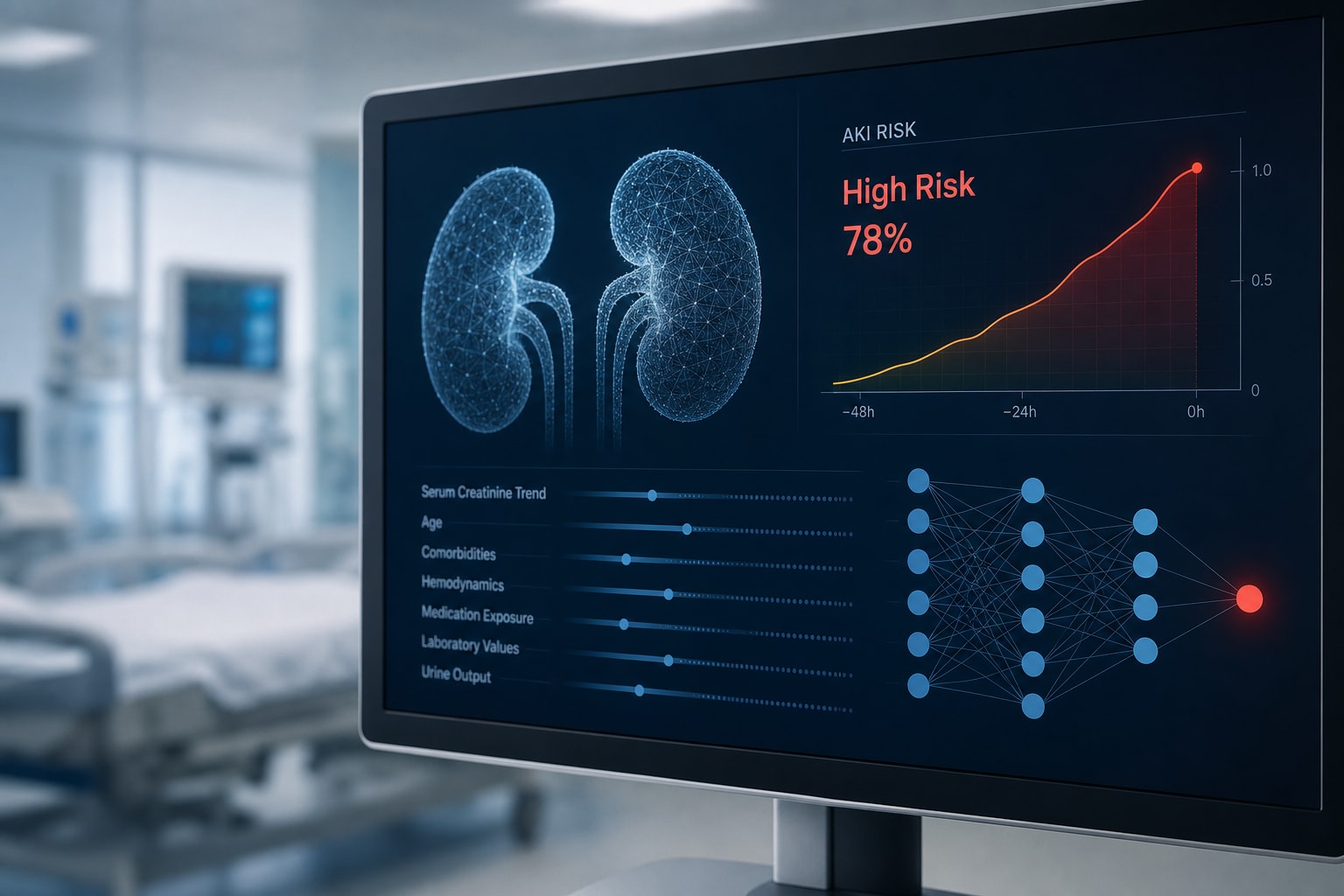
AI-Enabled Acute Kidney Injury Prediction and the Challenge of Prevention
-
By
-
Charat Thongprayoon
-
Francesco Pesce
-
Wisit Cheungpasitporn
-
July 10, 2026
Clinical Scorecard: Predicting Acute Kidney Injury with AI: Addressing the Prevention Challenge
At a Glance
| Category | Detail |
|---|
| Condition | Acute Kidney Injury (AKI) |
| Key Mechanisms | Predictive analytics, biomarkers, electronic decision support systems |
| Target Population | Hospitalized patients at risk of AKI |
| Care Setting | Hospital inpatient care |
Key Highlights
- AKI is associated with longer hospital stays and increased mortality.
- Early nephrology consultation did not improve AKI outcomes.
- Risk identification alone is insufficient without actionable implementation.
- Consult recommendations were often not followed in the early consultation arm.
- Future interventions should focus on risk-triggered actions rather than advice.
Guideline-Based Recommendations
Diagnosis
- Use machine-learning risk scores to identify patients at risk of AKI.
Management
- Implement structured actions based on risk identification, such as nephrotoxin stewardship and fluid management.
Monitoring & Follow-up
- Track adherence to recommendations and real-time completion of actions.
Risks
- Consider competing acute problems and the urgency of recommendations.
Patient & Prescribing Data
Hospitalized patients without overt AKI at enrollment
Proactive nephrology consultation may not suffice without adherence to recommendations.
Clinical Best Practices
- Embed risk scores within workflows to facilitate timely actions.
- Prioritize high-yield actions based on patient risk profiles.
- Utilize closed-loop systems for AKI prevention strategies.
Related Resources & Content