Clinical Scorecard: Relationship Between Triglyceride-Glucose Indices and Liver Events in Individuals with Type 2 Diabetes
At a Glance
Category
Detail
Condition
Type 2 diabetes and liver-related events (LRE)
Key Mechanisms
Insulin resistance captured by triglyceride-glucose (TyG) indices correlates with hepatic injury, inflammation, and fibrosis progression
Target Population
Individuals with type 2 diabetes
Care Setting
Clinical practice for risk identification and stratification of liver-related events
Key Highlights
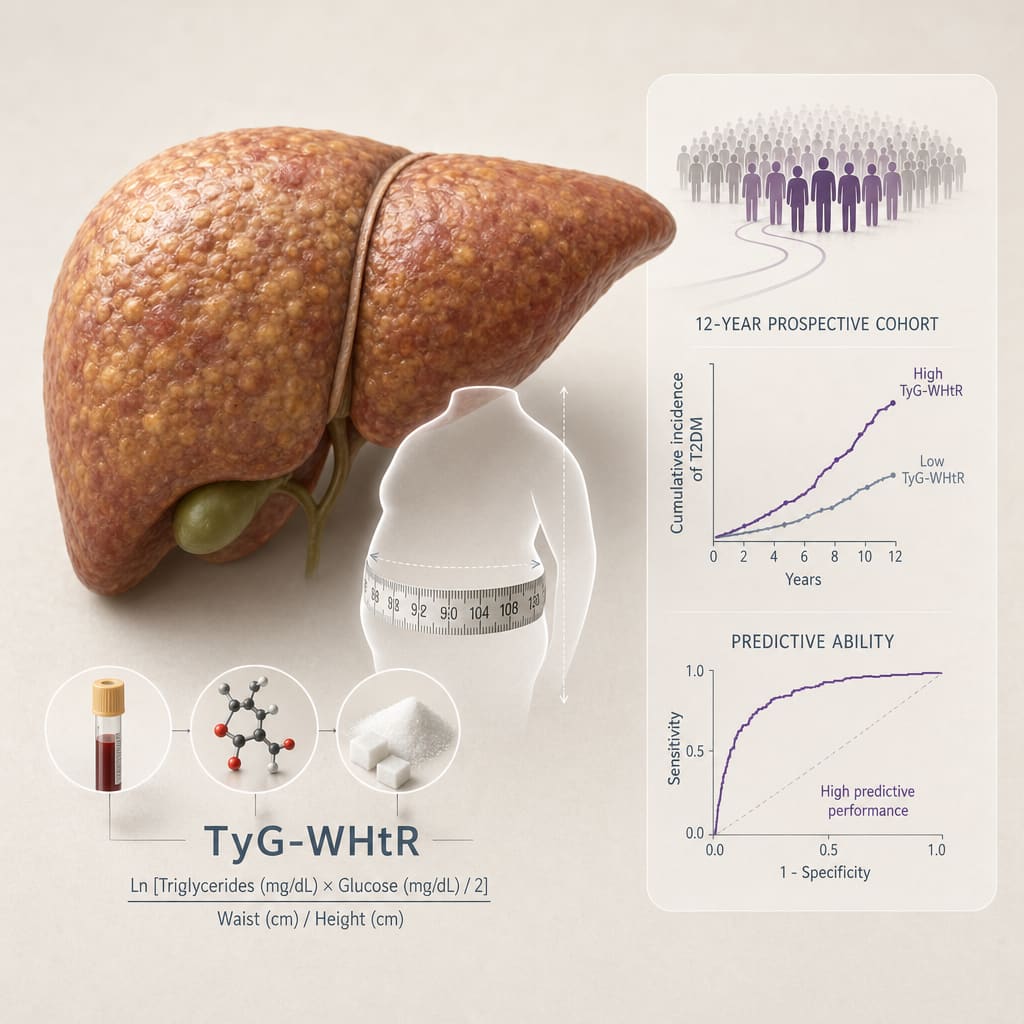
TyG-WC and TyG-WHtR indices are independently associated with increased risk of liver-related events in type 2 diabetes patients.
No significant association was found between TyG or TyG-BMI and liver-related event risk.
Associations between TyG-WC/TyG-WHtR and liver events are stronger in high-risk subgroups, including excessive alcohol consumers and those with elevated FIB-4 scores (≥1.3).
Guideline-Based Recommendations
Diagnosis
Use TyG-WC and TyG-WHtR indices as cost-effective tools to enhance identification and stratification of liver-related event risk in type 2 diabetes patients.
Continue use of FIB-4 score for liver fibrosis risk stratification but recognize its limitations in T2D populations.
Management
Monitor individuals with high TyG-WC and TyG-WHtR indices closely for liver-related complications.
Consider intensified surveillance and preventive strategies in T2D patients with elevated TyG-WC or TyG-WHtR, especially those with excessive alcohol consumption or high FIB-4 scores.
Monitoring & Follow-up
Incorporate TyG-WC and TyG-WHtR indices into routine clinical assessments for early detection of liver-related event risk.
Use longitudinal follow-up and Cox proportional hazards modeling to evaluate risk progression.
Risks
High TyG-WC and TyG-WHtR values indicate increased risk of cirrhosis, hepatic decompensation, hepatocellular carcinoma, liver transplantation, and liver-related mortality in T2D patients.
Patient & Prescribing Data
18,105 individuals with type 2 diabetes from the UK Biobank cohort
TyG-WC and TyG-WHtR indices provide prognostic information beyond traditional markers and may guide risk stratification and management decisions to prevent liver-related events.
Clinical Best Practices
Calculate TyG-WC and TyG-WHtR indices using fasting triglycerides, fasting glucose, waist circumference, and height measurements.
Identify T2D patients with elevated TyG-WC or TyG-WHtR for targeted liver disease surveillance.
Recognize that TyG and TyG-BMI indices are not significantly associated with liver event risk and may be less useful for this purpose.
Apply risk stratification especially in high-risk subgroups such as patients with excessive alcohol intake or FIB-4 ≥1.3.
Use these indices as adjuncts to existing tools like FIB-4 to improve early detection and intervention.