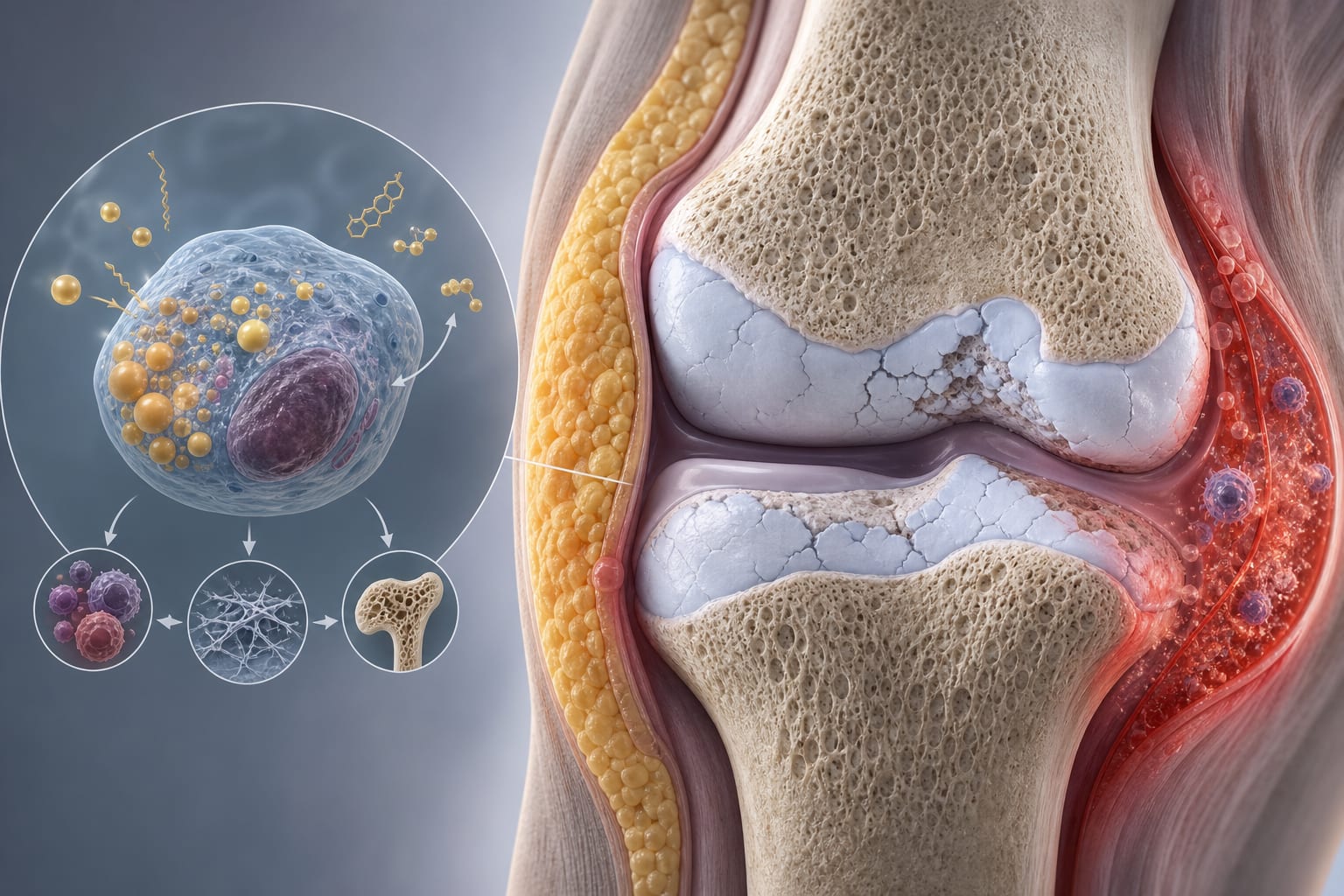
Reprogramming of Lipid Metabolism in Osteoarthritis: Mechanisms Involving Cartilage, Joint Interactions, and Therapeutic Obstacles
By
Kai Xu
Junchen Li
Genghong Wang
Jing Lin
Ji Li
June 29, 2026
Clinical Scorecard: Reprogramming of Lipid Metabolism in Osteoarthritis: Mechanisms Involving Cartilage, Joint Interactions, and Therapeutic Obstacles
At a Glance
Category Detail
Condition Osteoarthritis (OA) Key Mechanisms Lipid metabolic dysregulation, including cholesterol dysregulation and fatty-acid lipotoxicity. Target Population Individuals with osteoarthritis, particularly those with metabolic dysfunction. Care Setting Clinical and experimental settings focusing on joint health and metabolic interactions.
Key Highlights
OA is characterized by cartilage damage, synovitis, and subchondral bone remodeling. Lipid metabolism disturbances contribute to OA susceptibility and disease progression. Key pathways include the CH25H-CYP7B1-RORα axis and mitochondrial oxidative injury. Lipid overload and chronic inflammation can amplify proinflammatory responses. Current evidence supports metabolic stratification in OA. Guideline-Based Recommendations
Diagnosis
Consider lipidomic profiling to assess OA severity and metabolic status. Management
Explore lipid-targeted strategies such as statins and nutritional interventions. Monitoring & Follow-up
Monitor circulating lipid alterations in relation to tissue-specific mechanisms. Risks
Be aware of the potential for lipid peroxidation and ferroptotic cell death in OA. Patient & Prescribing Data
Patients with osteoarthritis, particularly those with obesity and metabolic syndrome.
Lipid-targeted interventions may be beneficial for specific patient subsets.
Clinical Best Practices
Integrate metabolic assessments into OA management plans. Evaluate the role of adipose tissue in joint health and disease progression. Related Resources & Content