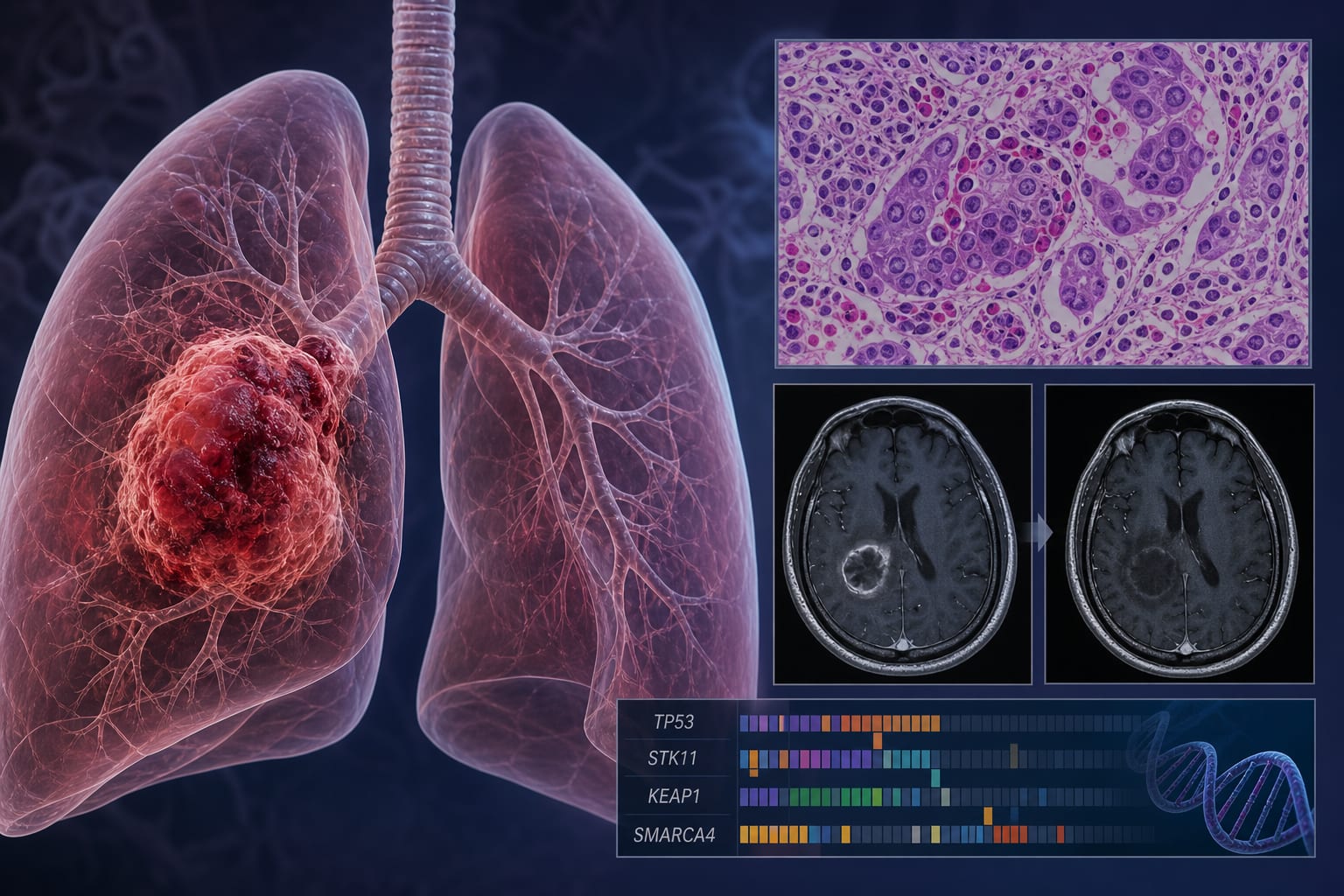
Molecular and Clinicopathological Features of Primary Pulmonary Choriocarcinoma: A Case Study and Comprehensive Review
By
Yixin Liu
Xin Lv
Shu Su
Fangjun Chen
Lifeng Wang
June 30, 2026
Clinical Scorecard: Molecular and Clinicopathological Features of Primary Pulmonary Choriocarcinoma: A Case Study and Comprehensive Review
At a Glance
Category Detail
Condition Primary Pulmonary Choriocarcinoma Key Mechanisms Loss-of-function or deleterious alterations in TP53, STK11, KEAP1, and SMARCA4. Target Population Patients with primary pulmonary choriocarcinoma, particularly those with advanced disease. Care Setting Oncology and multidisciplinary care settings.
Key Highlights
PPC is a rare and aggressive non-gestational trophoblastic malignancy. Standard treatment for PPC has not been established. Molecular profiling suggests distinct characteristics from gestational choriocarcinoma. Multimodal treatment including immunotherapy may warrant further investigation. The patient experienced disease progression despite initial treatment response. Guideline-Based Recommendations
Diagnosis
Diagnosis typically requires pathological confirmation following imaging studies. Management
Consider multimodal treatment including chemotherapy and immunotherapy. Monitoring & Follow-up
Regular imaging and serum beta-hCG levels to assess treatment response. Risks
High risk of early metastasis and poor response to conventional chemotherapy. Patient & Prescribing Data
A 61-year-old male with advanced PPC and brain metastases.
Combination therapy with albumin-bound paclitaxel, cisplatin, etoposide, capecitabine, and camrelizumab was utilized.
Clinical Best Practices
Conduct thorough imaging and pathological evaluation for diagnosis. Utilize a multidisciplinary approach for treatment planning. Monitor for treatment-related adverse effects and adjust therapy as needed. Related Resources & Content