Clinical characteristics, tongue manifestations, and traditional Chinese medicine syndrome patterns of spring influenza A in children: a single-center retrospective study - Scorecard - MDSpire
Conexiant’s news site is now MDSpire News. Learn more
Advertisement
Clinical Features, Tongue Signs, and TCM Syndrome Classifications of Spring Influenza A in Pediatric Patients: A Retrospective Study from a Single Center
Clinical Scorecard: Clinical Features, Tongue Signs, and TCM Syndrome Classifications of Spring Influenza A in Pediatric Patients: A Retrospective Study from a Single Center
At a Glance
Category
Detail
Condition
Influenza A in Pediatric Patients
Key Mechanisms
Infection by influenza A virus leading to respiratory symptoms and inflammatory responses.
Target Population
Children, particularly those aged >5–≤10 years.
Care Setting
Department of Traditional Chinese Medicine
Key Highlights
Fever was the most common initial symptom (92.31%).
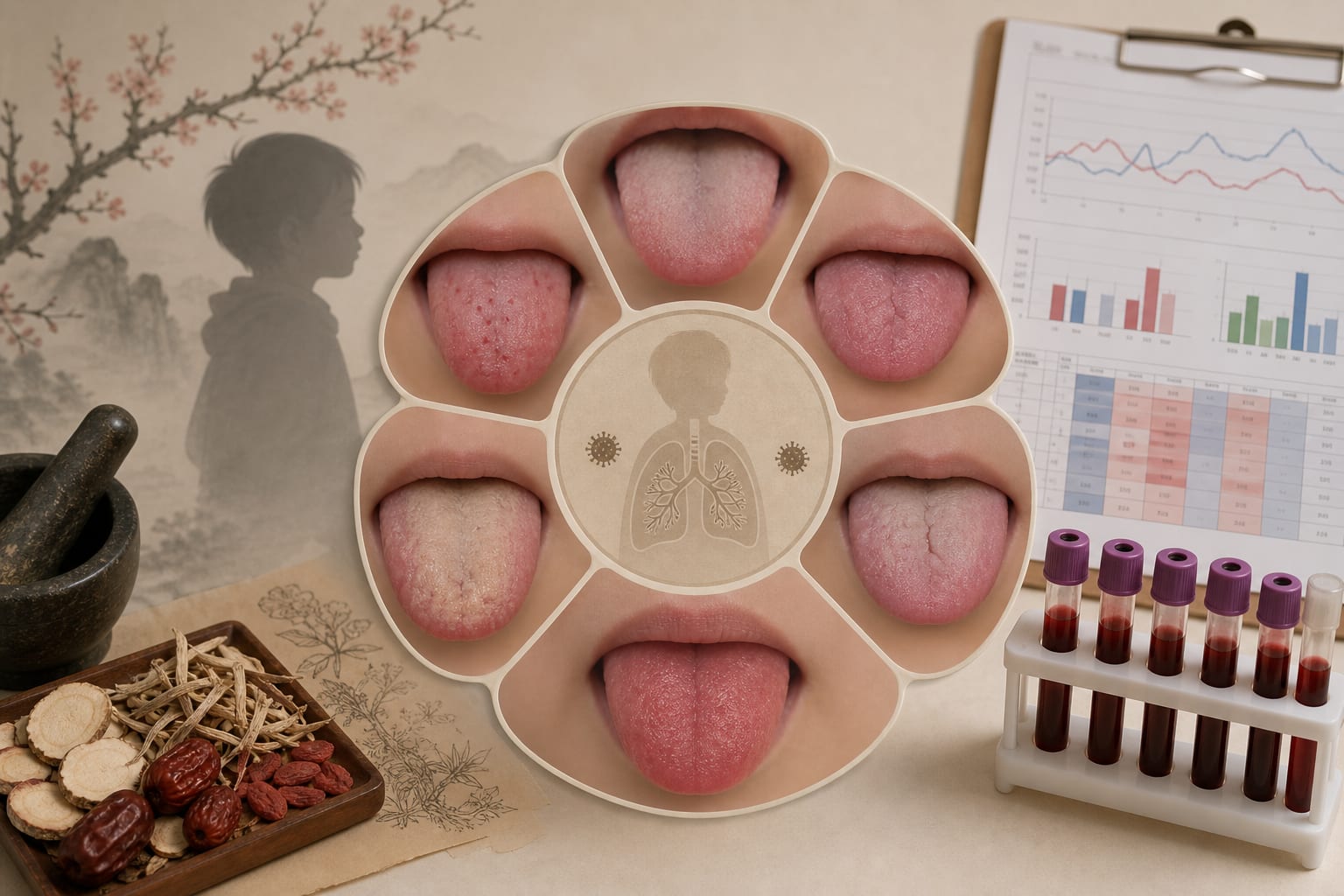
Red tongue and thick coating were predominant tongue characteristics.
Heat-toxin attacking the lung syndrome was the most common TCM syndrome (34.97%).
Dynamic changes in hematological parameters observed with disease progression.
Majority of patients sought medical care within ≤1 day of symptom onset.
Guideline-Based Recommendations
Diagnosis
Diagnosis based on clinical manifestations and TCM syndrome differentiation.
Management
Integrated approach of Chinese and Western medicine for treatment.
Monitoring & Follow-up
Monitor hematological parameters and symptom progression.
Risks
Potential for rapid disease progression and complications such as pneumonia.
Patient & Prescribing Data
143 children diagnosed with influenza A.
Early intervention is crucial, with a focus on symptom management and monitoring.
Clinical Best Practices
Assess initial symptoms and hematological parameters promptly.
Utilize TCM tongue signs for syndrome differentiation.
Consider age and disease duration in treatment planning.