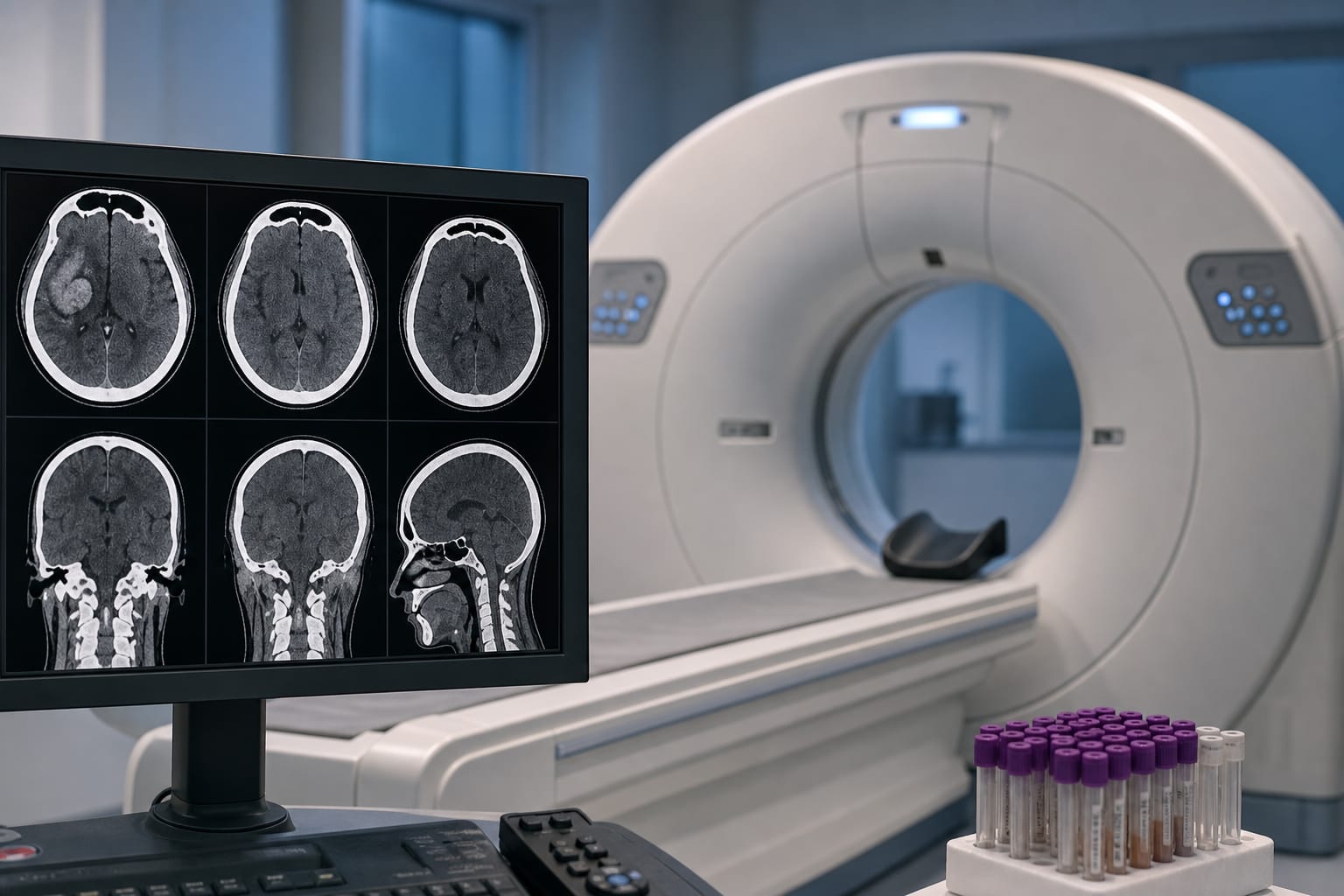
Computed tomography findings in 11,504 adult patients with traumatic brain injury: a large real-world cohort study with a S100B subgroup analysis - Scorecard - MDSpire
Clinical Scorecard: CT Imaging Results in 11,504 Adults with Traumatic Brain Injury: Insights from a Comprehensive Cohort Study Including S100B Analysis
At a Glance
Category
Detail
Condition
Traumatic Brain Injury (TBI)
Key Mechanisms
Cranial CT imaging and serum S100B biomarker assessment
Target Population
Adults presenting with TBI
Care Setting
Emergency departments
Key Highlights
Over 10 million TBI cases reported annually worldwide
Higher incidence of TBI in elderly individuals with comorbidities
CT imaging is the primary diagnostic tool for TBI
S100B may aid in ruling out clinically relevant brain injury
Clinical decision rules exist to optimize imaging utilization
Guideline-Based Recommendations
Diagnosis
Use cranial CT for suspected TBI
Consider serum S100B levels in selected patients
Management
Evaluate patients based on clinical assessment and imaging findings
Monitoring & Follow-up
Monitor for acute intracranial pathology in TBI patients
Risks
Increased resource utilization and radiation exposure from unnecessary CT scans
Patient & Prescribing Data
Adults with documented TBI
Inclusion of S100B measurement may reduce unnecessary imaging
Clinical Best Practices
Apply clinical decision rules like the Canadian CT Head Rule and New Orleans Criteria
Assess elderly patients carefully due to altered clinical presentation
Utilize serum biomarkers as adjuncts in TBI assessment