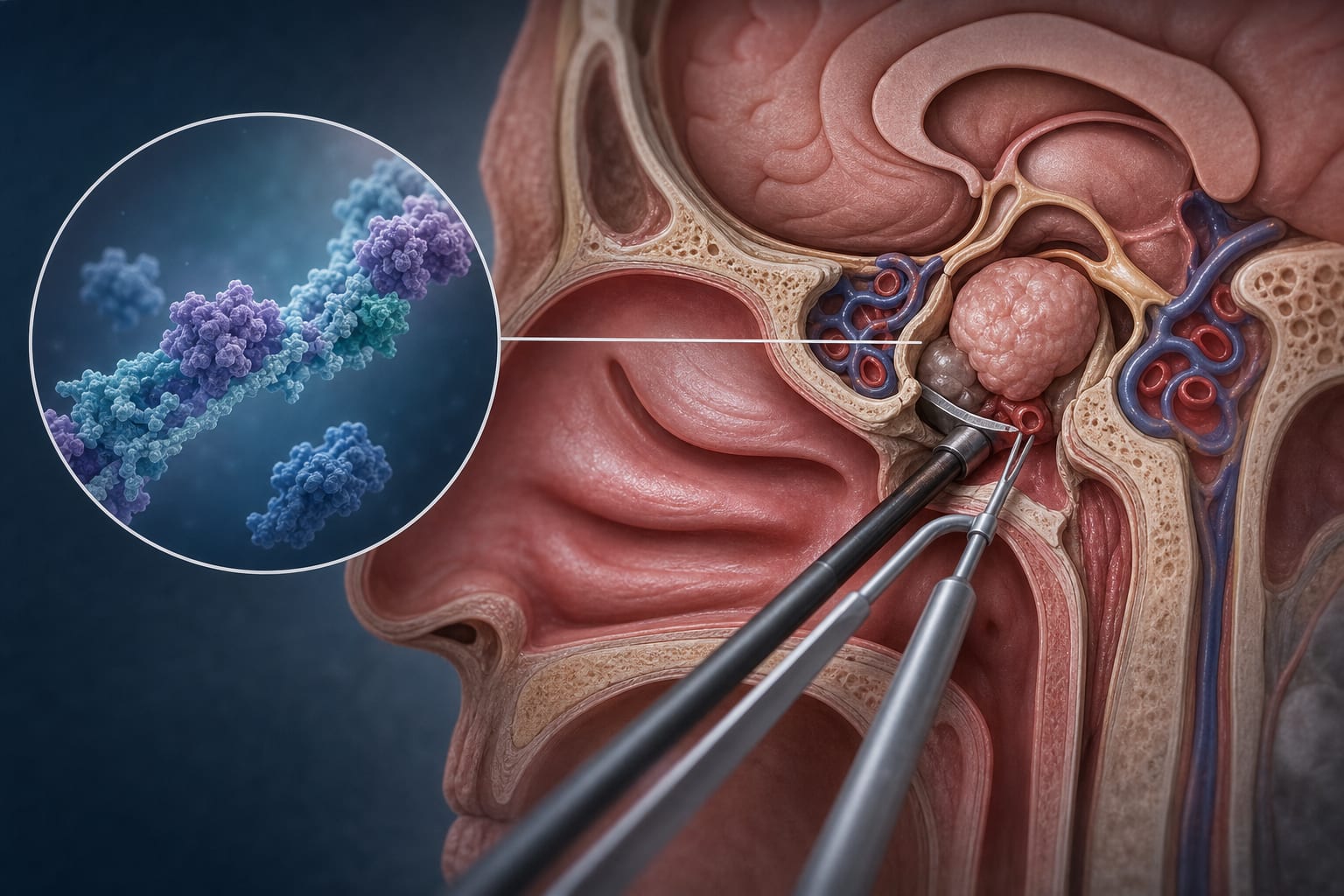
Navigating hemostasis: anesthetic challenges in a pituitary tumor with type 2 von Willebrand disease—case report
Clinical Scorecard: Addressing Hemostasis: Anesthetic Considerations in a Pituitary Tumor Patient with Type 2 von Willebrand Disease—A Case Study
At a Glance
| Category | Detail |
|---|
| Condition | Type 2 von Willebrand Disease |
| Key Mechanisms | Deficiency or dysfunction of von Willebrand factor (VWF) affecting hemostasis. |
| Target Population | Patients with von Willebrand disease undergoing neurosurgery. |
| Care Setting | Multidisciplinary perioperative management in a surgical setting. |
Key Highlights
- High risk of hemorrhage in patients with von Willebrand disease during neurosurgical procedures.
- Individualized hemostatic management using VWF/FVIII concentrate.
- Successful postoperative outcomes with no complications reported.
Guideline-Based Recommendations
Diagnosis
- Assessment of VWF levels and bleeding history.
Management
- Targeted replacement of VWF/FVIII concentrate based on plasma levels.
Monitoring & Follow-up
- Real-time thromboelastography (TEG) and hemodynamic monitoring.
Risks
- Increased risk of intraoperative and postoperative hemorrhage due to proximity to critical neurovascular structures.
Patient & Prescribing Data
42-year-old male with type 2 von Willebrand disease and hypothyroidism.
Maintaining VWF:RCo and FVIII levels above specified thresholds during surgery.
Clinical Best Practices
- Implement a multidisciplinary approach for anesthetic management.
- Prioritize hemodynamic stability and hemostatic control during surgery.
Related Resources & Content