Utilizing Transfer Learning and Vision Transformers for Automated Cataract Diagnosis in Ophthalmic Imaging
By
Hugo Vega-Huerta
Camila Isabela Cuba-Aquino
Gari Mario Suca-Mariño
Ivan Adrianzén-Olano
Gisella Luisa Elena Maquen-Niño
Frida López-Córdova
Juan Carlos Lázaro-Guillermo
Gilberto Carrión-Barco
Katherin Vanessa Rodriguez-Zevallos
Denny John Fuentes-Adrianzén
Mario Chauca
Javier Elmer Cabrera-Díaz
June 30, 2026
Clinical Scorecard: Utilizing Transfer Learning and Vision Transformers for Automated Cataract Diagnosis in Ophthalmic Imaging
At a Glance
Category Detail
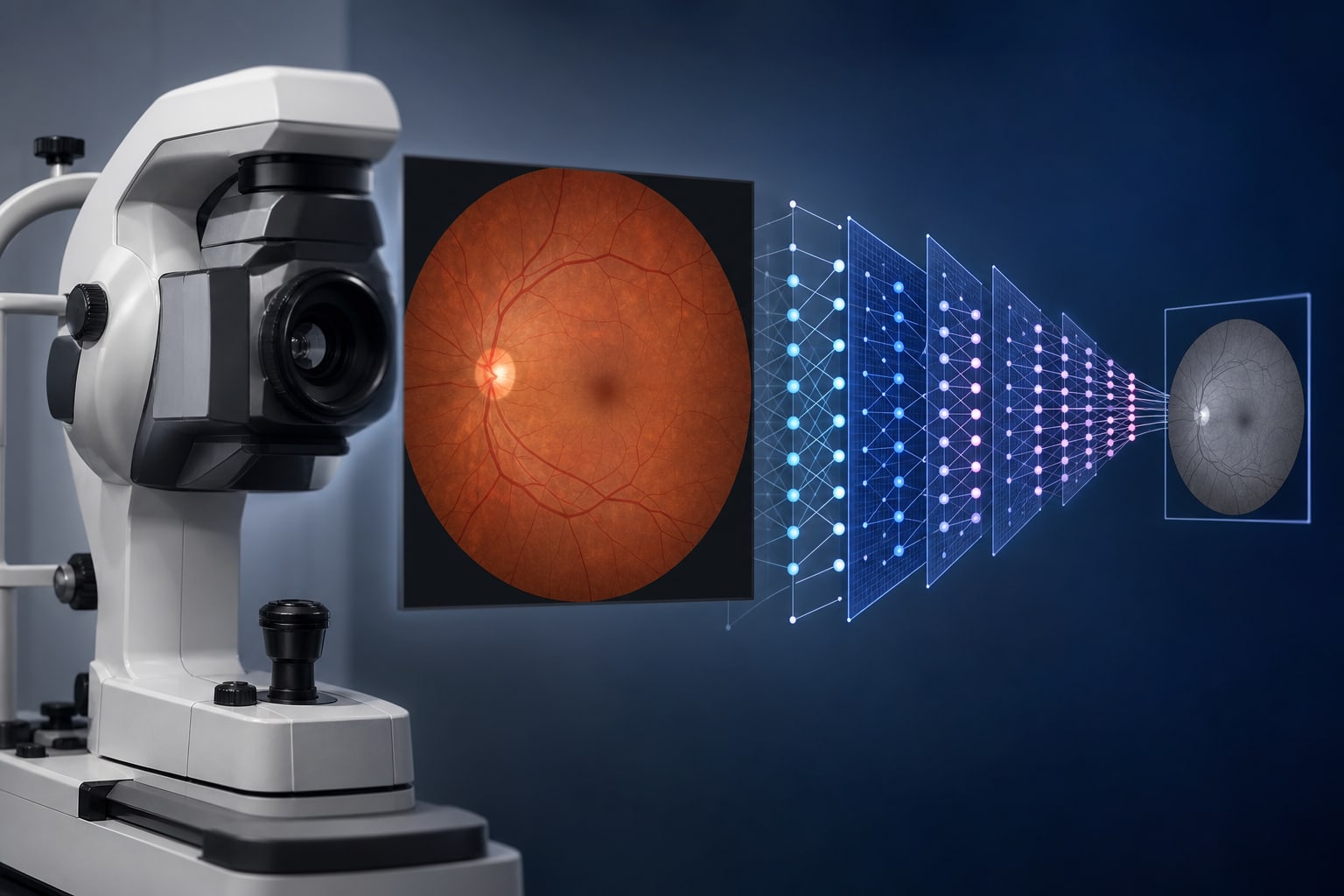
Condition Cataracts Key Mechanisms Deep learning and convolutional neural networks for image analysis. Target Population Individuals at risk of cataracts, particularly in rural and underserved regions. Care Setting Ophthalmology clinics and remote screening programs.
Key Highlights
Cataracts are the leading cause of preventable blindness worldwide. ResNet152 achieved 99.10% accuracy in automated cataract detection. The system aims to improve accessibility to ophthalmological diagnosis. Deep learning can automate classification with accuracy comparable to human experts. The proposed system supports early diagnosis and reduces diagnostic workload. Guideline-Based Recommendations
Diagnosis
Utilize automated systems for early detection of cataracts using retinal fundus images. Management
Implement AI-assisted diagnostic tools in resource-limited settings. Monitoring & Follow-up
Evaluate the performance of automated systems in real-world clinical settings. Risks
Diagnostic accuracy may decrease outside controlled study environments. Patient & Prescribing Data
Patients in rural or low-income areas with limited access to ophthalmologists.
Automated systems can facilitate rapid preliminary diagnosis and reduce unnecessary patient transfers.
Clinical Best Practices
Incorporate AI diagnostic tools into the medical workflow for efficient triage. Ensure continuous evaluation of AI systems for accuracy and reliability. Related Resources & Content