Clinical Scorecard: What's New
At a Glance
| Category | Detail |
|---|---|
| Condition | Presbyopia, Astigmatism, Myopia, Lower Lid Laxity |
| Key Mechanisms | Multifocal toric lens stabilization, binocular harmonization in spectacle lenses, cloud-based orthokeratology lens design, dynamic muscle stimulation with radiofrequency |
| Target Population | Patients with presbyopia, astigmatism, myopia, and lower lid laxity |
| Care Setting | Optometry and ophthalmology clinical practice |
Key Highlights
- Acuvue Oasys Max 1-Day Multifocal for Astigmatism integrates four proprietary technologies to minimize lens rotation, accommodate pupil size changes, enhance moisture retention, and filter 60% of blue-violet light.
- Hoya VisuPro All Day and VisuPro Flex spectacle lenses use Binocular Harmonization Technology and Focus Max Optimization to improve near vision and digital device use in early presbyopia.
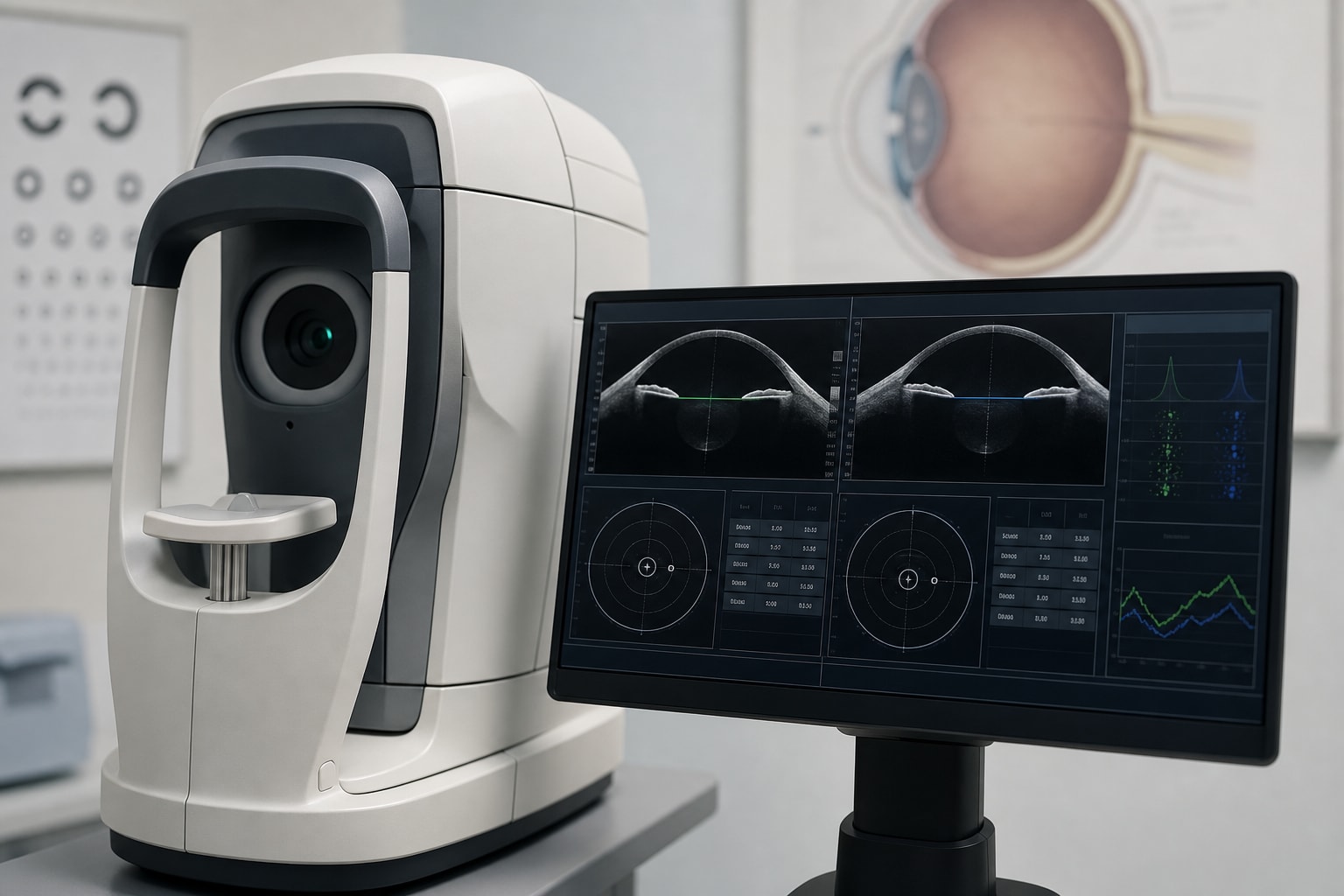
- Bausch + Lomb's Arise platform uses cloud-based technology synced with topographers to design orthokeratology lenses, including toric peripheral curves for myopia treatment.
Guideline-Based Recommendations
Diagnosis
- Assess presbyopia and astigmatism for appropriate multifocal toric lens fitting.
- Evaluate early presbyopia symptoms for advanced focus spectacle lens prescription.
- Use corneal topography to guide orthokeratology lens design for myopia management.
- Assess lower lid laxity and blinking function for suitability of dynamic muscle stimulation therapy.
Management
- Prescribe Acuvue Oasys Max 1-Day Multifocal for Astigmatism for stable vision and hydration in astigmatic presbyopes.
- Recommend Hoya VisuPro lenses to enhance near vision comfort during close work and digital device use.
- Utilize Arise fitting platform to customize orthokeratology lenses for myopia control.
- Consider OptiLIFT device for non-surgical toning of periorbital muscles to improve lower lid laxity and blinking.
Monitoring & Follow-up
- Monitor lens fit stability and patient comfort with multifocal toric lenses.
- Evaluate visual acuity and near vision comfort with advanced focus spectacle lenses.
- Track myopia progression and corneal health during orthokeratology treatment.
- Assess muscle tone and blinking function improvements following OptiLIFT therapy.
Risks
- Potential discomfort or adaptation issues with multifocal toric lenses.
- Spectacle lens adaptation challenges in early presbyopia.
- Corneal complications related to orthokeratology lens wear.
- Skin irritation or discomfort from dynamic muscle stimulation device.
Patient & Prescribing Data
Patients with presbyopia, astigmatism, myopia, and lower lid laxity seeking vision correction or periorbital muscle toning.
New lens technologies and devices offer improved vision stability, comfort, and non-surgical options for ocular and periorbital conditions.
Clinical Best Practices
- Incorporate proprietary lens technologies to enhance vision stability and comfort in presbyopic astigmatic patients.
- Use binocular harmonization and focus optimization in spectacle lenses to support near vision and digital device use.
- Leverage cloud-based orthokeratology fitting platforms for precise myopia management.
- Employ dynamic muscle stimulation with radiofrequency for non-invasive treatment of lower lid laxity and impaired blinking.
References
- Acuvue Oasys Max 1-Day Multifocal for Astigmatism
- Hoya VisuPro Advanced Focus Lenses
- Bausch + Lomb Arise Ortho-K System
- Lumenis OptiLIFT Device
This content is an AI-generated, fully rewritten summary based on a published scholarly article. It does not reproduce the original text and is not a substitute for the original publication. Readers are encouraged to consult the source for full context, data, and methodology.