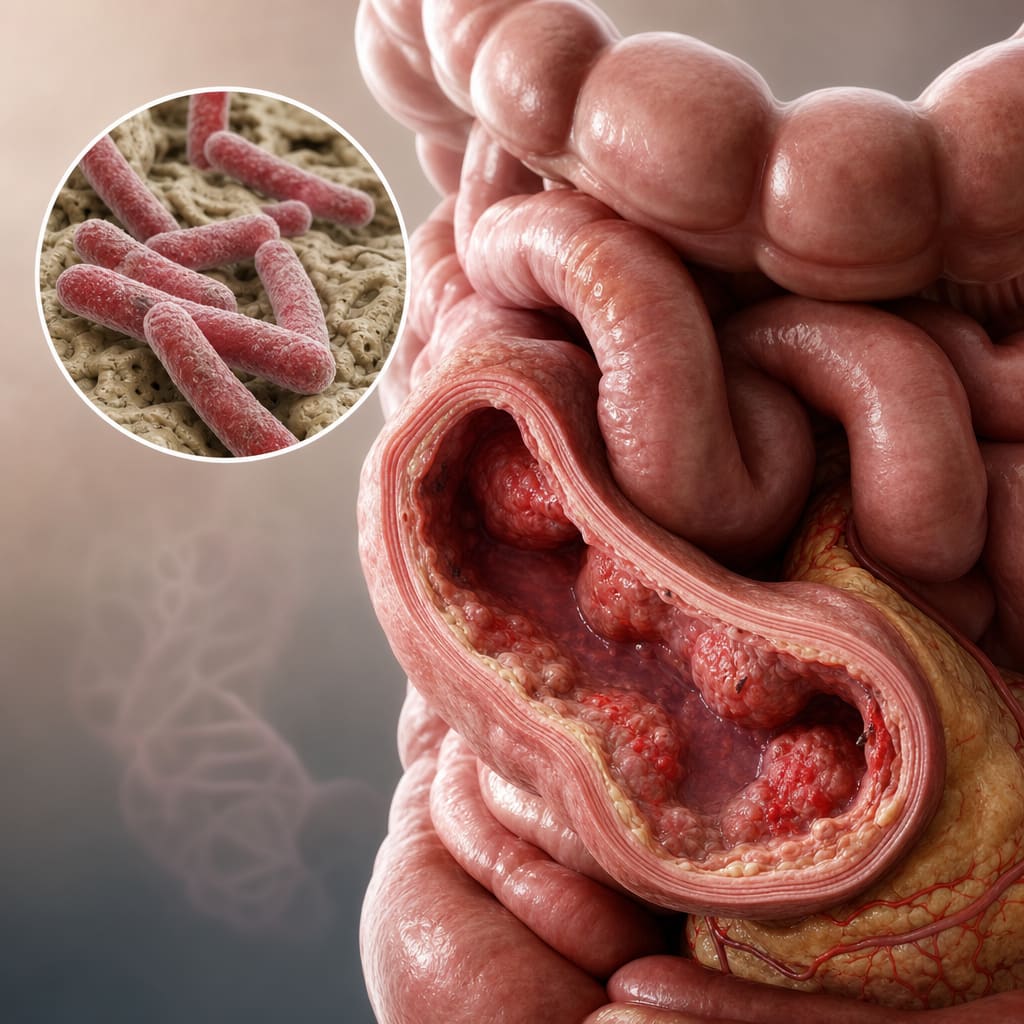
Bile acids and bile acid modification in health and disease: from novel modifications to therapeutic interventions
-
By
-
Chuying Yu
-
Xintong Ye
-
Haoyu Zhao
-
Suting Qian
-
Feifei Xie
-
Qingsheng Liu
-
June 4, 2026
-
Clinical Scorecard: Bile Acids: Their Role in Health and Disease, Novel Modifications, and Potential Therapeutic Approaches
At a Glance
| Category | Detail |
|---|
| Condition | |
| Key Mechanisms | Bile acids regulate metabolism and immune function through receptor interactions and microbiota modifications. |
| Target Population | |
| Care Setting | |
Key Highlights
- Bile acids serve as lipid-digesting molecules and signaling mediators.
- Microbiota-driven modifications of bile acids link gut dysbiosis to metabolic disorders.
- Novel bile acid modifications show therapeutic potential for various diseases.
- AI-driven approaches enhance understanding of bile acid biology.
- Preclinical studies inform the clinical translation of bile acid interventions.
- Bile acid modifications are crucial for therapeutic applications.
Guideline-Based Recommendations
Diagnosis
- Assess bile acid levels and modifications in metabolic disorders.
Management
- Consider bile acid-targeted therapies such as FXR agonists and TGR5 agonists for metabolic and inflammatory conditions.
Monitoring & Follow-up
- Monitor changes in bile acid profiles in response to therapeutic interventions.
Risks
- Evaluate potential hepatotoxicity associated with FXR agonists.
Patient & Prescribing Data
Therapies targeting bile acid signaling pathways, such as FXR and TGR5 modulators, may improve metabolic health.
Clinical Best Practices
- Utilize multi-omics approaches to study bile acid metabolism, considering patient-specific factors.
- Incorporate microbiota interventions in treatment plans.
- Explore novel bile acid modifications for therapeutic applications.
Related Resources & Content