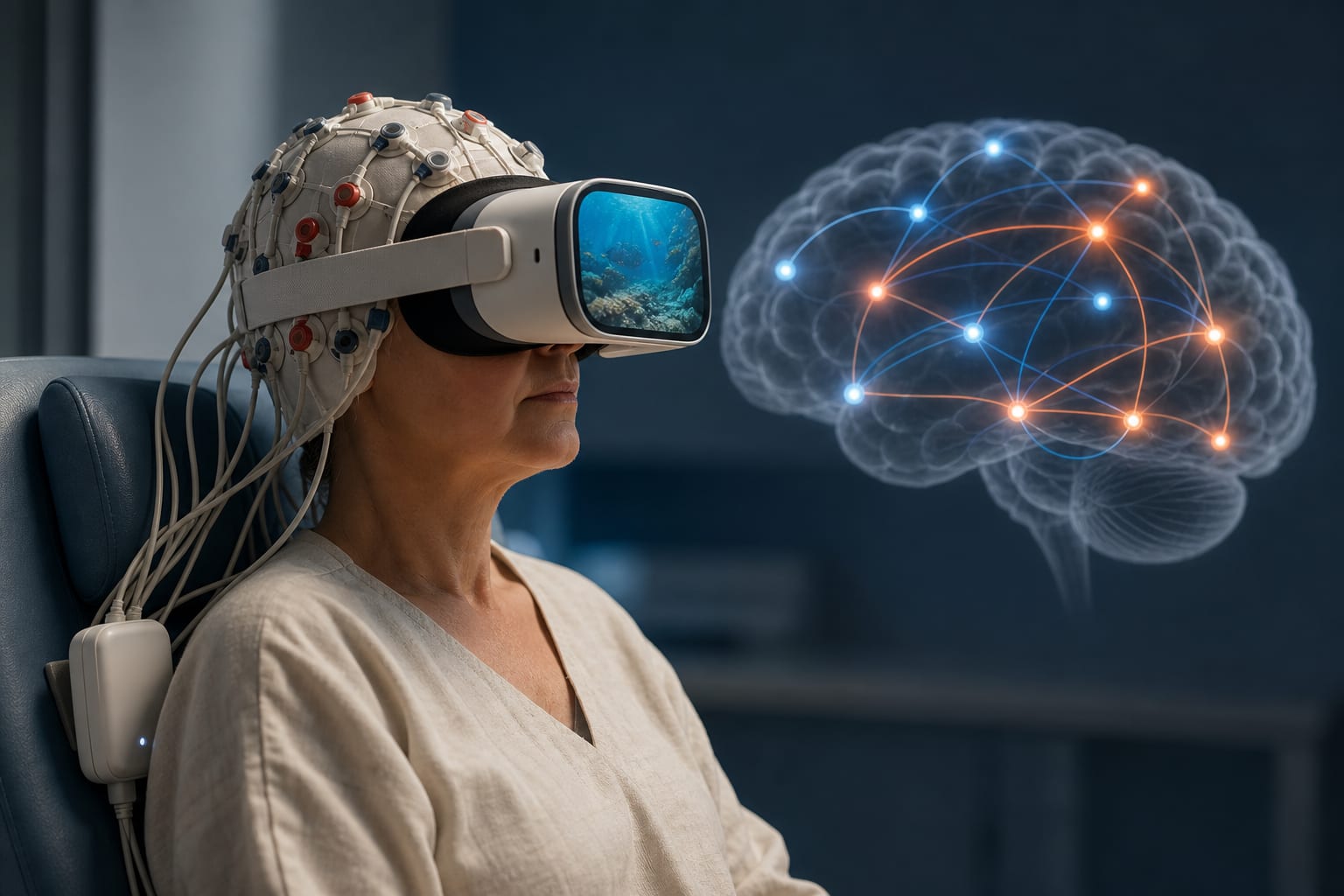
Neurophysiological Links Between Functional Brain Connectivity and Pain Alleviation in Cancer Patients Using Virtual Reality
-
By
-
Somayeh B. Shafiei
-
Saeed Shadpour
-
Oscar de Leon-Casasola
-
July 15, 2026
Clinical Scorecard: Neurophysiological Links Between Functional Brain Connectivity and Pain Alleviation in Cancer Patients Using Virtual Reality
At a Glance
| Category | Detail |
|---|
| Condition | Cancer-related pain |
| Key Mechanisms | Functional connectivity and brain activation changes during VR exposure |
| Target Population | Cancer patients with chronic neuropathic and/or somatic pain |
| Care Setting | Outpatient clinic of the Division of Pain Medicine |
Key Highlights
- Functional connectivity changes correlate with pain reduction.
- Significant negative correlations observed between specific brain regions.
- fNIRS provides insights into brain activation during pain modulation.
- Study involved 41 cancer patients with chronic pain.
Guideline-Based Recommendations
Diagnosis
- Assess pain intensity using standardized scales.
Management
- Consider VR as a non-pharmacologic approach for pain relief.
Monitoring & Follow-up
- Utilize fNIRS to evaluate brain activation and connectivity.
Risks
- Monitor for inadequate pain relief despite multimodal pharmacological therapy.
Patient & Prescribing Data
Adults with chronic cancer-related pain receiving multimodal pharmacological therapy.
VR may serve as a complementary approach for patients reporting inadequate pain relief.
Clinical Best Practices
- Incorporate VR into pain management strategies for cancer patients.
- Evaluate functional connectivity as a biomarker for treatment response.
- Personalize VR therapies based on individual patient needs.
Related Resources & Content