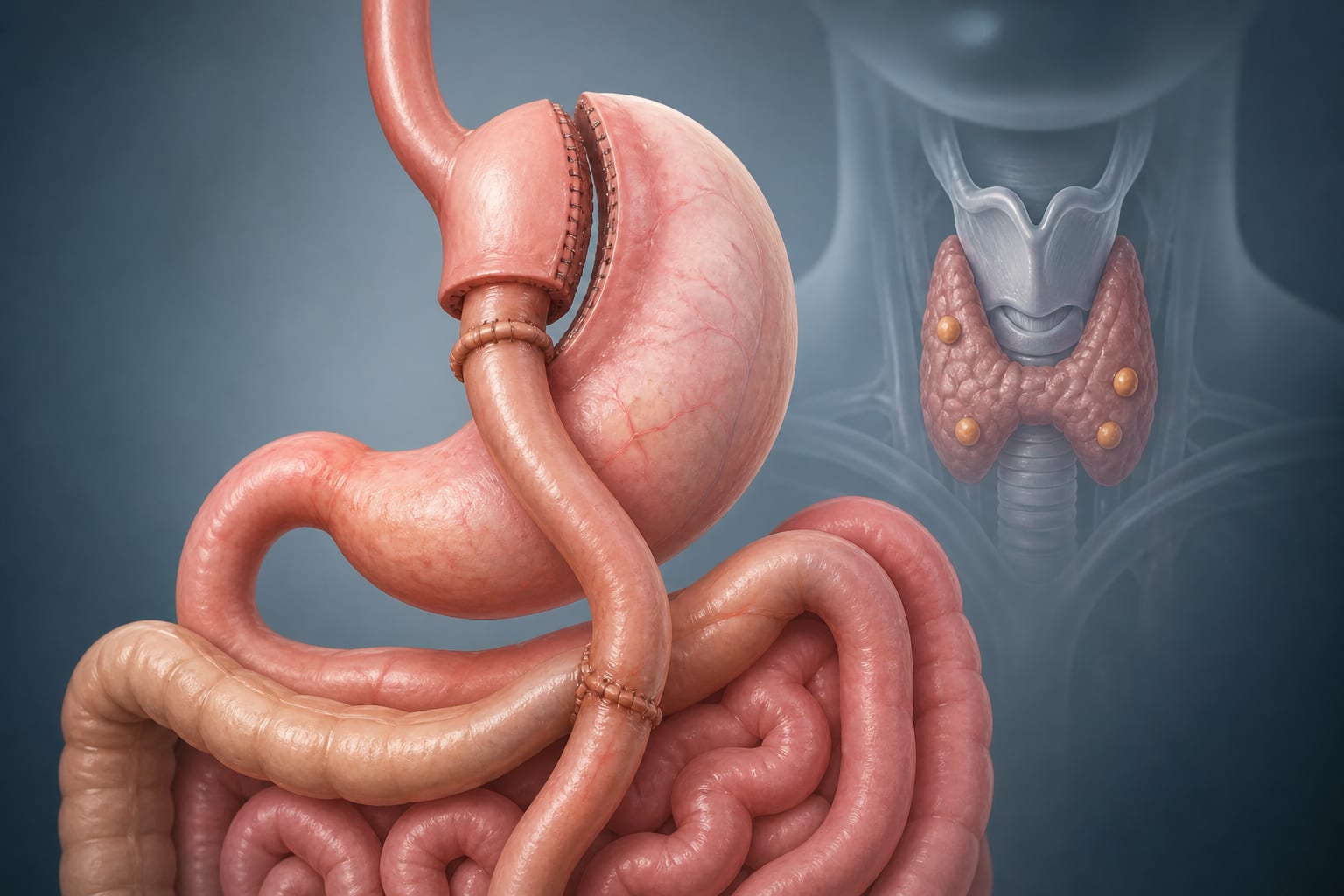
Clinical Scorecard: Roux-en-Y Gastric Bypass and Hypocalcemia Risk After Total Thyroidectomy: A Narrative Review
At a Glance
Category
Detail
Condition
Postoperative calcium dysregulation after total thyroidectomy in patients with prior Roux-en-Y gastric bypass (RYGB)
Key Mechanisms
RYGB bypasses the duodenum and jejunum, principal sites of calcium absorption, and may diminish calcium uptake. Transient hypoparathyroidism after total thyroidectomy may compound hypocalcemia risk.
Target Population
Patients with prior RYGB undergoing total, completion, or subtotal thyroidectomy; the review excluded thyroid lobectomy and sleeve gastrectomy cases.
Care Setting
Preoperative and postoperative care. The review reports no established guidelines or standardized algorithms for screening or management in this population.
Key Highlights
The review describes a potential double-hit from RYGB-related reduction in calcium uptake and transient hypoparathyroidism after total thyroidectomy.
The evidence is limited and includes case reports, case series, and retrospective cohorts.
The largest individual study cited, comprising 35 patients, found a statistically higher rate of permanent hypocalcemia, but not transient hypocalcemia, compared with controls.
The 2026 American Thyroid Association Multidisciplinary Consensus Statement on Ambulatory Thyroid Surgery identified this population as high risk.
Guideline-Based Recommendations
Diagnosis
The review reports no established RYGB-specific guideline or standardized algorithm for preoperative screening or postoperative hypocalcemia management.
Definitions varied across included studies; hypocalcemia was frequently characterized as serum calcium below the relevant laboratory threshold, with or without symptoms.
Management
No validated RYGB-specific treatment protocol is established in the supplied source.
General-population protocols for transient hypocalcemia after total thyroidectomy have been developed; their applicability to patients with prior RYGB remains unclear.
Monitoring & Follow-up
The review states that no standardized pre- or postoperative screening algorithm is established for this population.
The source identifies surgical indication, baseline laboratory values, and extent of resection as factors that contextualize postoperative hypocalcemia risk.
Risks
RYGB bypasses principal sites of calcium absorption and may diminish calcium uptake, increasing hypocalcemia risk.
Transient hypoparathyroidism is described as the most frequent complication after total thyroidectomy and may compound RYGB-related risk.
The review notes that outcomes remain insufficiently characterized; the largest individual study cited found higher permanent, but not transient, hypocalcemia.
Patient & Prescribing Data
Patients with prior RYGB undergoing total thyroidectomy, with eligible evidence also including completion and subtotal thyroidectomy cases.
The supplied source does not establish a validated RYGB-specific prescribing regimen. It notes that general-population postoperative protocols exist, but their applicability to patients with prior RYGB is unclear.
Clinical Best Practices
Consider prior RYGB when contextualizing postoperative hypocalcemia risk after thyroidectomy.
Contextualize risk using surgical indication, baseline laboratory values, and extent of resection.
The review reports that standardized RYGB-specific screening and management algorithms are unavailable; it does not establish a specific testing or treatment protocol.
Coronary artery disease develops when plaque accumulates within the arteries that supply blood to the heart muscle. Genetics can play an important role, while smoking, diabetes, uncontrolled high blood pressure, inactivity, poor diet and other factors can accelerate the process.