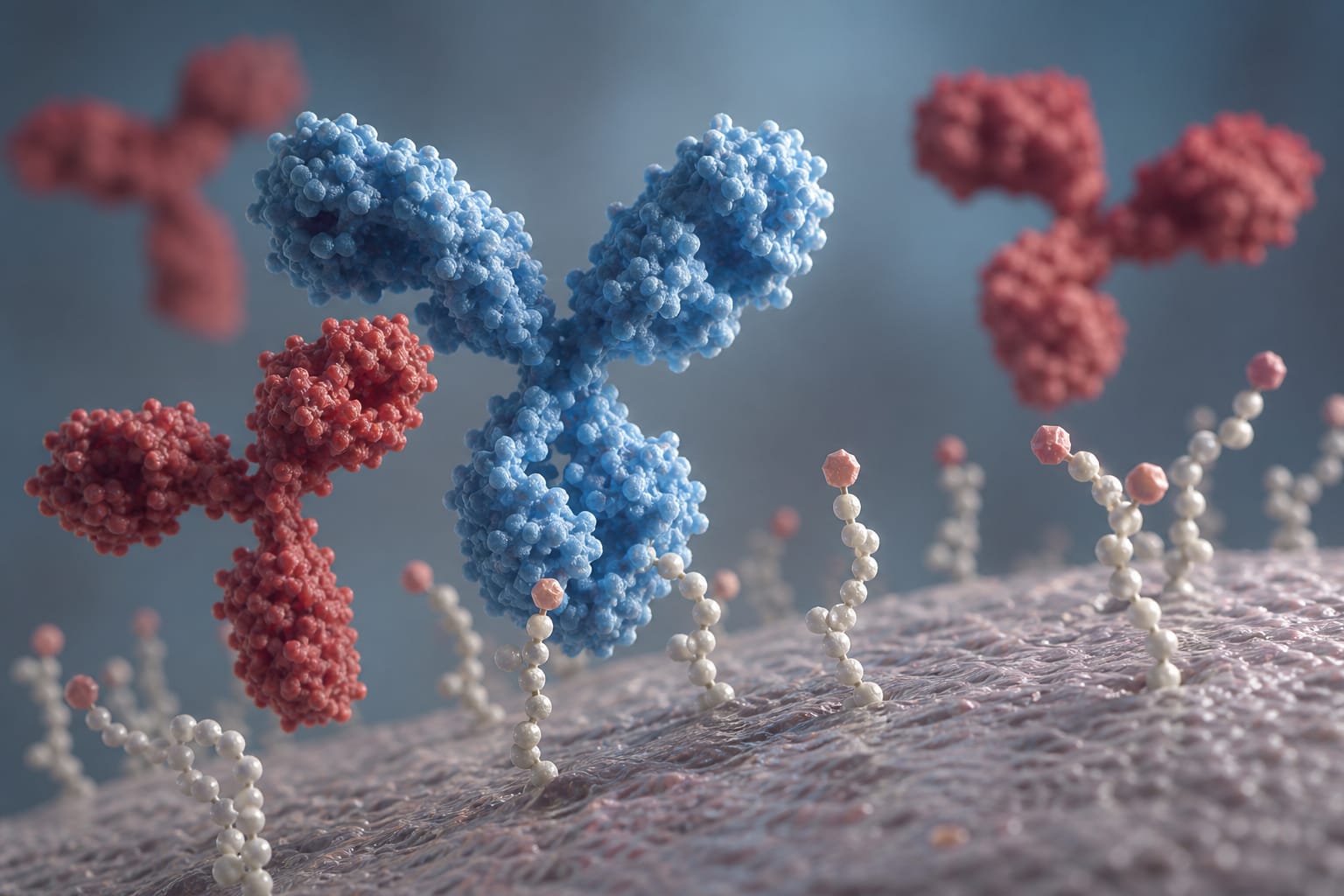
NIH Scientists Discover Uncommon Antibodies That May Help Address Alpha-Gal Syndrome
-
September 1, 2026
Clinical Scorecard: NIH Scientists Discover Uncommon Antibodies That May Help Address Alpha-Gal Syndrome
At a Glance
| Category | Detail |
|---|---|
| Condition | Alpha-Gal Syndrome (AGS) |
| Key Mechanisms | Tick bite-associated allergic condition triggered by galactose-α-1,3-galactose (alpha-gal) in red meat and mammal-derived products. |
| Target Population | Individuals with alpha-gal syndrome, particularly those experiencing allergic reactions to red meat. |
| Care Setting | Research and clinical development for allergy treatment. |
Key Highlights
- Discovery of uncommon antibodies that may prevent allergic reactions in AGS.
- Monoclonal antibodies showed potential to block IgE attachment to allergens.
- Approximately 110,000 suspected cases of AGS identified in the U.S. since 2010.
- Symptoms of AGS can range from gastrointestinal issues to anaphylaxis.
- Research indicates a need for targeted therapies for AGS.
Guideline-Based Recommendations
Diagnosis
- Identification of allergic reactions to alpha-gal through clinical history and testing.
Management
- Avoidance of red meat and mammal-derived products as the primary management strategy.
Monitoring & Follow-up
- Regular assessment of symptoms and potential allergic reactions in affected individuals.
Risks
- Potential for severe allergic reactions, including anaphylaxis.
Patient & Prescribing Data
Individuals diagnosed with alpha-gal syndrome.
Current treatment focuses on avoidance of allergens; monoclonal antibodies may represent future therapeutic options.
Clinical Best Practices
- Educate patients about the risks associated with alpha-gal syndrome.
- Encourage avoidance of known allergens to prevent allergic reactions.
- Monitor for new treatment developments, including monoclonal antibody therapies.
Related Resources & Content
Based on findings from:
NIH researchers identify rare antibodies with potential to combat alpha-gal syndrome
National Institutes Of Health, 2026.
https://www.nih.gov/news-events/news-releases/nih-researchers-identify-rare-antibodies-potential-combat-alpha-gal-syndrome
This content is an AI-generated, fully rewritten summary based on a published scholarly article. It does not reproduce the original text and is not a substitute for the original publication. Readers are encouraged to consult the source for full context, data, and methodology.