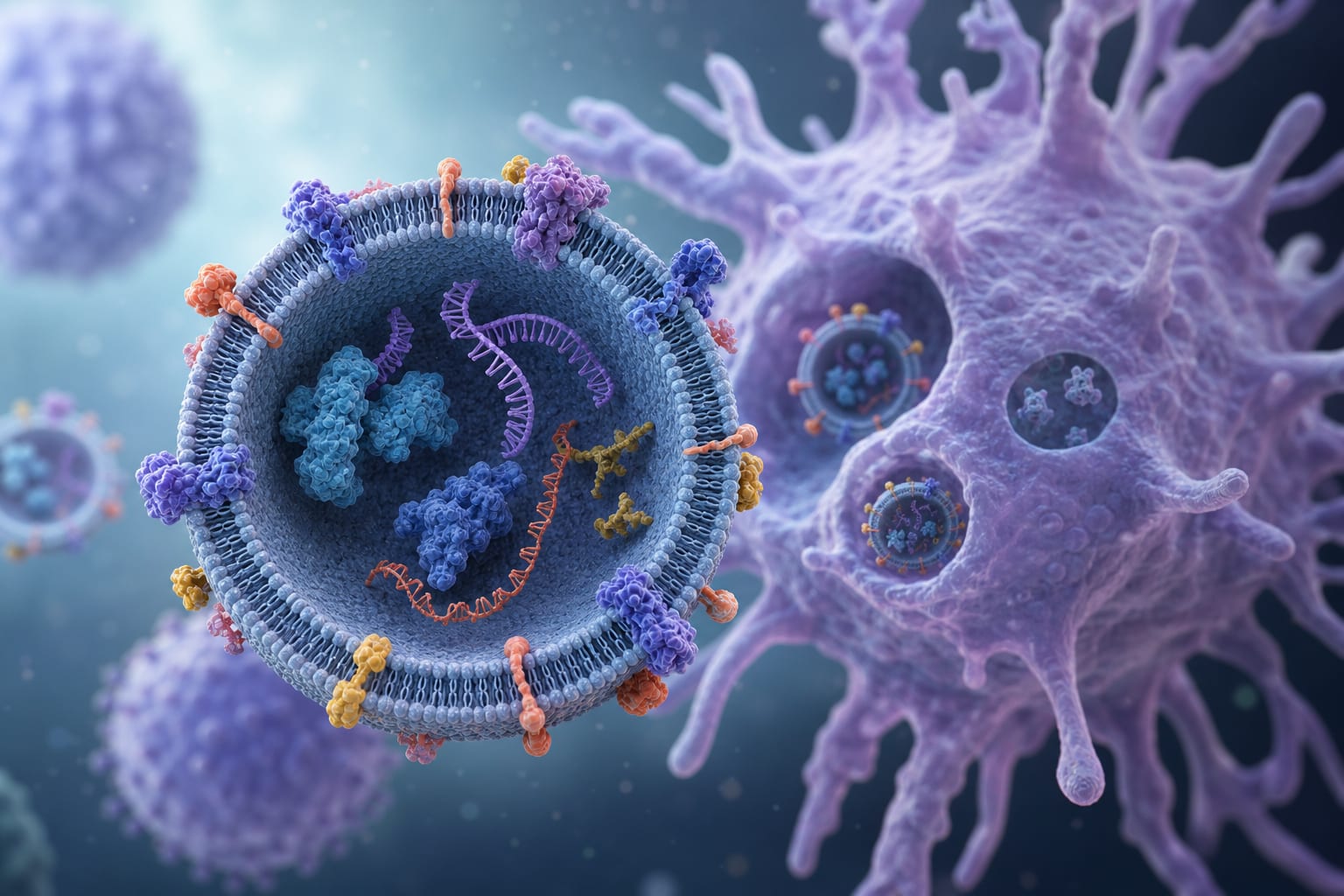
Extracellular Vesicles: Innovative Vaccine Delivery Systems for Viral Infections
-
By
-
Roopali Rajput
-
Madhu Khanna
-
Radhika
-
Jitender Sharma
-
Hardeep Kaur
-
June 19, 2026
Clinical Scorecard: Extracellular Vesicles: Innovative Vaccine Delivery Systems for Viral Infections
At a Glance
| Category | Detail |
|---|
| Condition | Viral Infections |
| Key Mechanisms | Extracellular vesicles (EVs) serve as carriers of immunogens, facilitating antigen presentation and immune response. |
| Target Population | Individuals at risk of viral infections. |
| Care Setting | Biomedical research and vaccine development. |
Key Highlights
- EVs provide safety and effective antigen presentation for vaccines.
- Research on EVs is expanding, focusing on their role in vaccine delivery.
- EVs have shown potential in eliciting robust immune responses against various viruses.
- Engineering strategies for EVs are being explored to enhance vaccine efficacy.
- EVs can cross biological barriers, such as the blood-brain barrier.
Guideline-Based Recommendations
Diagnosis
- Utilize EVs for targeted delivery of viral antigens.
Management
- Explore engineering strategies to optimize EVs for vaccine applications.
Monitoring & Follow-up
- Assess immune responses elicited by EV-based vaccines in clinical studies.
Risks
- Consider potential immunopathogenesis associated with specific viral antigens.
Patient & Prescribing Data
Patients requiring vaccination against viral infections.
EVs can enhance the delivery and efficacy of vaccines targeting various viral pathogens.
Clinical Best Practices
- Engage in ongoing research to refine EV engineering for vaccine delivery.
- Monitor the safety and efficacy of EV-based vaccines in clinical trials.
- Collaborate across disciplines to advance the application of EVs in vaccine development.
Related Resources & Content