Baicalin suppresses colorectal cancer proliferation and induces M1 polarization of tumor-associated macrophages by promoting proteasomal degradation of HK2 - Scorecard - MDSpire
Advertisement
Baicalin suppresses colorectal cancer proliferation and induces M1 polarization of tumor-associated macrophages by promoting proteasomal degradation of HK2
Clinical Scorecard: Baicalin Inhibits Proliferation of Colorectal Cancer Cells and Promotes M1 Macrophage Polarization Through Enhanced Proteasomal Degradation of HK2
At a Glance
Category
Detail
Condition
Colorectal Cancer (CRC)
Key Mechanisms
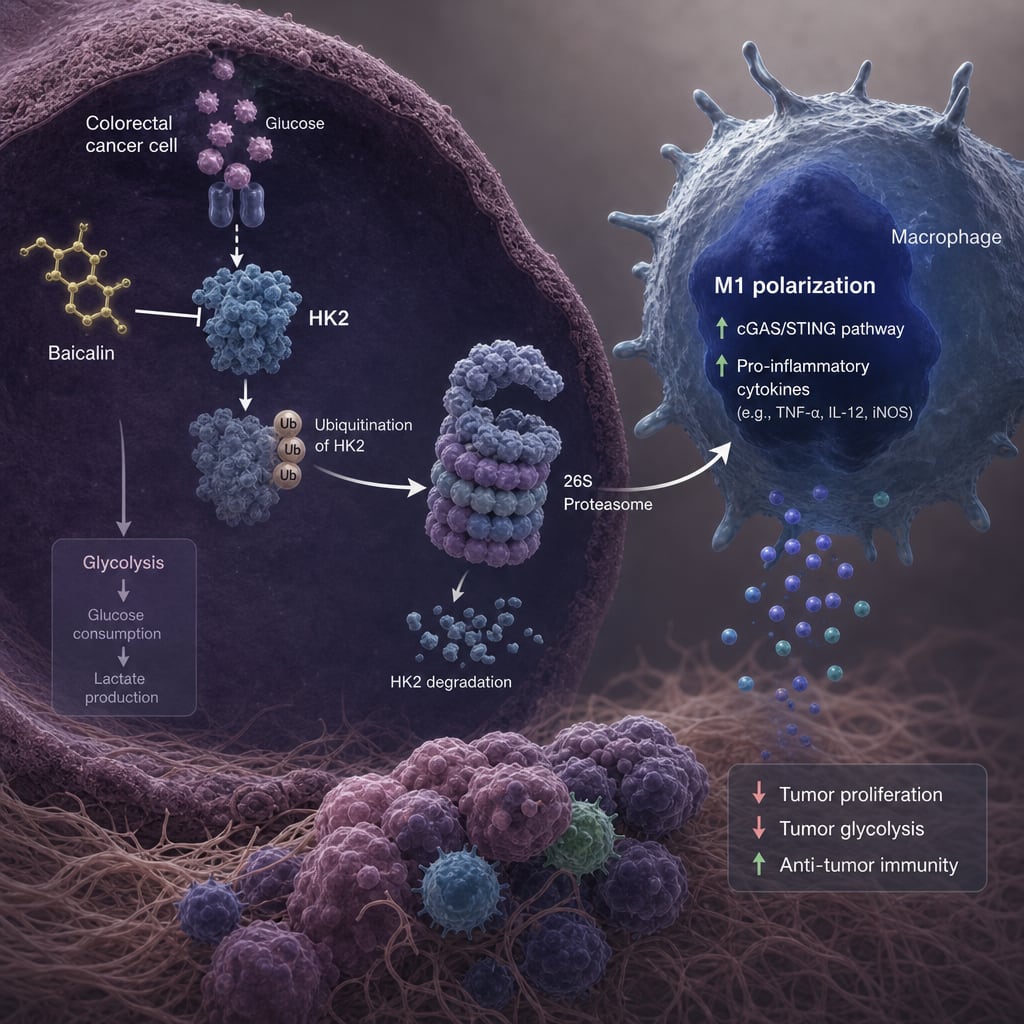
Inhibition of Hexokinase II (HK2) and promotion of its proteasomal degradation, leading to reduced glycolysis and activation of the cGAS/STING pathway.
Target Population
Patients with colorectal cancer.
Care Setting
Oncology research and clinical settings.
Key Highlights
Baicalin significantly suppresses colorectal cancer cell proliferation.
It promotes M1 macrophage polarization through HK2 degradation.
Baicalin activates the cGAS/STING signaling pathway, enhancing IFN-β production.
HK2 is a key therapeutic target due to its role in tumor metabolism.
The study suggests a novel approach for CRC treatment.
Guideline-Based Recommendations
Diagnosis
Utilize imaging and biopsy for CRC diagnosis.
Monitor for elevated levels of tumor markers.
Management
Consider baicalin as a potential adjunct therapy targeting HK2.
Integrate surgery, chemotherapy, and radiotherapy as needed.
Monitoring & Follow-up
Regular assessment of tumor markers and imaging to evaluate treatment response.
Risks
Potential systemic toxicity and drug resistance in current CRC therapies.
Patient & Prescribing Data
Patients diagnosed with colorectal cancer, particularly those with high HK2 expression.
Baicalin may enhance treatment efficacy by targeting metabolic pathways in CRC.
Clinical Best Practices
Incorporate metabolic profiling in CRC treatment planning.
Evaluate the immune microenvironment when considering therapies.