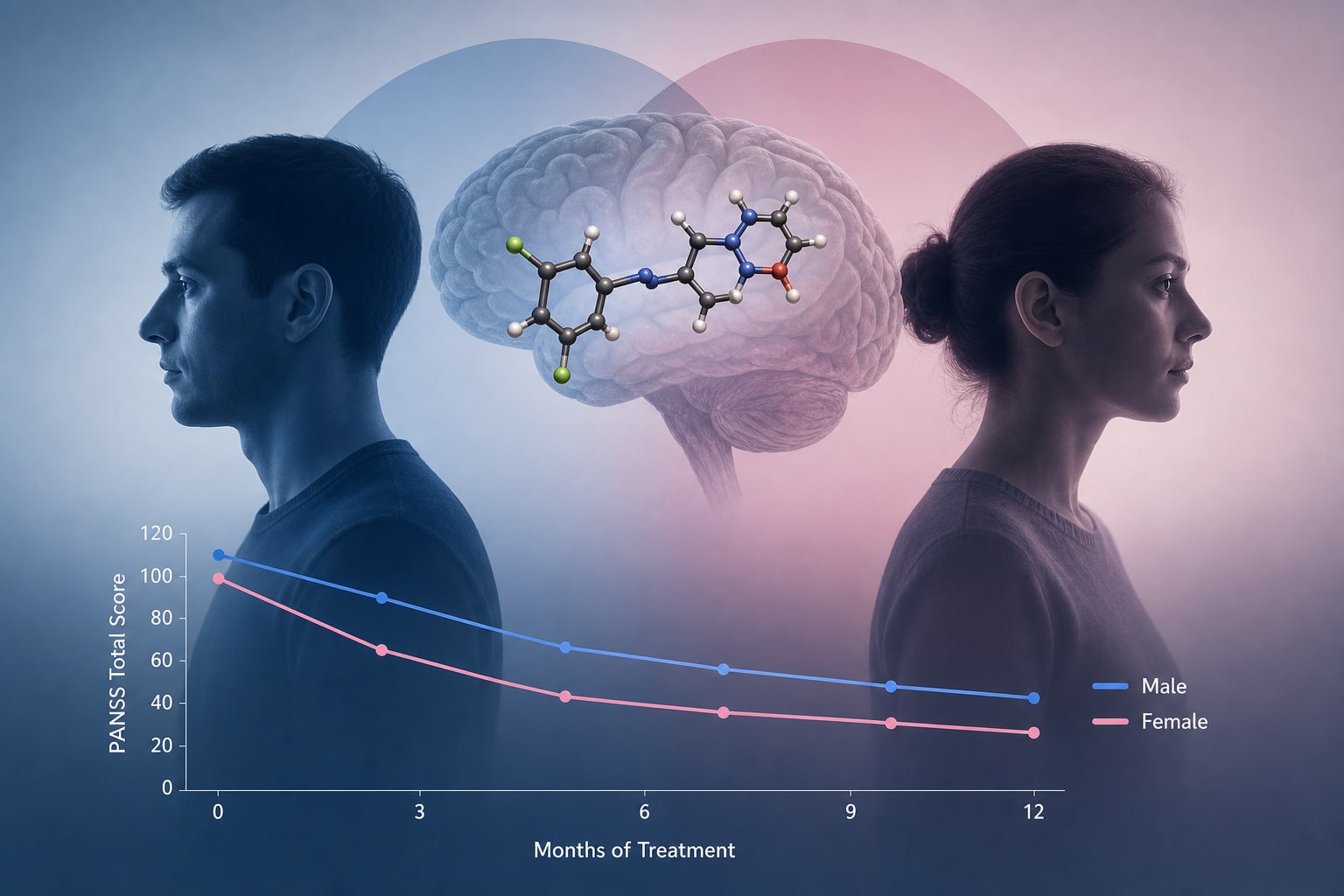
Gender-Differentiated Treatment Outcomes with Cariprazine: A Year-Long Naturalistic Study in Schizophrenia
-
By
-
Claudia Carmassi
-
Virginia Pedrinelli
-
Andrea Bordacchini
-
Berenice Rimoldi
-
Livia Parrini
-
Carlo A. Bertelloni
-
Valerio Dell’Oste
-
June 23, 2026
Clinical Scorecard: Gender-Differentiated Treatment Outcomes with Cariprazine: A Year-Long Naturalistic Study in Schizophrenia
At a Glance
| Category | Detail |
|---|
| Condition | Schizophrenia |
| Key Mechanisms | Cariprazine acts on D2, 5-HT1A, 5-HT2A, 5-HT2B, and D3 receptors. |
| Target Population | Adults diagnosed with schizophrenia |
| Care Setting | Outpatient psychiatric services |
Key Highlights
- Study involved 32 subjects (15 men, 17 women) over 12 months.
- Both genders showed improvements in PANSS subscale symptoms after treatment.
- Gender-specific response profiles emerged in symptom subscales.
- Mean dose of cariprazine was 4.2 mg for men and 4.0 mg for women.
- No significant differences in overall efficacy between genders.
Guideline-Based Recommendations
Diagnosis
- Diagnosis based on DSM-5-TR criteria.
Management
- Cariprazine is effective for treating schizophrenia symptoms.
Monitoring & Follow-up
- Assess symptoms using PANSS at baseline, 6 months, and 12 months.
Risks
- Potential for gender-specific side effects and response variations.
Patient & Prescribing Data
Adults with schizophrenia
Cariprazine shows efficacy across genders with specific response profiles.
Clinical Best Practices
- Consider gender differences in treatment response when prescribing antipsychotics.
- Utilize validated scales like PANSS for symptom assessment.
Related Resources & Content