Clinical Scorecard: Federal Agency Advises Against Allocating Federal Funds for Fentanyl Testing Strips
At a Glance
Category
Detail
Condition
Opioid use disorder and illicit drug use
Key Mechanisms
Harm reduction strategies including drug adulterant testing, medication-assisted treatment, and supportive services
Target Population
People who use illicit drugs, including those with opioid use disorder
Care Setting
Addiction treatment programs, public health, law enforcement, and community harm reduction services
Key Highlights
SAMHSA advises against using federal funds for fentanyl testing strips and other harm reduction supplies for public distribution.
Medications like methadone and buprenorphine should be used as part of long-term recovery with accompanying support services, not as indefinite standalone treatments.
Federal funding is encouraged for naloxone distribution, sharps disposal, and infectious disease testing and vaccination, but not for paraphernalia that may facilitate drug use.
Guideline-Based Recommendations
Diagnosis
Use of fentanyl, xylazine, and medetomidine test strips is restricted to professional settings such as public health, law enforcement, and medical workers.
Management
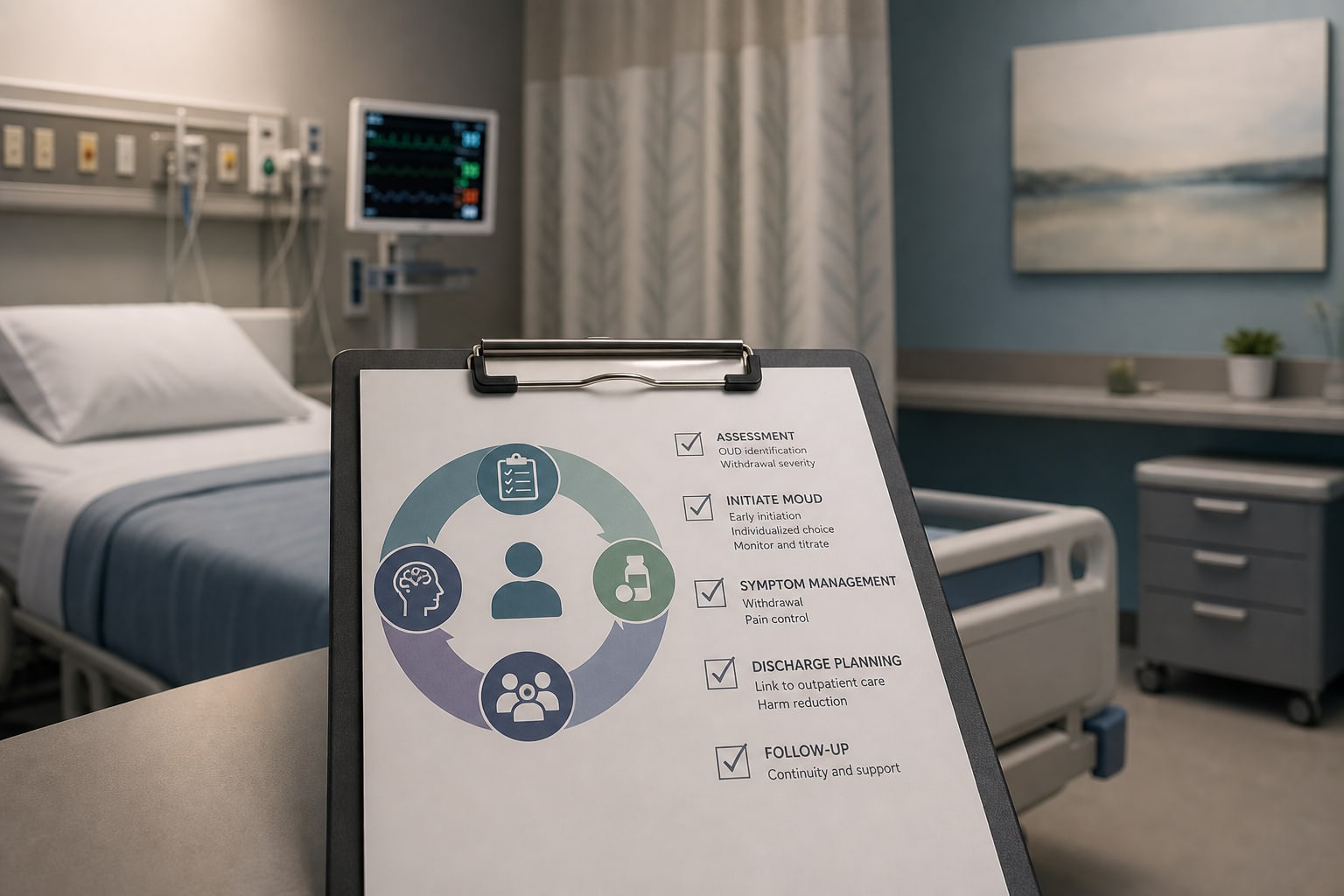
Medications for opioid use disorder (methadone, buprenorphine) should be integrated with psychosocial counseling and recovery support services.
Clinicians should discuss medication continuation with patients at least annually.
Monitoring & Follow-up
Ongoing medication management is recommended alongside psychosocial support.
Patient decisions to decline psychosocial treatment should not delay pharmacotherapy.
Risks
Federal funds should not support supplies or services perceived to promote or facilitate illicit drug use.
Long-term medication use without support services is discouraged as a default approach.
Patient & Prescribing Data
Individuals with opioid use disorder receiving medication-assisted treatment
Longer durations of medication treatment generally yield better outcomes; withholding medication due to lack of psychosocial services is not supported by current standards.
Clinical Best Practices
Incorporate psychosocial counseling and recovery support alongside medication-assisted treatment.
Use naloxone and sharps disposal kits to reduce overdose and infection risks.
Engage patients in regular discussions about their treatment preferences and continuation of medications.