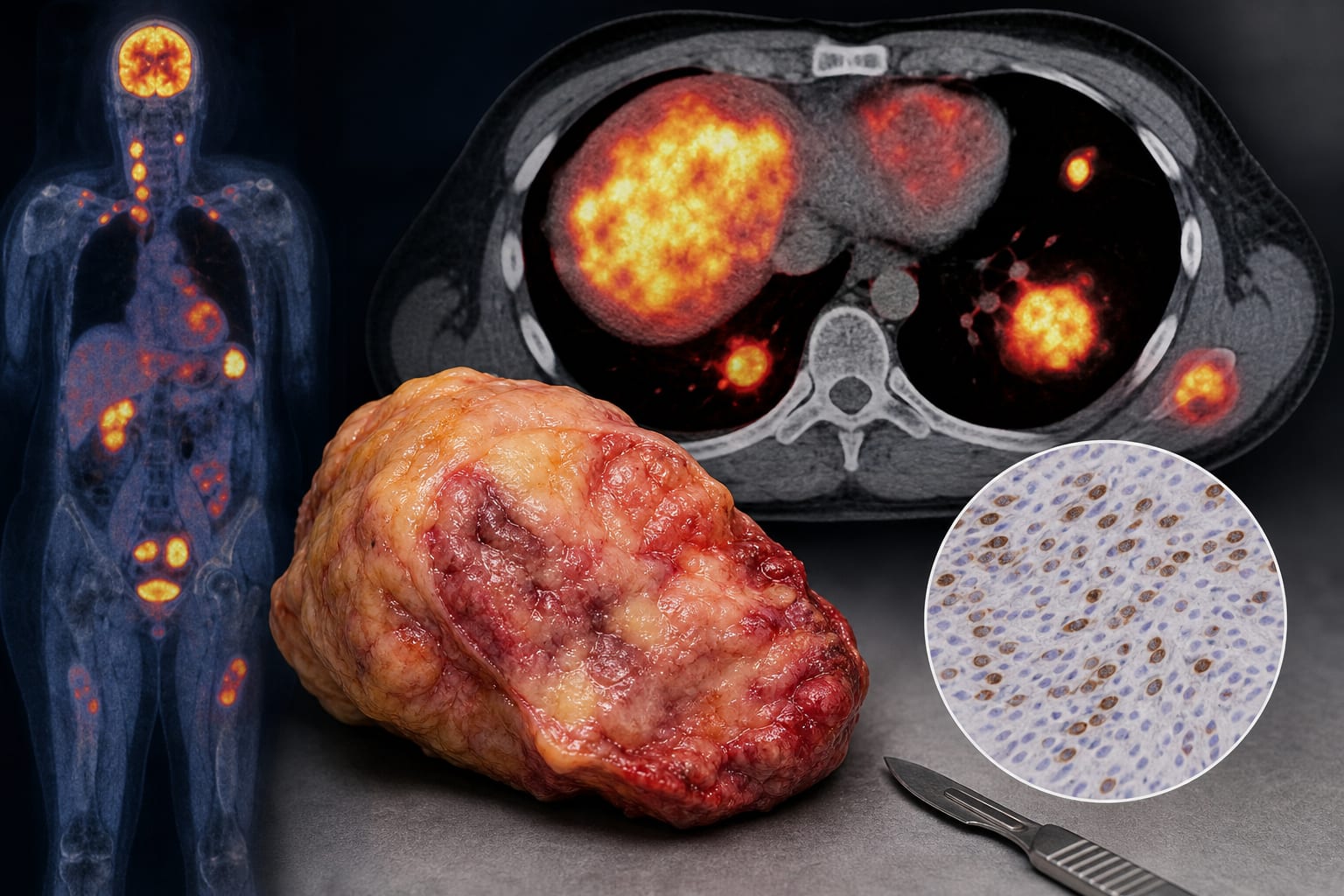
Clinical Scorecard: Concurrent Giant Cell Tumor and Enchondroma of the Pubic Bone: A Case Study
At a Glance
Category
Detail
Condition
Key Mechanisms
GCTB is characterized by locally aggressive behavior, intermediate-grade classification, and driver mutations in the H3F3A gene; Enchondroma is a benign cartilaginous tumor.
Target Population
Care Setting
Key Highlights
GCTB accounts for 4%-5% of primary bone tumors, with rare pelvic involvement.
Concurrent occurrence of GCTB and enchondroma in the same anatomical location is exceedingly rare.
Histopathological assessment is crucial for accurate diagnosis.
GCTB can exhibit aggressive features, including soft tissue extension and high Ki-67 proliferation index.
The coexistence of GCTB and enchondroma is a unique case in bone tumors.
Guideline-Based Recommendations
Diagnosis
Histopathological analysis is essential for distinguishing GCTB from other bone lesions.
Utilize imaging studies (CT, MRI) to assess tumor characteristics.
Management
Surgical excision of the tumor with a margin of healthy tissue is recommended.
Monitoring & Follow-up
Regular follow-up imaging to monitor for recurrence or metastasis.
Risks
Potential for local aggressiveness and rare progression to pulmonary metastases.
Patient & Prescribing Data
Surgical intervention (excision of the tumor) was performed after thorough preoperative assessments.
Clinical Best Practices
Utilize imaging studies (CT, MRI) to assess tumor characteristics.
Conduct comprehensive histopathological evaluations for accurate diagnosis.
Consider multidisciplinary approaches for management of complex cases.
Consider genetic testing for H3F3A mutations in GCTB cases.