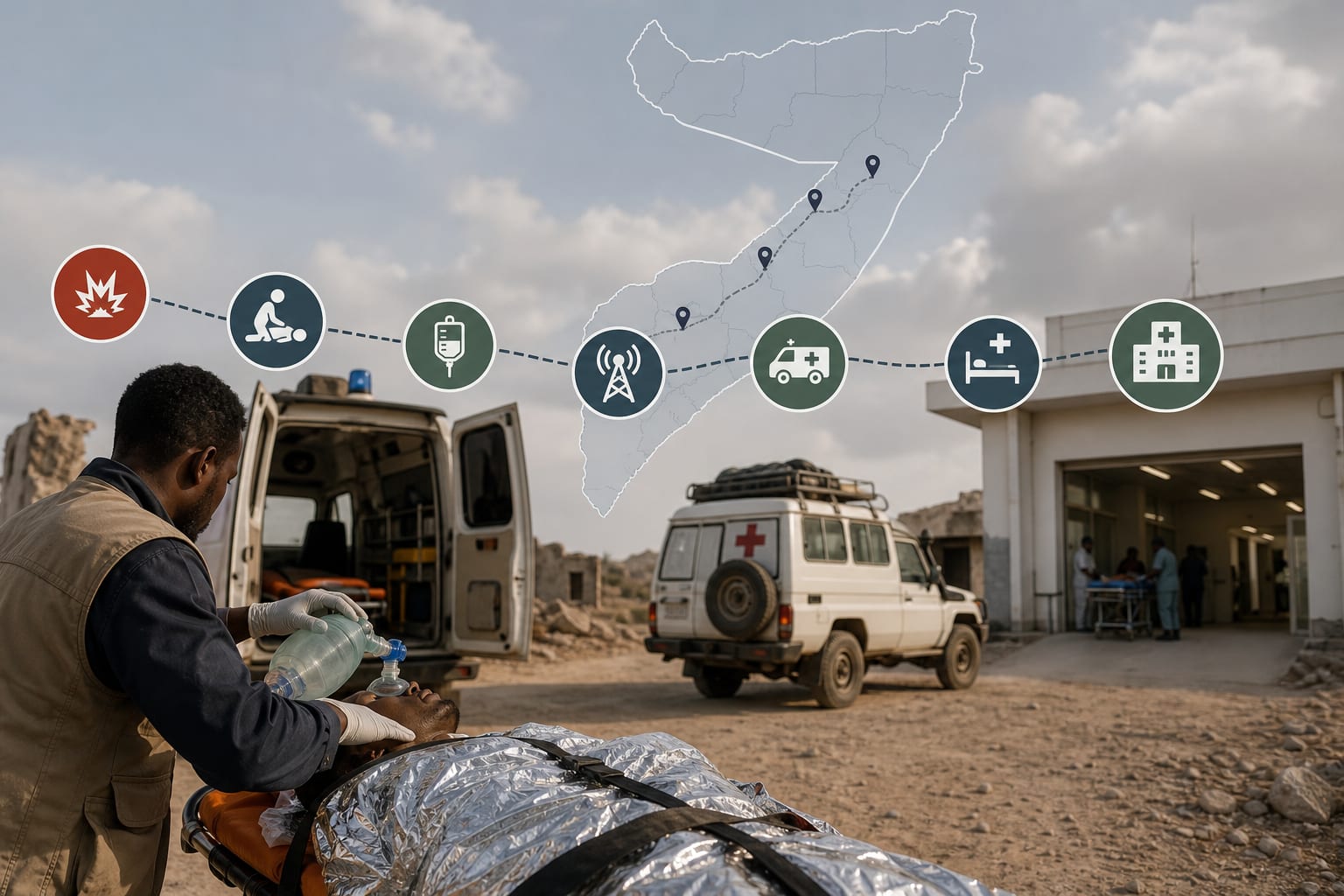
The missing middle in war and disaster critical care: stabilization, referral, and hospital pre-alert in conflict-affected Somalia - Scorecard - MDSpire
Clinical Scorecard: Addressing the Gap in Critical Care During Conflict and Disasters: The Importance of Stabilization, Referral, and Hospital Pre-Alert in Somalia
At a Glance
Category
Detail
Condition
Critical care in conflict and disaster settings
Key Mechanisms
Stabilization, referral, transport, pre-alert, and handover
Target Population
Critically ill patients in conflict-affected areas
Care Setting
Emergency medical services and hospitals
Key Highlights
Over 80% of hospitals in Somalia assessed fell below critical care readiness threshold.
A conflict-adapted referral pathway integrates triage, stabilization, and transport.
Pre-alert communication is essential for effective patient handover.
Preparedness can be measured through documented stabilization and timely transfers.
Local agreements and drills can improve referral pathways in resource-limited settings.
Guideline-Based Recommendations
Diagnosis
Rapid triage to identify immediate threats such as airway obstruction and major blood loss.
Management
Provide minimum stabilization before transport, including airway support and hemorrhage control.
Monitoring & Follow-up
Track vital signs during transport and ensure complete handover at receiving facility.
Risks
Multiple interfacility transfers can delay care and increase risk of patient deterioration.
Patient & Prescribing Data
Interventions should be based on patient condition and available resources, ensuring they are deliverable safely and rapidly.
Clinical Best Practices
Use a standardized pre-alert format to communicate essential patient information.
Establish contingency procedures for communication failures during transport.
Regularly review and evaluate referral pathways through drills and feedback.