Integrated management of atrial fibrillation and comorbidities in the community: a generalist-specialist collaborative RCT and subgroup analysis - Scorecard - MDSpire
Conexiant’s news site is now MDSpire News. Learn more
Advertisement
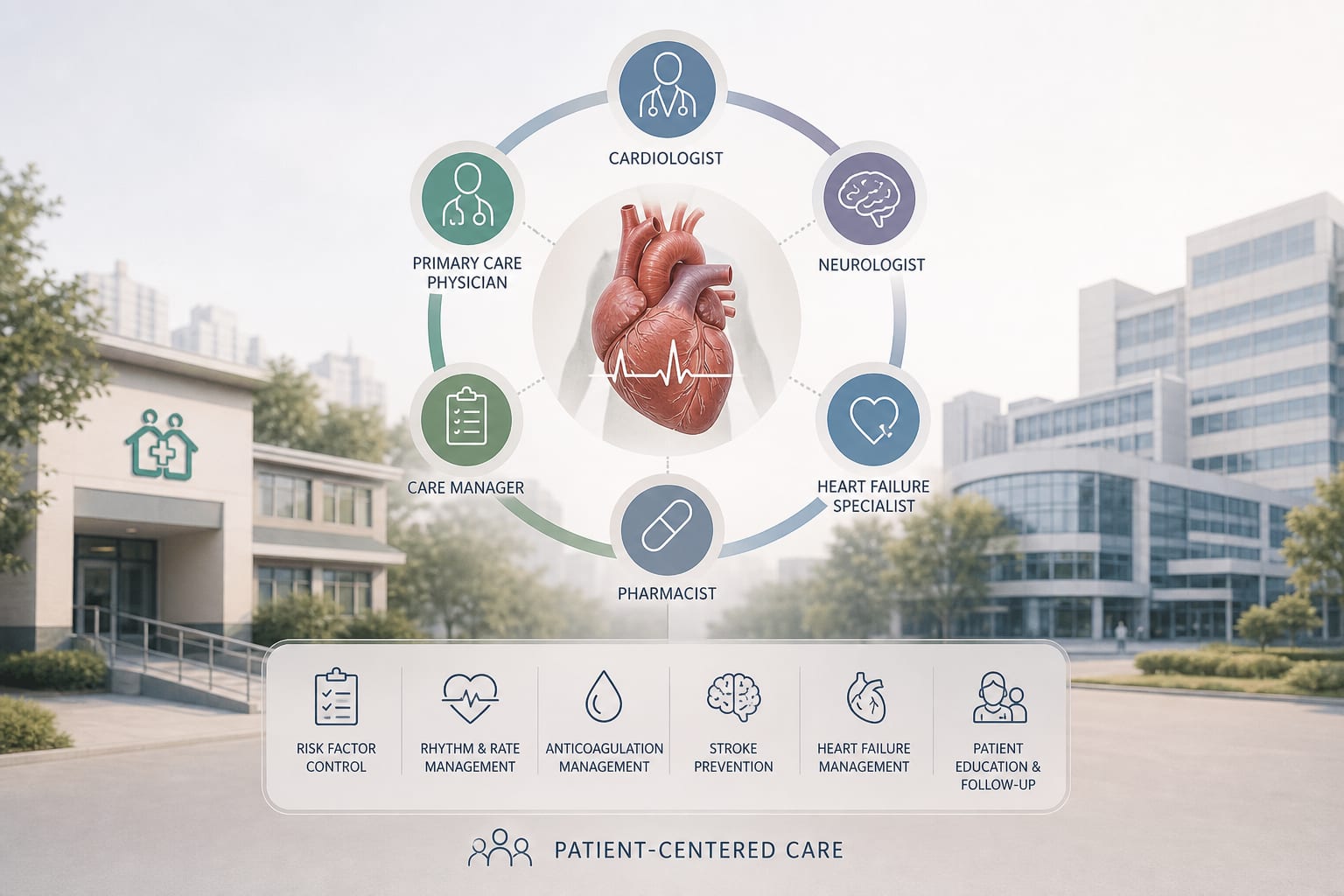
Collaborative Care Approach for Atrial Fibrillation and Associated Comorbidities in Community Settings: Results from a Randomized Controlled Trial and Subgroup Analysis
Clinical Scorecard: Collaborative Care Approach for Atrial Fibrillation and Associated Comorbidities in Community Settings: Results from a Randomized Controlled Trial and Subgroup Analysis
At a Glance
Category
Detail
Condition
Atrial Fibrillation (AF)
Key Mechanisms
Generalist-specialist collaboration and cardio-cerebrovascular co-management.
Target Population
Patients with atrial fibrillation in community settings.
Care Setting
Community-based integrated care model.
Key Highlights
The intervention group showed significantly higher attainment rates for BMI, blood pressure, and blood glucose control.
Improvement in left ventricular ejection fraction (LVEF) was significant in the intervention group.
Standardized usage rates for anticoagulant and heart rate control medications were higher in the intervention group.
The incidence of heart failure or stroke was significantly lower in the intervention group.
No significant interactions for age, sex, or CHA2DS2-VASc score were observed.
Guideline-Based Recommendations
Diagnosis
Atrial fibrillation diagnosed by 12-lead ECG or 24-hour Holter monitoring.
Non-valvular AF confirmed by echocardiogram.
Management
Integrated, patient-centered management of AF with emphasis on comprehensive control of cardiovascular risk factors.
Monitoring & Follow-up
Regular follow-up to assess risk factor control and medication adherence.
Risks
Inadequate risk factor control and low adherence to anticoagulant therapy increase stroke risk.
Patient & Prescribing Data
Patients with atrial fibrillation attending community health service centers.
Higher rates of medication adherence and risk factor control were observed with the collaborative care model.
Clinical Best Practices
Implement generalist-specialist collaborative care models in community settings.
Focus on comprehensive management of hypertension, diabetes, and other cardiovascular risk factors.