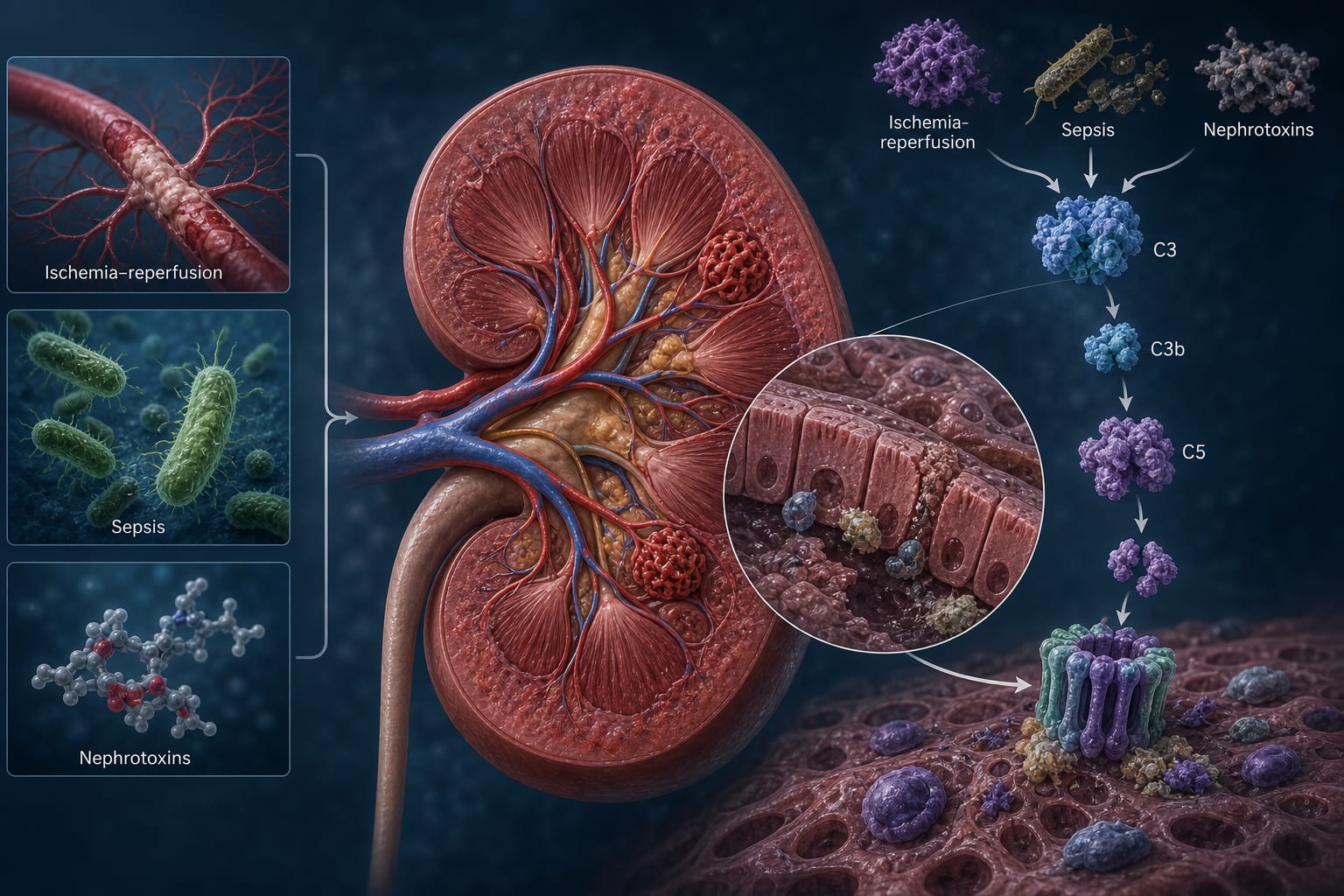
Complement in acute kidney injury: a convergent pathogenic pathway in multifactorial renal damage
-
By
-
Dan Yi
-
Rong Yang
-
Yue Guo
-
Hua Zhou
-
Junjun Luan
-
May 22, 2026
-
Clinical Scorecard: The Role of Complement Activation in Acute Kidney Injury: A Shared Pathogenic Mechanism in Diverse Renal Impairments
At a Glance
| Category | Detail |
|---|
| Condition | |
| Key Mechanisms | Dysregulated complement activation contributing to inflammatory amplification, microcirculatory dysfunction, and tubular injury. |
| Target Population | |
| Care Setting | |
Key Highlights
- AKI is characterized by substantial etiologic heterogeneity and high morbidity and mortality.
- Complement activation plays a significant role in the pathogenesis of AKI.
- Diverse insults such as ischemia-reperfusion injury and nephrotoxins can initiate complement activation.
Guideline-Based Recommendations
Diagnosis
- AKI is defined by increased serum creatinine and/or a decline in urine output.
Management
- Focus on shared and etiology-specific mechanisms across major AKI contexts.
Monitoring & Follow-up
- Monitor complement activation and its regulatory networks in AKI patients.
Risks
- Dysregulated complement activation can exacerbate oxidative stress and microcirculatory dysfunction.
Patient & Prescribing Data
Complement-targeted strategies may offer potential for precision therapy.
Clinical Best Practices
- Recognize the role of complement activation in AKI pathogenesis.
Related Resources & Content