α-cell SLC38A5 supports amino acid-induced α-cell proliferation and glucagon secretion - Scorecard - MDSpire

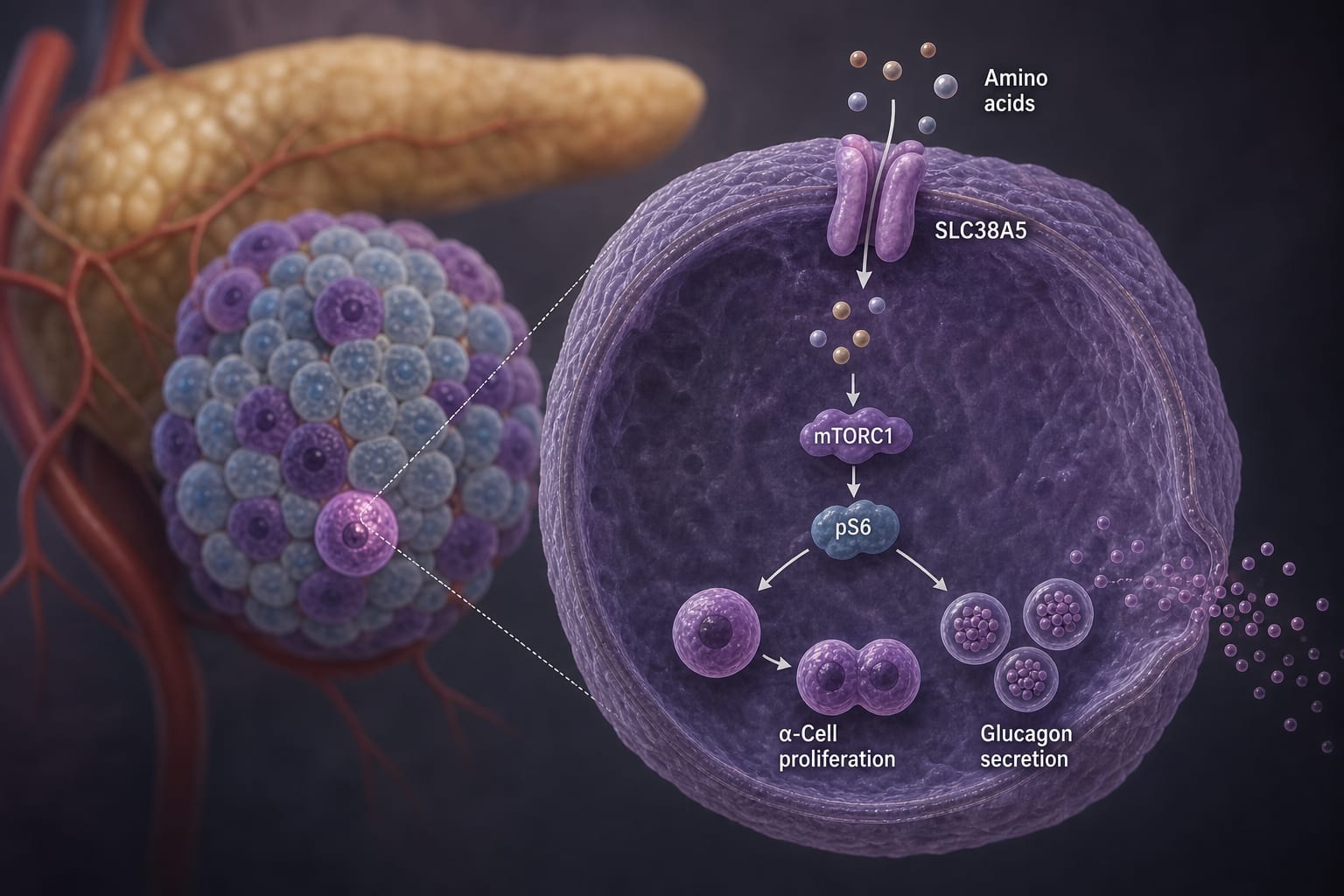
α-cell SLC38A5 supports amino acid-induced α-cell proliferation and glucagon secretion

  • By

  • Katelyn Sellick

  • Anna Marie R. Schornack

  • Tyler J. Rodgers

  • Fedora O. Ogodo

  • Mounika Aramandla

  • Jade E. Stanley

  • Walter Siv

  • Matthew Shou

  • Nitin C. Shankar

  • Soham S. Saraf

  • Diana E. Stanescu

  • E. Danielle Dean

  • June 15, 2026

  • 0 min

Share

Clinical Scorecard: The Role of SLC38A5 in Promoting α-Cell Growth and Glucagon Release in Response to Amino Acids

At a Glance

CategoryDetail
Condition
Key Mechanisms
Target PopulationIndividuals with diabetes experiencing glucagon dysregulation.
Care Setting

Key Highlights

  • SLC38A5 is essential for amino acid-induced glucagon secretion and α-cell proliferation.
  • α-cell-specific deletion of Slc38a5 reduces glucagon secretion despite elevated amino acids.
  • SLC38A5 is highly expressed in pancreatic α cells in both mice and humans.

Guideline-Based Recommendations

Diagnosis

  • Monitor glucagon levels in patients with diabetes.

Management

  • Consider targeting amino acid transport mechanisms.

Monitoring & Follow-up

  • Evaluate circulating amino acid levels.

Risks

  • Dysregulated glucagon secretion can lead to hyperglycemia.

Patient & Prescribing Data

Understanding SLC38A5's role may inform future treatments.

Clinical Best Practices

  • Assess the role of amino acids in glucagon secretion.
  • Investigate the impact of SLC38A5 on α-cell biology.

Related Resources & Content

Original Source(s)

Related Content