Clinical Scorecard: HNGCIscore Based on Tumor Microenvironment Identifies Subgroups Sensitive to Immunotherapy in HER2-Negative Advanced Gastric Cancer Retreatment with ICIs
At a Glance
Category
Detail
Condition
HER2-Negative Advanced Gastric Cancer
Key Mechanisms
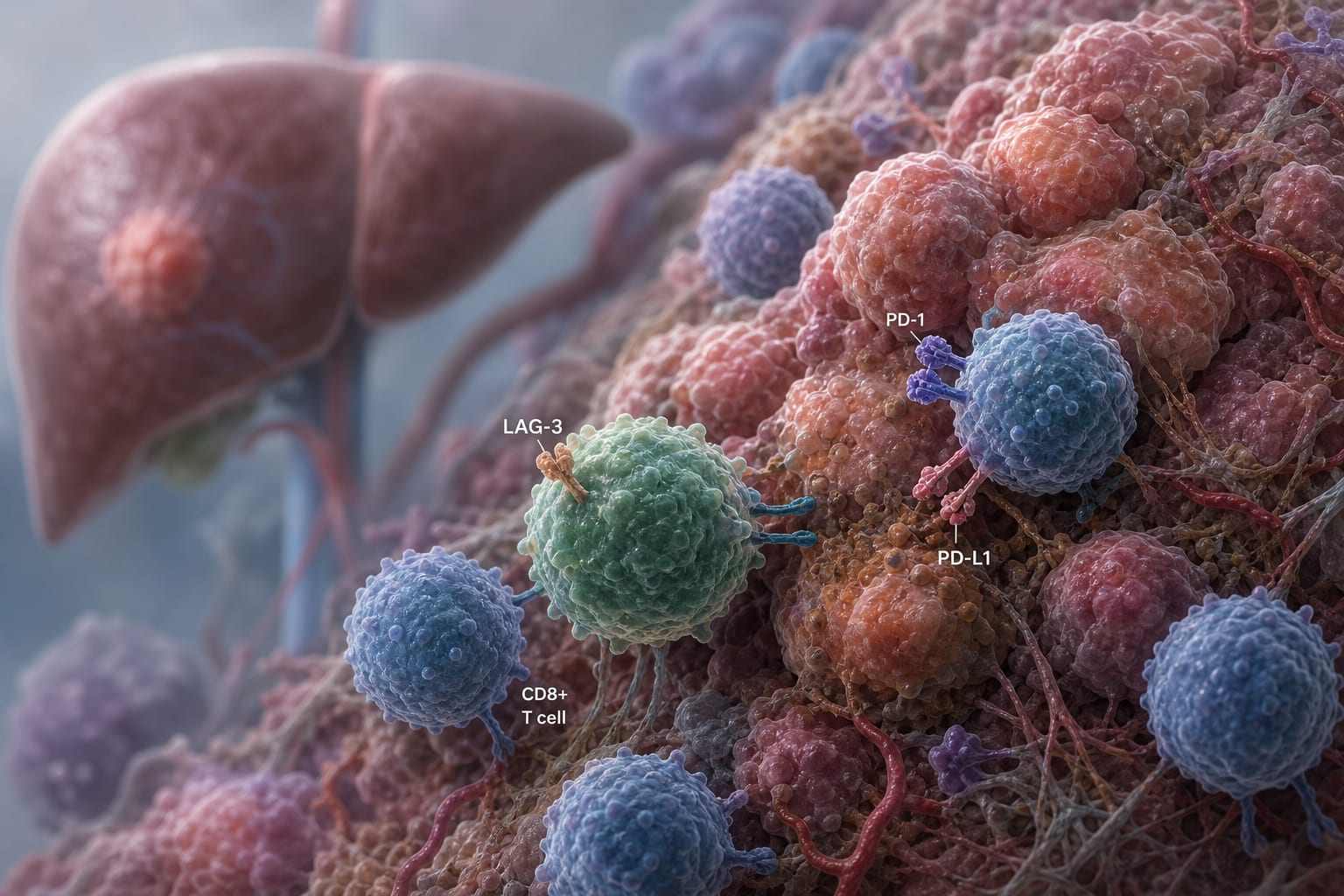
Immune checkpoint inhibitors (ICIs) and tumor microenvironment (TME) biomarkers
Target Population
Patients with HER2-negative advanced gastric cancer who have progressed after first-line ICI therapy
Care Setting
Multicenter retrospective study evaluating ICI-based retreatment
Key Highlights
Objective response rate (ORR) of 6.85% in cross-line ICI continuation and 5.63% in ICI rechallenge
Disease control rate (DCR) of 50.68% in cross-line and 52.11% in rechallenge groups
Median progression-free survival during retreatment (PFS2) was 3.0 months for cross-line and 5.5 months for rechallenge
Identification of 35 candidate genes associated with immunotherapy response
HNGCIscore developed to stratify patients based on TME characteristics
Guideline-Based Recommendations
Diagnosis
Use of multi-omics data to infer HER2-negative status
Management
Consider ICI-based retreatment for selected patients after progression on first-line therapy
Monitoring & Follow-up
Monitor for treatment-related adverse events, which occurred in 58.9% and 77.5% of cross-line and rechallenge groups, respectively
Risks
Any-grade treatment-related adverse events and grade 3–4 events were observed in both groups
Patient & Prescribing Data
144 patients with HER2-negative advanced gastric cancer
Retreatment with ICIs shows feasibility with measurable disease control and manageable toxicity
Clinical Best Practices
Utilize the HNGCIscore framework to identify patients likely to benefit from immunotherapy
Perform protein-level validation of biomarkers such as GBP1, IDO1, and CD72