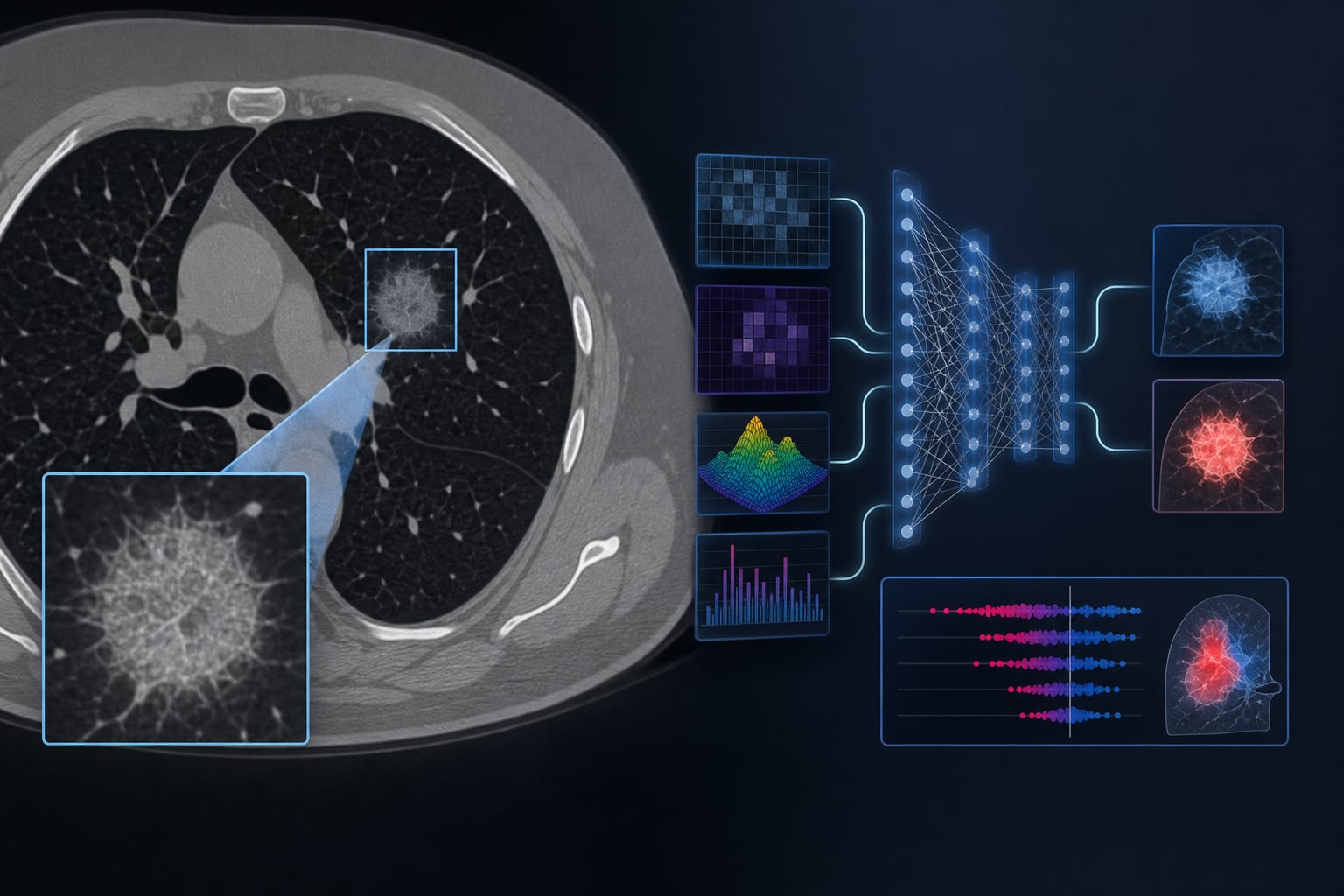
Clinical Scorecard: Evaluation of AI-Enhanced Dual Interpretation of Chest X-rays for Identifying Clinically Significant Missed Diagnoses: A Study Across Two Centers
At a Glance
Category
Detail
Condition
Missed clinically significant findings on chest radiographs including lung nodules, pneumonia, pneumothorax, device malposition, and rib fractures
Key Mechanisms
AI-based deep learning analysis of chest radiographs combined with natural language processing of radiology reports to identify discrepancies and missed findings
Target Population
Adult patients (≥18 years) undergoing posteroanterior chest radiography in secondary and tertiary care settings
Care Setting
Radiology departments in general hospitals and tertiary oncology centers
Key Highlights
Chest radiography is prone to missed findings due to 2D projection limitations and interpretation challenges.
AI-assisted double reading uses AI as a secondary reader post-report sign-off to detect missed clinically actionable findings without disrupting workflow.
The AI system focuses on key pathologies such as nodules, consolidation, pneumothorax, rib fractures, and device malposition to trigger further review.
Guideline-Based Recommendations
Diagnosis
Use posteroanterior chest radiographs for AI analysis; exclude anteroposterior and bedside radiographs.
Apply AI software validated for detecting clinically actionable findings including nodules, consolidation, pneumothorax, and device malposition.
Management
Implement AI-assisted double reading as a secondary review process after initial radiologist reporting to identify missed findings.
Focus radiologist review on AI-flagged discrepancies to improve detection without increasing primary reading workload.
Monitoring & Follow-up
Monitor AI detection probabilities and heatmaps to verify flagged abnormalities.
Track discrepancy rates and clinical relevance of missed findings identified by AI to assess system performance.
Risks
Potential increase in radiologist workload if AI results are not seamlessly integrated or produce false positives.
Diagnostic errors from missed findings can lead to delayed treatment and medicolegal consequences.
Patient & Prescribing Data
Adults undergoing chest radiography in secondary and tertiary care hospitals
Early detection of missed findings such as lung cancer nodules can significantly impact treatment options and prognosis.
Clinical Best Practices
Utilize AI as a secondary reader to avoid interrupting primary radiologist workflow.
Limit AI review to clinically actionable findings to optimize efficiency and reduce false positives.
Integrate AI results with heatmaps for explainability and easier verification by radiologists.
Exclude non-PA chest radiographs from AI analysis to maintain accuracy.