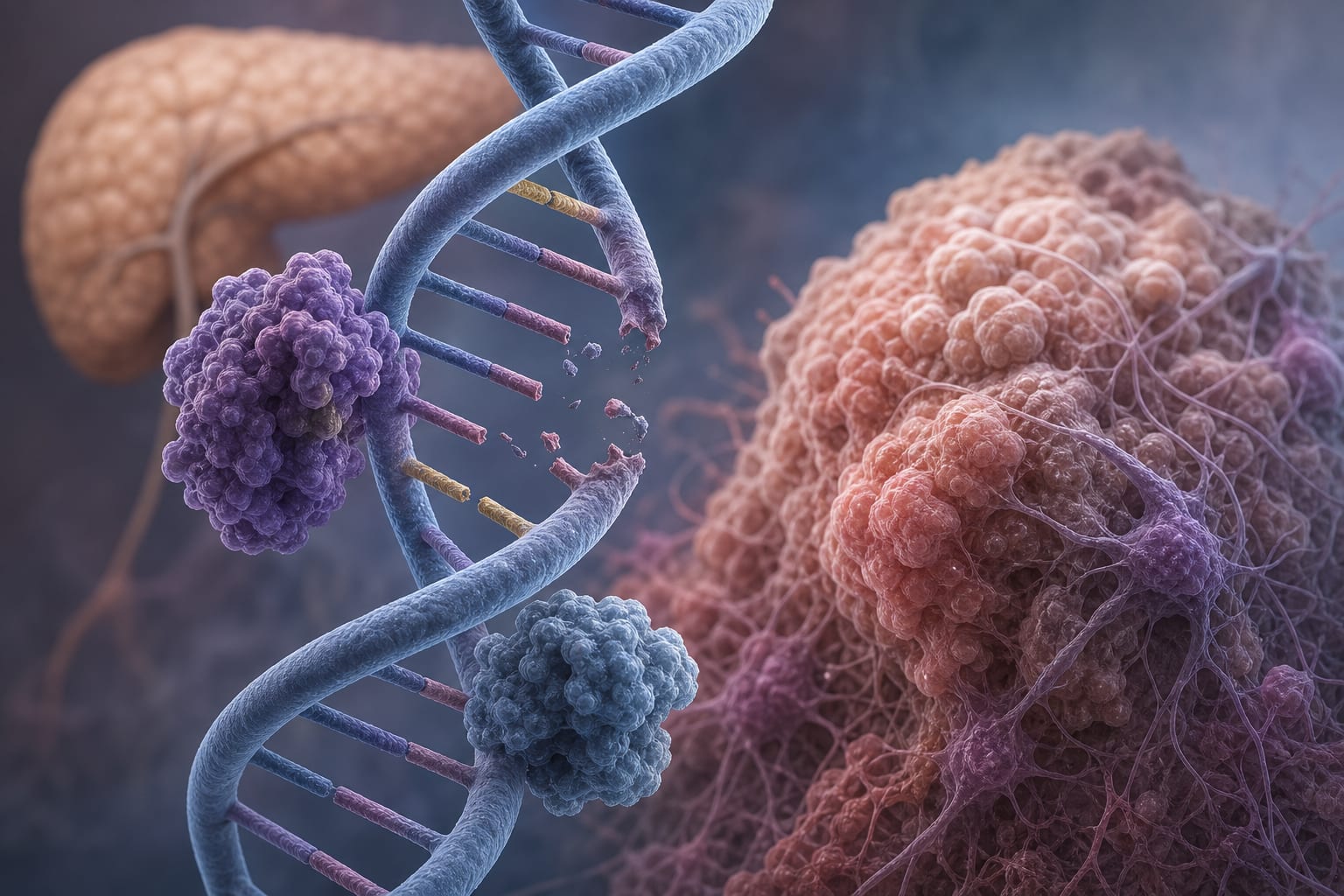
DNA damage response inhibitors in pancreatic cancer: progress and challenges
-
By
-
Yeyao Wu
-
Wei Li
-
Mengyun Wu
-
June 15, 2026
-
Clinical Scorecard: Advancements and Obstacles in the Use of DNA Damage Response Inhibitors for Treating Pancreatic Cancer
At a Glance
| Category | Detail |
|---|
| Condition | Pancreatic Cancer |
| Key Mechanisms | DNA Damage Response (DDR) pathways, including homologous recombination repair (HRR) deficiencies. |
| Target Population | Patients with pancreatic cancer, particularly those with BRCA1/2 and PALB2 mutations. |
| Care Setting | Clinical oncology settings, focusing on targeted therapies. |
Key Highlights
- DDR inhibitors show promise as targeted treatments for pancreatic cancer.
- Single-agent DDR inhibitors face limitations such as resistance and narrow beneficiary population.
- Emerging combination strategies aim to overcome resistance and extend benefits beyond BRCA-mutant patients.
- Current challenges include limited accessibility and dose-limiting toxicities.
- Future directions involve novel biomarkers and adaptive trial designs.
Guideline-Based Recommendations
Diagnosis
- Identify HRR deficiencies through genetic testing for BRCA1/2 and PALB2 mutations.
Management
- Consider DDR-targeted therapies in combination with other treatment modalities.
Monitoring & Follow-up
- Utilize liquid biopsy for real-time resistance monitoring.
Risks
- Be aware of primary and acquired resistance to DDR inhibitors.
Patient & Prescribing Data
Patients with advanced pancreatic cancer, particularly those with specific genetic mutations.
DDR inhibitors are effective in a subset of patients but face challenges in broader application.
Clinical Best Practices
- Adopt combination therapy approaches to enhance treatment efficacy.
- Monitor for resistance mechanisms in patients undergoing DDR-targeted therapy.
Related Resources & Content