Case Report: Dupilumab as a steroid-sparing therapeutic option in refractory anti-p200 pemphigoid: real-world effectiveness in a patient with significant comorbidities - Scorecard - MDSpire
Clinical Scorecard: Clinical Case Study: Efficacy of Dupilumab as a Steroid-Sparing Treatment for Refractory Anti-p200 Pemphigoid in a Patient with Multiple Comorbidities
At a Glance
Category
Detail
Condition
Anti-p200 pemphigoid
Key Mechanisms
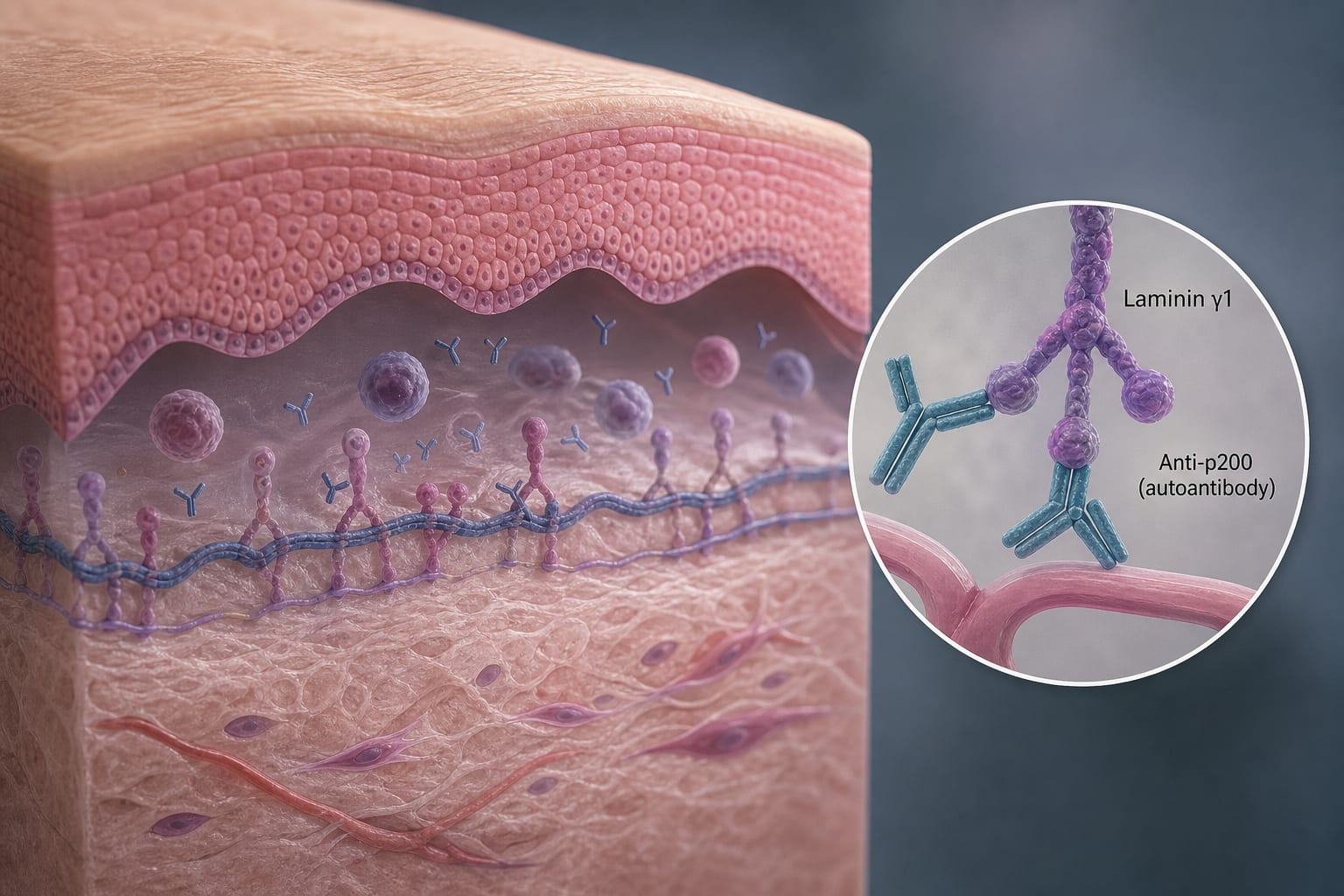
Autoantibodies against a 200-kDa basement membrane zone protein, primarily laminin γ1.
Target Population
Patients with refractory anti-p200 pemphigoid and corticosteroid-related toxicity.
Care Setting
Tertiary dermatology outpatient clinic
Key Highlights
Dupilumab led to substantial improvement in pruritus within two weeks.
Near-complete remission achieved by two months.
Corticosteroid tapering was possible without adverse events.
Patient had a history of complicated diverticulitis.
Prior treatments included high-dose prednisone and dapsone.
Guideline-Based Recommendations
Diagnosis
Diagnosis requires clinical findings, histopathology, direct immunofluorescence, and specialized immunological assays.
Management
Systemic corticosteroids are the cornerstone of treatment, often with dapsone.
Monitoring & Follow-up
Monitor for disease activity and treatment-related adverse effects.
Risks
Extended corticosteroid exposure can lead to significant morbidity.
Patient & Prescribing Data
A 49-year-old woman with refractory anti-p200 pemphigoid and multiple comorbidities.
Dupilumab was initiated as a steroid-sparing option after failure of high-dose prednisone and dapsone.
Clinical Best Practices
Consider dupilumab for patients with refractory anti-p200 pemphigoid.
Assess for corticosteroid-related adverse effects in long-term management.