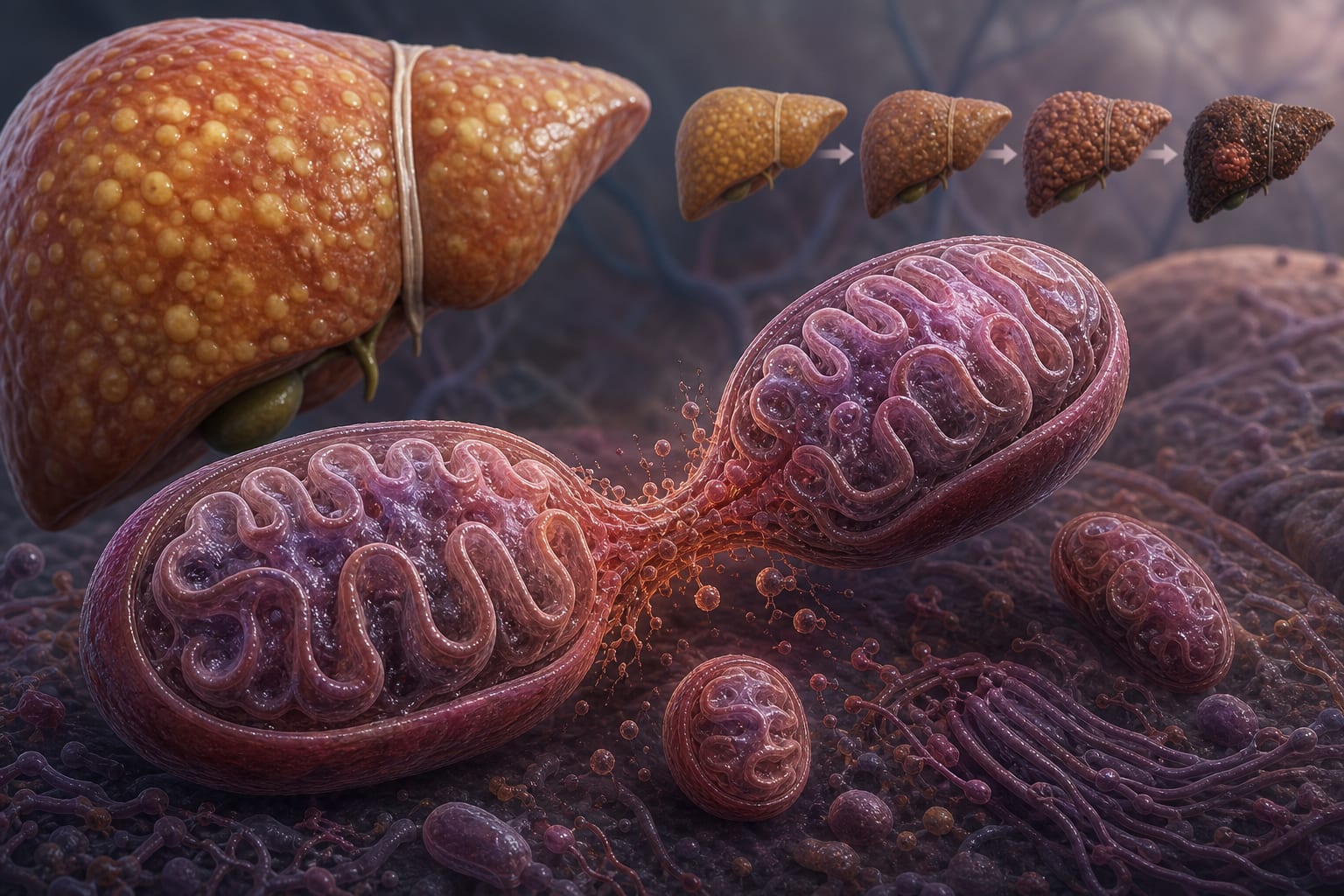
The role of mitochondrial dynamics in metabolic dysfunction–associated steatotic liver disease
-
By
-
Ningxi Yang
-
Yarong Hao
-
May 13, 2026
-
Clinical Scorecard: Mitochondrial Dynamics and Their Impact on Metabolic Dysfunction-Related Steatotic Liver Disease
At a Glance
| Category | Detail |
|---|
| Condition | Metabolic Dysfunction-Associated Steatotic Liver Disease (MASLD) |
| Key Mechanisms | Mitochondrial dynamics involving fusion and fission processes are crucial for maintaining mitochondrial function and quality control. |
| Target Population | Individuals with metabolic disorders, particularly those with type 2 diabetes and obesity. |
| Care Setting | Clinical settings focusing on metabolic and liver diseases. |
Key Highlights
- MASLD is a prevalent chronic liver disease linked to systemic metabolic dysfunction.
- The condition progresses from simple steatosis to steatohepatitis, cirrhosis, and potentially hepatocellular carcinoma.
- Mitochondrial dysfunction is a key factor in the pathogenesis of MASLD.
- There is a bidirectional relationship between MASLD and systemic metabolic disorders like type 2 diabetes.
- Current therapeutic strategies for MASLD are largely ineffective.
Guideline-Based Recommendations
Diagnosis
- Distinguish between simple hepatic steatosis and steatohepatitis for accurate diagnosis.
Management
- Focus on lifestyle modifications and management of associated metabolic disorders.
Monitoring & Follow-up
- Regular assessment of liver function and metabolic parameters in at-risk populations.
Risks
- Increased risk of developing type 2 diabetes, hypertension, and cardiovascular diseases.
Patient & Prescribing Data
Patients with metabolic dysfunction, particularly those with obesity and type 2 diabetes.
Current pharmacological interventions are limited; emphasis on lifestyle changes is critical.
Clinical Best Practices
- Implement strategies to maintain mitochondrial homeostasis as part of treatment.
- Encourage patient education on the importance of metabolic health.
- Monitor for signs of progression to more severe liver disease.
Related Resources & Content