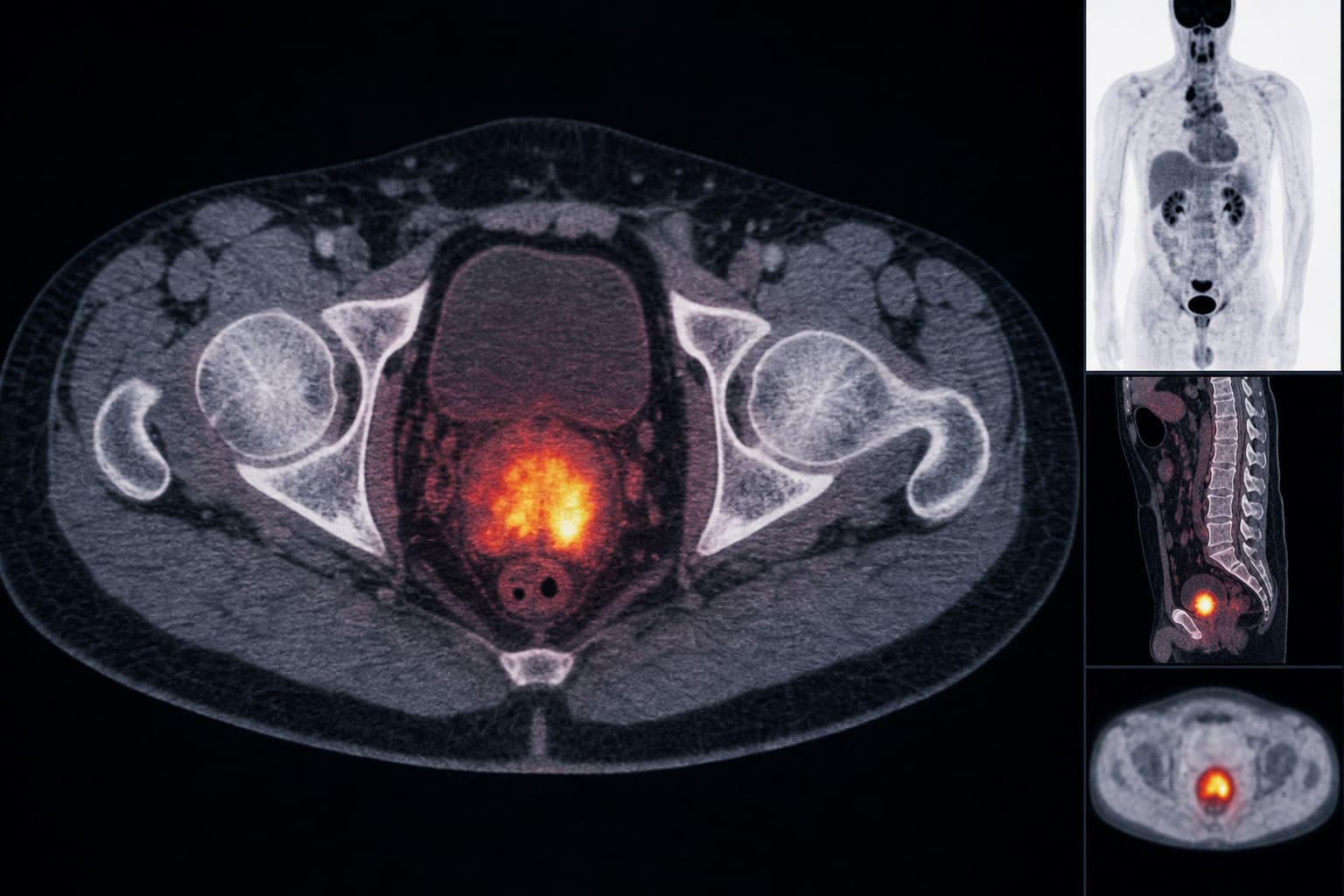
Prostatic incidental uptake on PET/CT: an updated systematic review and meta-analysis of prevalence and malignancy risk
-
By
-
Chiara Martinello
-
Cesare Michele Iacovitti
-
Andreea Marin
-
Slavko Tasevski
-
Alessio Rizzo
-
Marco Cuzzocrea
-
Gaetano Paone
-
Domenico Albano
-
Giorgio Treglia
-
June 22, 2026
-
Clinical Scorecard: Incidental Prostatic Uptake on PET/CT: A Systematic Review and Meta-Analysis of Its Prevalence and Associated Malignancy Risk
At a Glance
| Category | Detail |
|---|
| Condition | Prostatic Incidental Uptake (PIU) |
| Key Mechanisms | Detection of incidental prostatic uptake on PET/CT scans using [18F]FDG and other radiotracers. |
| Target Population | Men undergoing PET/CT for non-prostate primary indications. |
| Care Setting | Nuclear medicine and oncology imaging. |
Key Highlights
- Pooled prevalence of PIU is 1.7% for [18F]FDG PET/CT.
- Malignancy rates among PIU cases are 21.3% for further evaluation and 59.7% for biopsy.
- Higher mean age and SUVmax are associated with malignant PIUs.
- Peripheral location of PIU is a predictor of malignancy.
- No malignant lesions reported in SSA PET/CT study.
Guideline-Based Recommendations
Diagnosis
- Individualized clinical correlation is recommended for PIU, especially with focal or peripheral uptake.
Management
- Further evaluation or biopsy is suggested for cases with suspicious findings.
Monitoring & Follow-up
- Monitor PSA levels and other prostate-directed findings in patients with PIU.
Risks
- PIU is associated with a relevant risk of malignancy.
Patient & Prescribing Data
Men with incidental prostatic uptake detected on PET/CT scans.
Clinical correlation is essential to determine the significance of PIU.
Clinical Best Practices
- Consider the clinical context when interpreting incidental prostatic uptake.
- Utilize a multidisciplinary approach involving urologists and oncologists for management.
Related Resources & Content