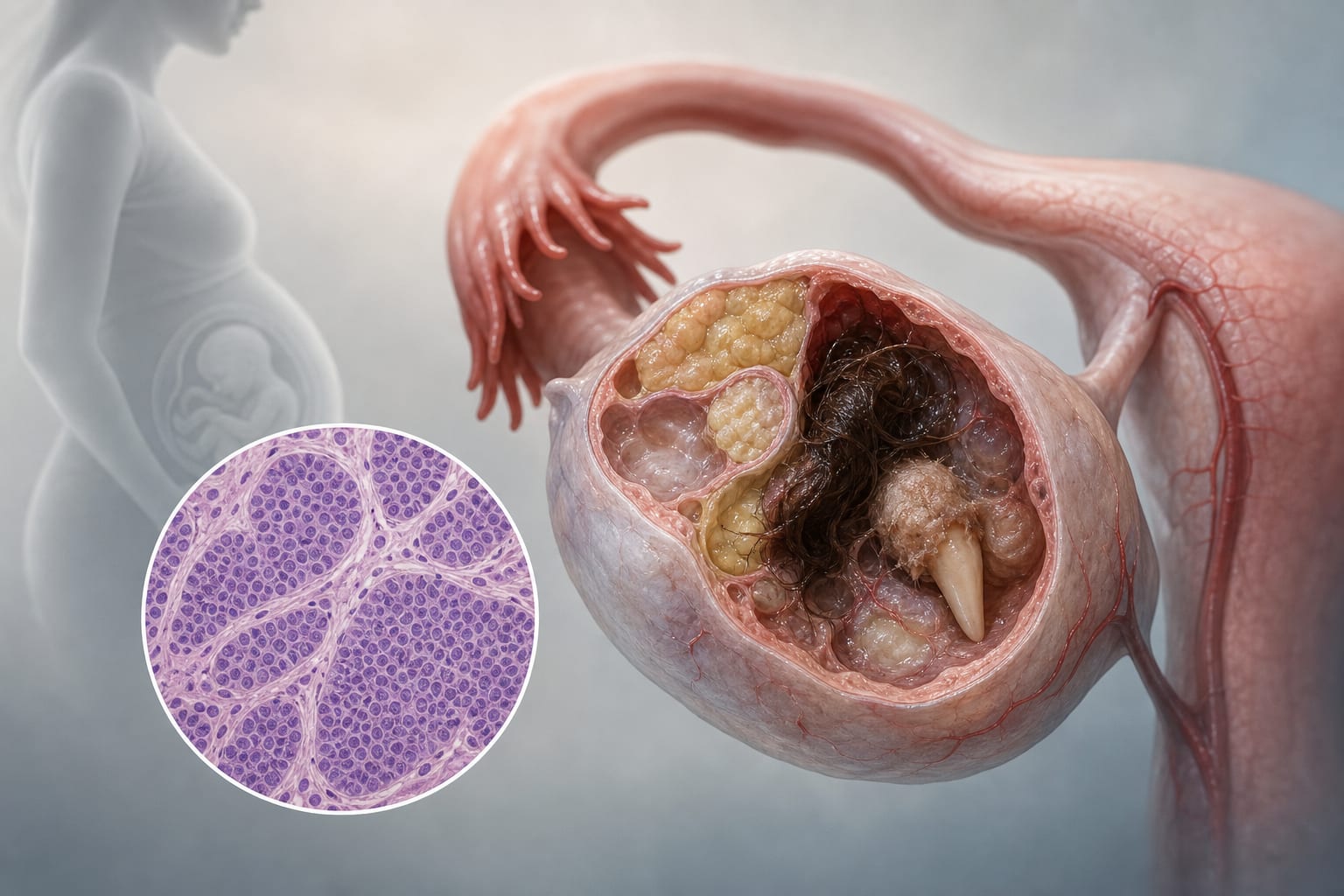
Occult ovarian carcinoid in pregnancy: a case report and literature review
-
By
-
Yong Zhu
-
Yanqing Wu
-
Ying Chen
-
June 10, 2026
-
Clinical Scorecard: Hidden Ovarian Carcinoid Tumor Detected During Pregnancy: A Case Study and Review of Existing Literature
At a Glance
| Category | Detail |
|---|
| Condition | Ovarian Carcinoid Tumor |
| Key Mechanisms | Rare neuroendocrine neoplasm, often associated with mature cystic teratoma. |
| Target Population | Pregnant women, particularly those with incidental findings during cesarean section. |
| Care Setting | Obstetric surgical settings. |
Key Highlights
- Ovarian carcinoid tumors are often asymptomatic and can be detected incidentally.
- Prenatal ultrasounds may fail to identify ovarian masses due to anatomical changes during pregnancy.
- Surgical resection is the mainstay of treatment with a favorable prognosis for early-stage disease.
- Final pathological staging confirmed FIGO IA with no evidence of recurrence during follow-up.
- Neuroendocrine markers assist in diagnosis and differentiation from other ovarian tumors.
Guideline-Based Recommendations
Diagnosis
- Utilize immunohistochemical staining for neuroendocrine markers.
Management
- Surgical resection is recommended for malignant ovarian neoplasms.
Monitoring & Follow-up
- Follow-up includes clinical examination and serum tumor marker assessment every six months for the first two years.
Risks
- Potential for misdiagnosis due to the occult nature of the tumor.
Patient & Prescribing Data
Primigravida women undergoing cesarean section.
Laparoscopic adnexectomy may be performed with curative intent following diagnosis.
Clinical Best Practices
- Consider fertility-sparing approaches for patients desiring future pregnancies.
- Adhere to NCCN and ESMO guidelines for staging and management of low-grade tumors.
Related Resources & Content