Smart thyroid-regulated drug delivery systems: a review of intelligent biosensor-integrated therapeutics for precision thyroxine replacement - Scorecard - MDSpire
Advertisement
Smart thyroid-regulated drug delivery systems: a review of intelligent biosensor-integrated therapeutics for precision thyroxine replacement
Clinical Scorecard: Innovative Thyroid-Controlled Drug Delivery Mechanisms: An Overview of Smart Biosensor-Integrated Therapies for Targeted Thyroxine Replacement
At a Glance
Category
Detail
Condition
Hypothyroidism post-thyroidectomy
Key Mechanisms
Thyroid hormone regulation via the hypothalamic-pituitary-thyroid (HPT) axis
Target Population
Patients who have undergone total thyroidectomy
Care Setting
Endocrinology and hormone replacement therapy
Key Highlights
Levothyroxine (L-T4) replacement therapy is the standard treatment for hypothyroidism post-thyroidectomy.
Only about 34% of patients achieve target euthyroidism at first follow-up after total thyroidectomy.
Current fixed-dose L-T4 therapy often leads to oscillations between over- and under-replacement.
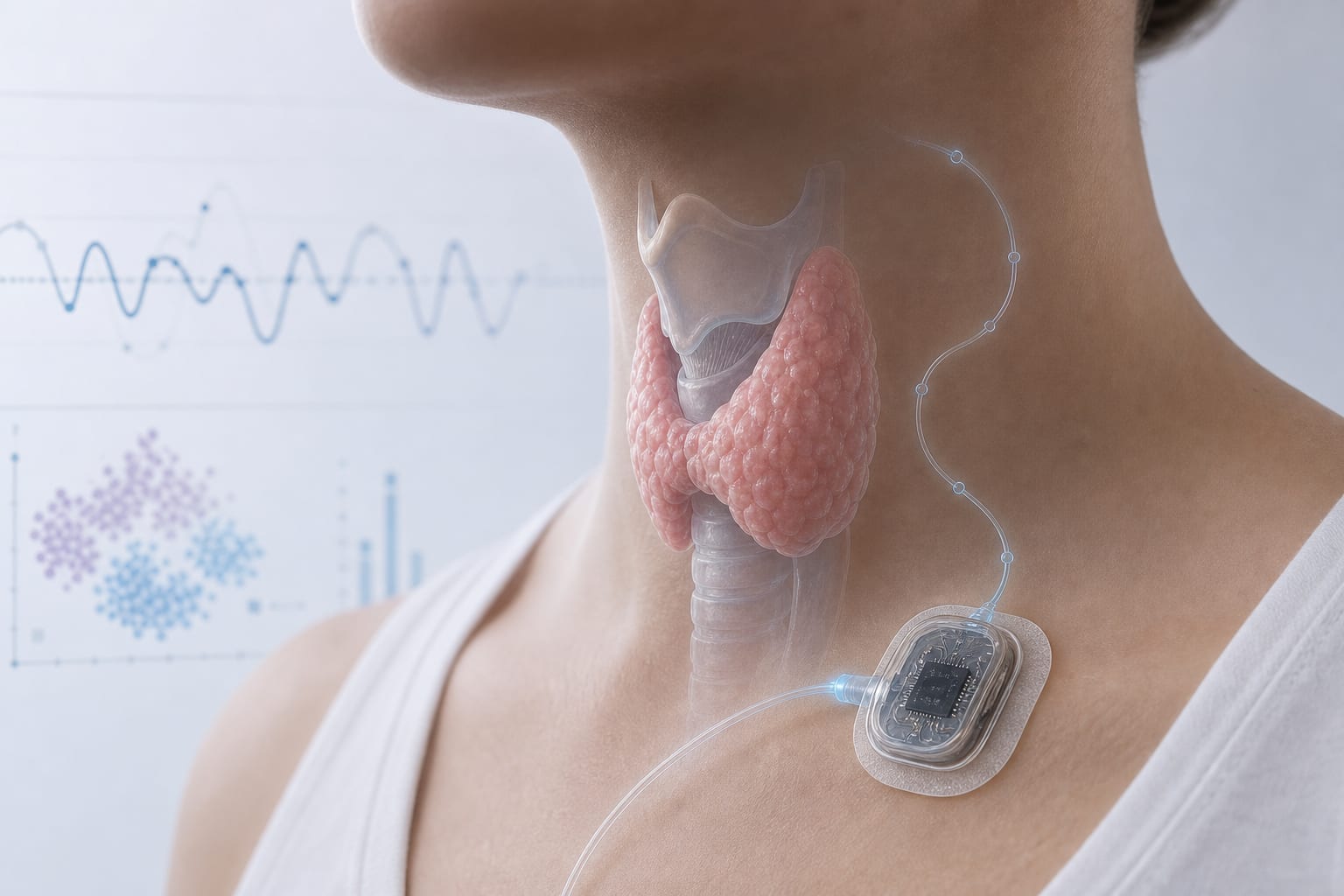
Advances in biosensors and machine learning can improve thyroid hormone monitoring and dosing.
Proposed Intelligent Medicine Bot (IMB) aims to provide closed-loop, adaptive L-T4 delivery.
Guideline-Based Recommendations
Diagnosis
Assess thyroid hormone levels post-thyroidectomy to determine L-T4 needs.
Management
Consider individualized dosing strategies rather than fixed doses for L-T4 therapy.
Monitoring & Follow-up
Regularly monitor TSH and free T4 levels to adjust L-T4 dosage appropriately.
Risks
Monitor for cardiac arrhythmias, bone mineral loss, cognitive fog, and metabolic disruption due to hormone imbalance.
Patient & Prescribing Data
Patients with hypothyroidism following total thyroidectomy
Current therapies often fail to maintain stable hormone levels, necessitating innovative delivery mechanisms.
Clinical Best Practices
Utilize biosensors for real-time monitoring of thyroid hormone levels.
Implement machine learning models to predict individualized L-T4 requirements.
Explore closed-loop drug delivery systems for more precise hormone replacement.