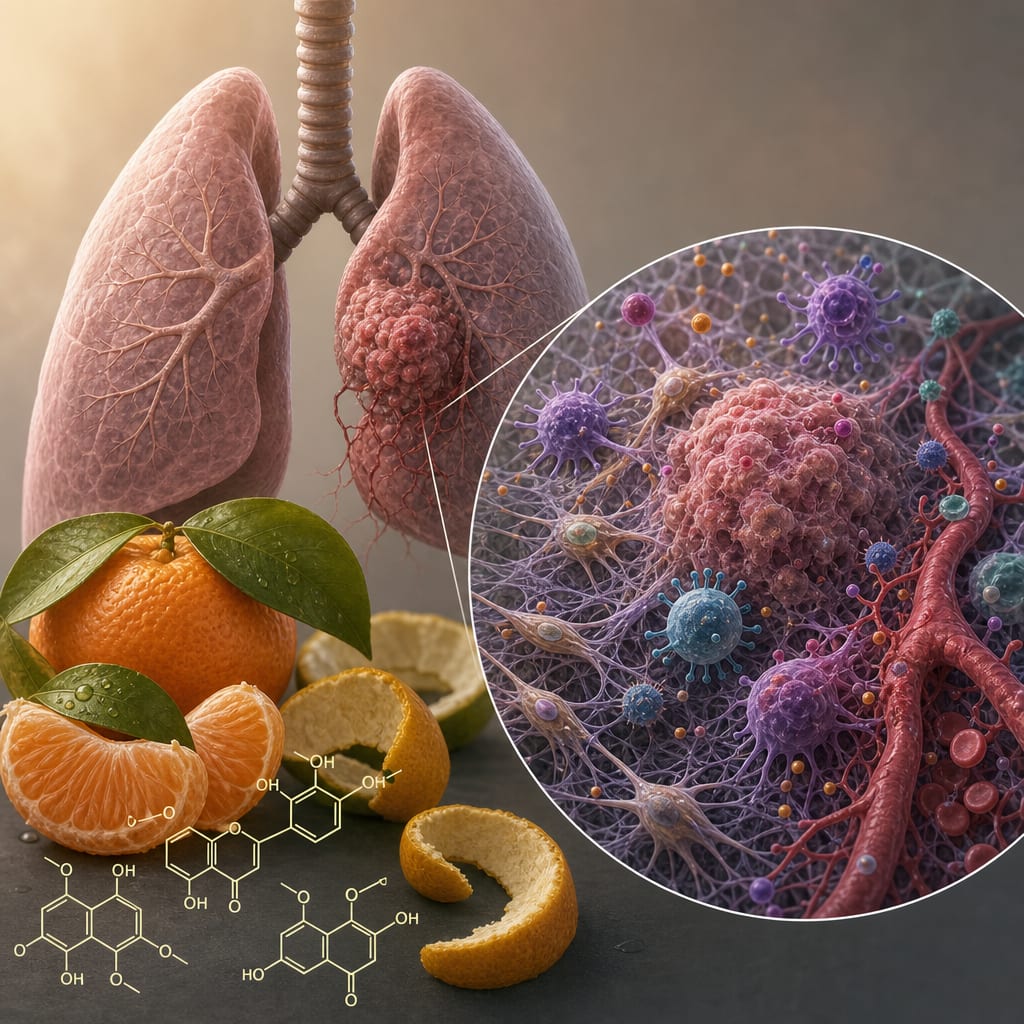
Clinical Scorecard: Modulation of the Tumor Microenvironment in Lung Cancer by Citrus Flavonoids: Insights from Preclinical Studies to Clinical Applications
At a Glance
Category
Detail
Condition
Key Mechanisms
Regulation of oxidative stress-inflammation homeostasis, correction of lipid metabolic reprogramming, induction of pyroptosis, inhibition of epithelial-mesenchymal transition, and suppression of tumor angiogenesis.
Target Population
Care Setting
Key Highlights
CRP flavonoids such as nobiletin, hesperidin, and tangeretin modulate the lung cancer TME.
Targeting the TME can reverse immune evasion and improve treatment efficacy.
Emerging targets include ferroptosis and the cGAS-STING pathway.
CRP flavonoids have favorable toxicity profiles and potent immunomodulatory properties.
Current research gaps include integrative mechanisms of pathway crosstalk and the role of EMT and tumor angiogenesis suppression.
Guideline-Based Recommendations
Diagnosis
Utilize imaging techniques such as CT and PET scans along with histopathological evaluation for lung cancer diagnosis.
Management
Monitoring & Follow-up
Risks
Patient & Prescribing Data
Patients diagnosed with lung cancer, particularly those resistant to standard therapies.
CRP flavonoids may improve treatment outcomes when used alongside conventional therapies.
Clinical Best Practices
Integrate CRP flavonoids in treatment plans for lung cancer patients, focusing on their multi-target effects.
Conduct further research to explore the multi-target effects of CRP flavonoids, particularly in relation to emerging TME regulatory nodes.