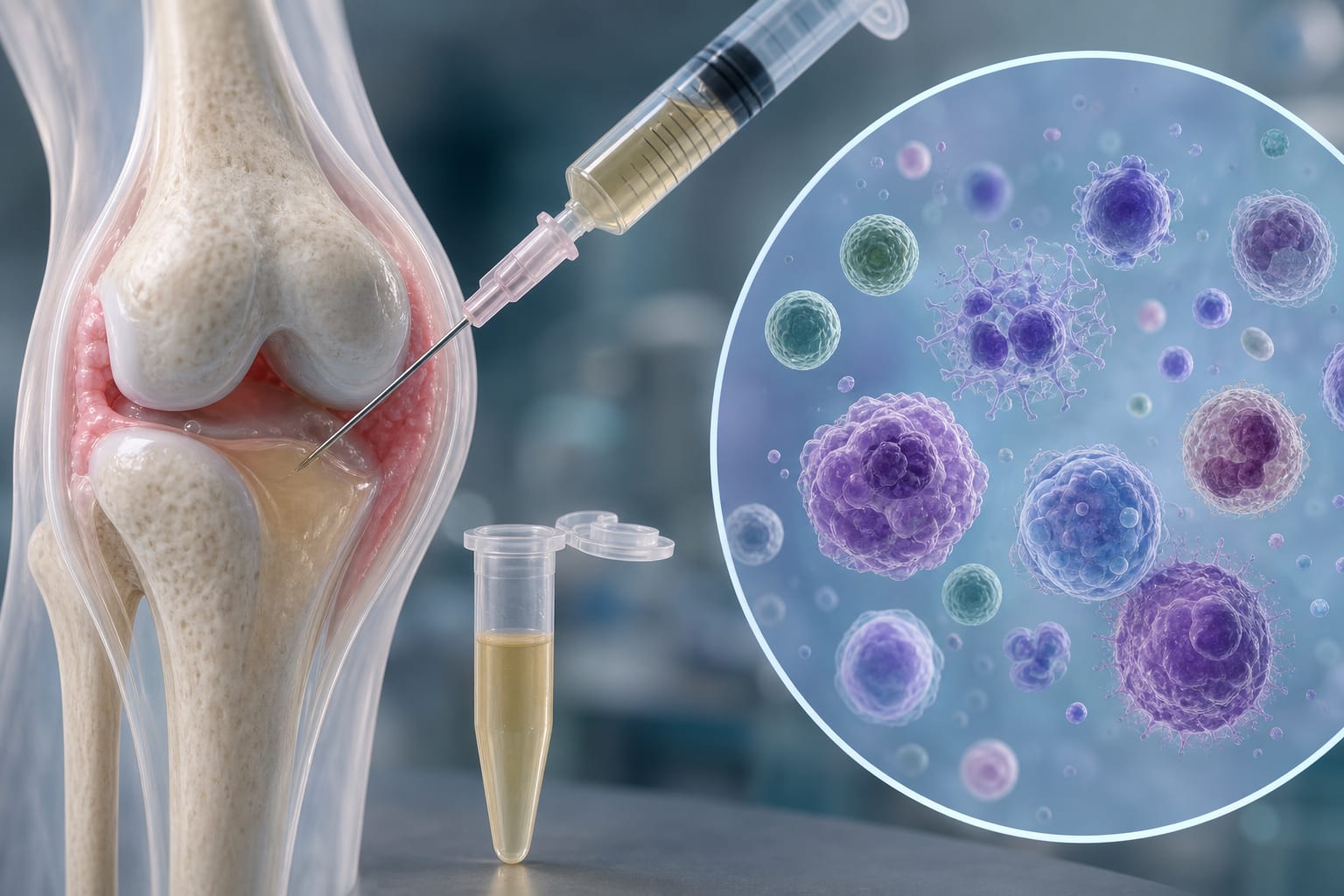
Cellular Analysis of Synovial Fluid Reveals Unique Inflammatory Profiles in Late-Onset Rheumatoid Arthritis and Polymyalgia Rheumatica
By
Shigeru Tanaka
Takahiro Sugiyama
Shuhei Kameda
Tatsuro Takahashi
Masahiro Yasui
Yuki Hayashi
Tomoaki Ida
Yuhi Yoshida
Soichiro Kubota
Takashi Ito
Takahiro Kageyama
Daiki Nakagomi
Kei Ikeda
Shin-Ichiro Kagami
Hiroshi Nakajima
July 1, 2026
Clinical Scorecard: Cellular Analysis of Synovial Fluid Reveals Unique Inflammatory Profiles in Late-Onset Rheumatoid Arthritis and Polymyalgia Rheumatica
At a Glance
Category Detail
Condition Late-Onset Rheumatoid Arthritis and Polymyalgia Rheumatica Key Mechanisms Differentiation of inflammatory profiles in synovial fluid. Target Population Patients aged 60 years or older with late-onset inflammatory arthritis. Care Setting Tertiary referral hospitals.
Key Highlights
LORA is defined as RA with onset at 60 years or older. ACPA-negative LORA and PMR can present similarly, complicating diagnosis. Synovial fluid analysis may provide more accurate disease-specific signatures. Study included 21 East Asian patients with ACPA-positive LORA, ACPA-negative LORA, and PMR. Active inflammation confirmed by musculoskeletal ultrasound. Guideline-Based Recommendations
Diagnosis
Fulfillment of 2010 ACR/EULAR classification criteria for RA. Fulfillment of 2012 provisional classification criteria for PMR. Management
Consideration of comorbidities and therapeutic risks in treatment. Monitoring & Follow-up
Clinical re-evaluation of initial diagnosis six months after enrollment. Risks
Increased therapeutic risks due to comorbidities in elderly patients. Patient & Prescribing Data
Elderly patients aged 60 years or older.
Management strategies should account for potential comorbidities.
Clinical Best Practices
Use ultrasound to confirm active inflammation before treatment. Ensure anatomical consistency in synovial fluid aspiration. Related Resources & Content