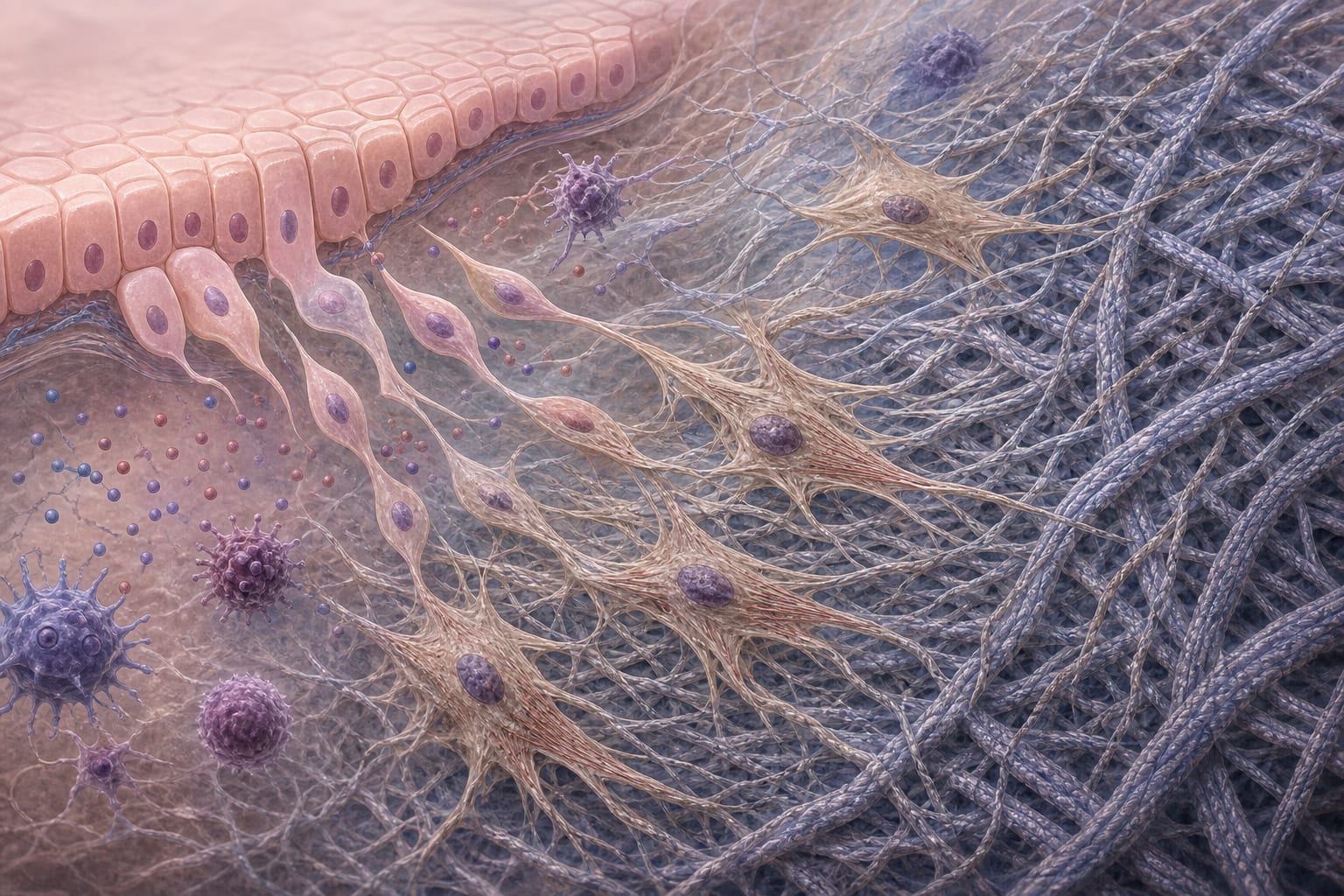
Epithelial–mesenchymal transition in cutaneous fibrosis disease: from mechanisms to therapy
-
By
-
ShaoXiang Yuan
-
Ziyi Luo
-
Nina Yang
-
Tao Xiong
-
YueZhong Chen
-
Xichao Jian
-
Yun Wang
-
Shune Xiao
-
Junzhe Chen
-
Chengliang Deng
-
June 9, 2026
-
Clinical Scorecard: Mechanisms and Therapeutic Approaches for Epithelial–Mesenchymal Transition in Skin Fibrosis
At a Glance
| Category | Detail |
|---|
| Condition | |
| Key Mechanisms | Epithelial–mesenchymal transition (EMT) contributes to fibrogenesis and excessive ECM accumulation. |
| Target Population | |
| Care Setting | |
Key Highlights
- Cutaneous fibrosis is characterized by abnormal tissue remodeling and excessive ECM accumulation.
- EMT plays a critical role in the development of fibrotic disorders.
- Sustained inflammation promotes fibroblast activation and differentiation into myofibroblasts.
- EMT may serve as an immediate cellular origin of fibroblasts and myofibroblasts in fibrogenesis.
Guideline-Based Recommendations
Diagnosis
- Assess the presence of chronic inflammation and tissue damage in patients.
Management
- Consider therapies targeting EMT to address cutaneous fibrosis.
Monitoring & Follow-up
- Evaluate changes in skin structure and function over time.
Risks
- Prolonged EMT can lead to excessive ECM accumulation and progressive tissue fibrosis.
Patient & Prescribing Data
Current therapeutic strategies are largely inadequate for achieving meaningful clinical outcomes.
Clinical Best Practices
- Integrate understanding of EMT in the management of cutaneous fibrosis.
Related Resources & Content