Respiratory safety and resource utilization in ERCP: a comparative study of high-flow nasal oxygen, conventional mask, and general anesthesia in high-risk populations - Scorecard - MDSpire

Respiratory safety and resource utilization in ERCP: a comparative study of high-flow nasal oxygen, conventional mask, and general anesthesia in high-risk populations

  • By

  • Kamil Taşkapılı

  • Emre Ballı

  • Mehlika Bilgi Kırmacı

  • June 18, 2026

  • 0 min

Share

Clinical Scorecard: Evaluating Respiratory Protection and Resource Use During ERCP: A Comparative Analysis of High-Flow Nasal Oxygen, Standard Mask, and General Anesthesia in High-Risk Patient Groups
At a Glance

CategoryDetail
ConditionEndoscopic retrograde cholangiopancreatography (ERCP)
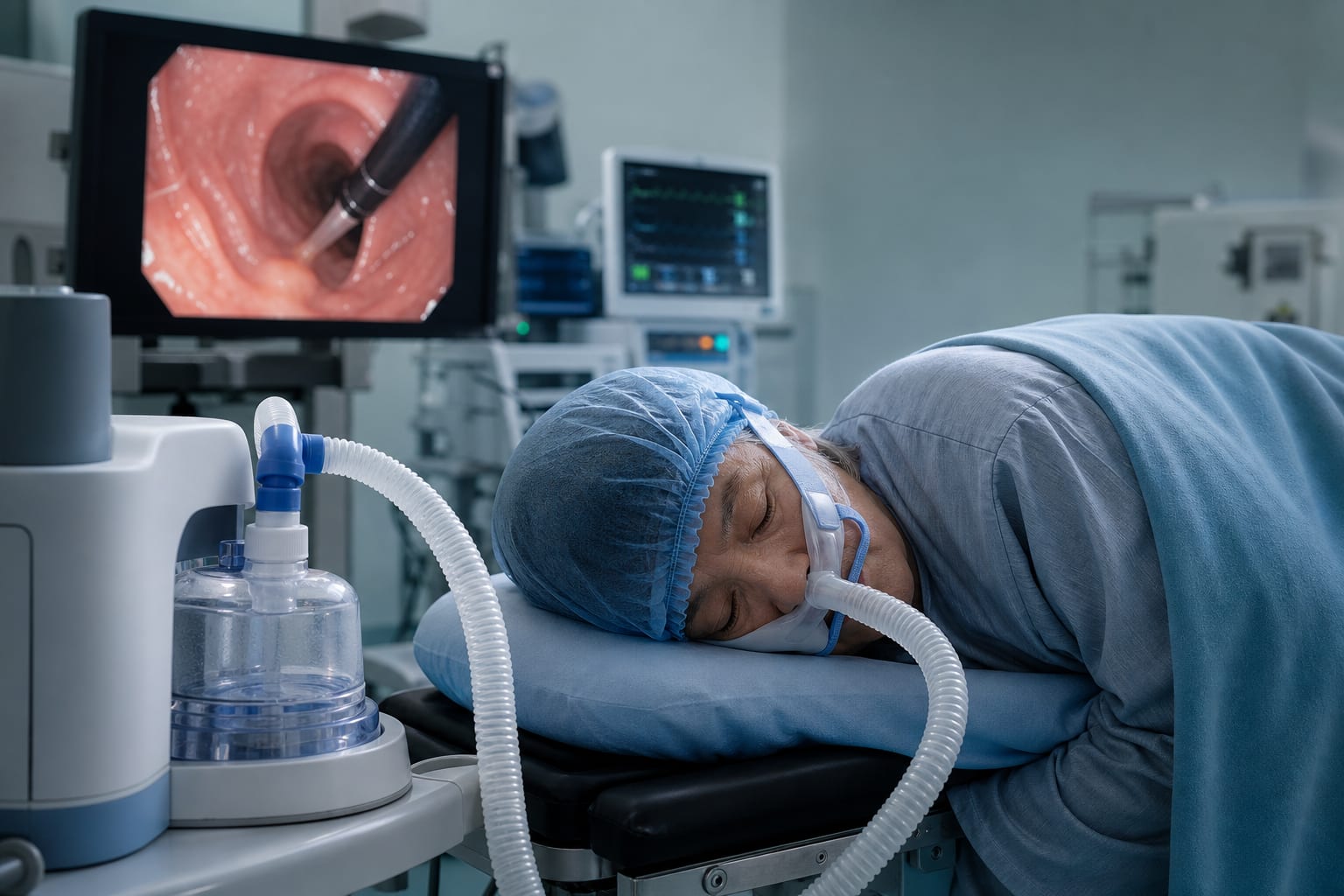
Key MechanismsHigh-flow nasal oxygen (HFNO) provides non-invasive oxygenation and prevents desaturation during sedation.
Target PopulationAdult patients (aged 18–80 years) with ASA physical status I, II, or III undergoing elective ERCP.
Care SettingTertiary-care academic medical center

Key Highlights

  • Desaturation incidence was 59.7% in standard mask (SM) group vs. 0% in HFNO and general anesthesia (GA) groups.
  • Minimum SpO₂ was significantly lower in SM (90%) compared to HFNO (99%) and GA (99%).
  • Airway interventions required in 31.4% of SM patients vs. 5.4% of HFNO patients.
  • Oxygen consumption was highest in HFNO (500 L) compared to SM (175 L) and GA (34.5 L).
  • HFNO matched GA in respiratory stability, achieving 0% desaturation rate.

Guideline-Based Recommendations

Diagnosis

    Management

    • Consider HFNO for non-invasive oxygenation during ERCP in high-risk patients.

    Monitoring & Follow-up

    • Monitor SpO₂ levels closely during ERCP procedures.

    Risks

    • Be aware of the potential for desaturation with SM oxygenation.

    Patient & Prescribing Data

    Adult patients undergoing elective ERCP with ASA I, II, or III.

    HFNO provides effective oxygenation and reduces the need for airway interventions.

    Clinical Best Practices

    • Utilize HFNO in high-risk ERCP patients to maintain oxygenation.
    • Assess the need for airway interventions based on oxygenation strategy.

    Related Resources & Content

    Original Source(s)

    Related Content